Unlocking AI & Machine Learning Potential
 Pratham Panchariya
Updated 4 min readHow we fact-check
On this page
Artificial Intelligence (AI) and Machine Learning (ML) are transforming the world we live in, revolutionizing industries, and redefining the way we interact with technology. These two interconnected fields are driving innovation, enabling intelligent decision-making, and unlocking new possibilities across various domains. In this article, we will delve into the world of AI and ML, exploring their definitions, applications, and their potential impact on society.
Understanding Artificial Intelligence
Artificial Intelligence refers to the creation of intelligent machines that can mimic human-like behavior, perform tasks that typically require human intelligence, and adapt to changing circumstances. AI systems leverage algorithms, data, and computational power to process information, learn from experience, and make decisions or take actions.
Exploring Machine Learning
Machine Learning is a subset of AI that focuses on developing algorithms that allow systems to automatically learn and improve from experience without being explicitly programmed. ML algorithms analyze vast amounts of data, identify patterns, and make predictions or decisions based on those patterns. Supervised, unsupervised, and reinforcement learning are common approaches in ML. For those looking to gain practical skills or expand their knowledge in this fast-growing field, structured machine learning courses covering topics like supervised and unsupervised learning, NLP, deep learning, and more are available online and can help learners of all levels get hands-on experience.
Applications of AI and ML
a. Healthcare: AI and ML have the potential to revolutionize healthcare by assisting in disease diagnosis, predicting outcomes, and personalizing treatment plans. These technologies can analyze medical records, genetic data, and clinical data to identify patterns and support medical professionals in making informed decisions. b. Finance: The finance industry benefits from AI and ML through fraud detection, algorithmic trading, credit scoring, and risk assessment. These technologies can analyze vast amounts of financial data in real-time, identifying anomalies and predicting market trends, leading to more accurate financial decisions. c. Transportation: Self-driving cars and autonomous vehicles are prominent examples of AI and ML applications in the transportation sector. These technologies use sensors, computer vision, and deep learning algorithms to perceive the environment, make decisions, and navigate roads safely. d. Customer Service: AI-powered chatbots and virtual assistants have transformed customer service by providing personalized support and quick responses. Natural Language Processing (NLP) algorithms enable these systems to understand and respond to customer queries, improving overall customer experience. e. Manufacturing and Automation: AI and ML technologies are optimizing manufacturing processes by analyzing data from sensors, predicting equipment failures, and optimizing production schedules. These advancements improve efficiency, reduce costs, and enhance product quality.
Ethical Considerations
As AI and ML continue to advance, ethical considerations become paramount. Fairness, transparency, privacy, and accountability are crucial factors to address. The potential biases embedded in algorithms and the impact on job displacement must be carefully managed. Building AI systems that align with human values and societal well-being is essential.
Challenges and Future Directions
Despite the immense progress in AI and ML, challenges remain. Data quality, availability, and security are ongoing concerns. Developing robust and explainable algorithms, ensuring unbiased decision-making, and addressing the ethical dimensions of AI are key areas of focus. The collaboration between academia, industry, and policymakers is critical to overcoming these challenges. Looking ahead, the future of AI and ML holds tremendous potential. Advances in areas such as deep learning, reinforcement learning, and natural language processing will continue to expand the capabilities of AI systems. With responsible development and widespread adoption, AI and ML can reshape industries, enhance human productivity, and tackle complex societal problems.
Conclusion
Artificial Intelligence and Machine Learning are transforming the world as we know it, revolutionizing industries, and offering solutions to complex problems. From healthcare to finance, transportation to customer service, AI and ML are driving innovation and improving efficiency across various domains. While challenges and ethical considerations persist, the potential for positive impact remains immense. As society embraces these technologies, responsible development and a commitment to addressing ethical concerns will pave the way for a future where AI and ML unlock human potential and shape a better world.
Related reading
Related Articles
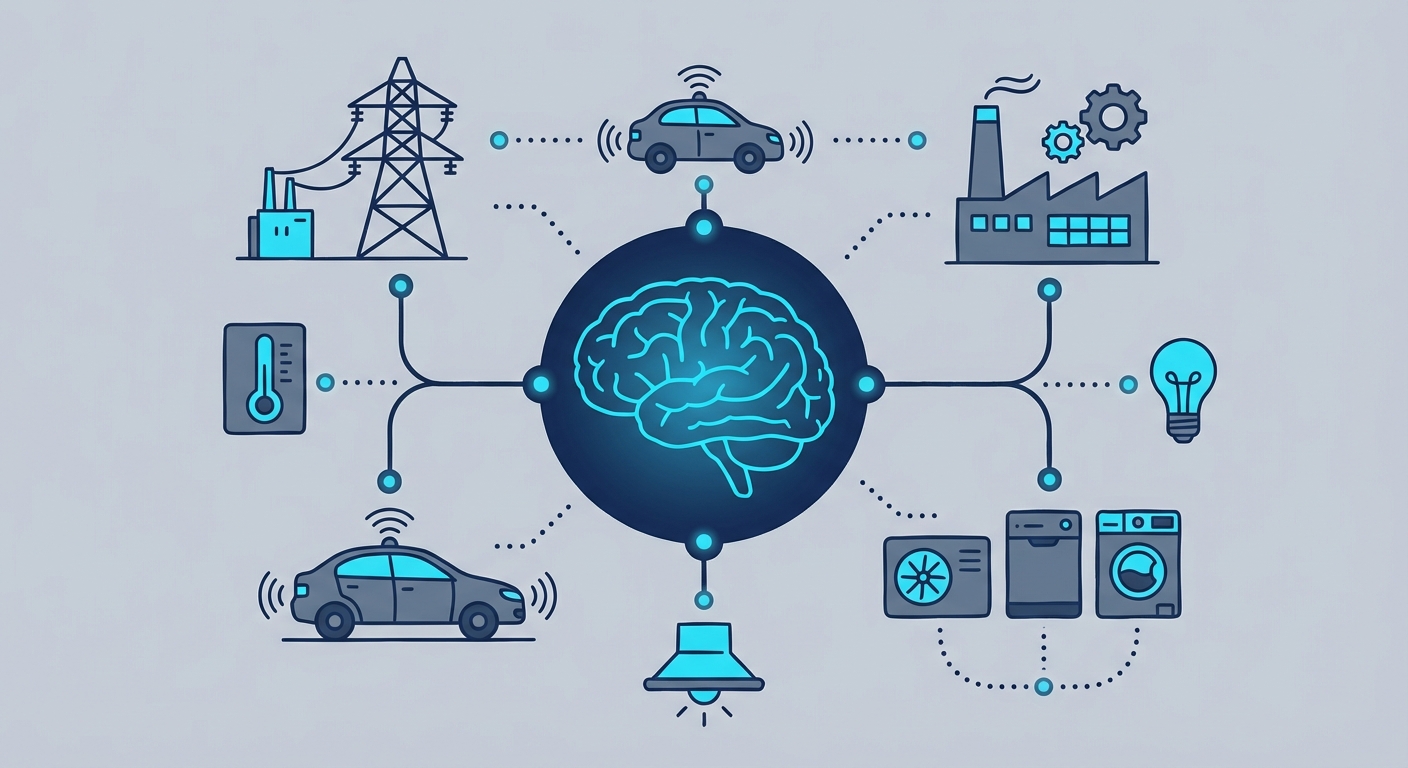 AIoTExploring the Intersection of Artificial Intelligence and IoTDiscover how AIoT transforms passive sensors into autonomous systems. Learn about edge computing, real-time decision-making, and the evolution of IoT intelligence.Ajay Kumar8 min read
 AI in educationAI Applications in Educational SettingsDiscover the transformative AI applications in education, including personalized learning, automated grading, VR simulations, and collaborative tools. Learn how AI is shaping the future of learning.Hitesh Kumawat9 min read
 AI in educationArtificial Intelligence in Educational ContextsExplore how artificial intelligence is revolutionizing education. Learn about AI applications, ethical considerations, and future trends in personalized learning and teaching.Nikita Shekhawat12 min read
 AI and Art: Unleashing the power of AI Art GeneratorsArtificial Intelligence (AI) has been a revolutionary force in numerous industries, and art is no exception. Over the last decade, profound advancements in AI tNikita Shekhawat3 min read