
Need an AI Content Generation Tool? Here’s What to Look for in 2026

TL;DR
- ✓ Shift from manual prompting to agentic AI that executes end-to-end workflows.
- ✓ Prioritize tools with native integrations to prevent costly team context switching.
- ✓ Ensure your chosen AI platform protects data sovereignty and proprietary brand assets.
- ✓ Evaluate AI tools based on their ability to ingest specific brand voice guidelines.
If you’re still using AI just to churn out "good enough" drafts, you’re already losing. By 2026, the bar has moved. Any LLM can string together a coherent sentence; that’s table stakes. The real differentiator today isn't the writing—it’s the autonomy.
You need a tool that acts like a seasoned hire, not a glorified autocomplete. It should handle the grunt work—the research, the formatting, the tedious compliance checks—without you having to babysit every single output. According to the latest State of Marketing AI Report, teams that have evolved beyond simple prompting are pulling 40% higher ROI than the folks still stuck in the "copy-paste-pray" loop. We aren't in the age of prompt-engineering anymore. We’re in the age of Agentic AI.
The Death of the "Prompt-and-Pray" Era
Let’s talk about "Subscription Hoarding"—the silent killer of modern marketing teams. You probably have a dozen disjointed tools: one for SEO, one for drafting, one for images, another for social. None of them talk to each other. Your team spends more time acting as a human bridge between browser tabs than they do actually creating strategy. It’s exhausting, it’s inefficient, and it’s expensive.
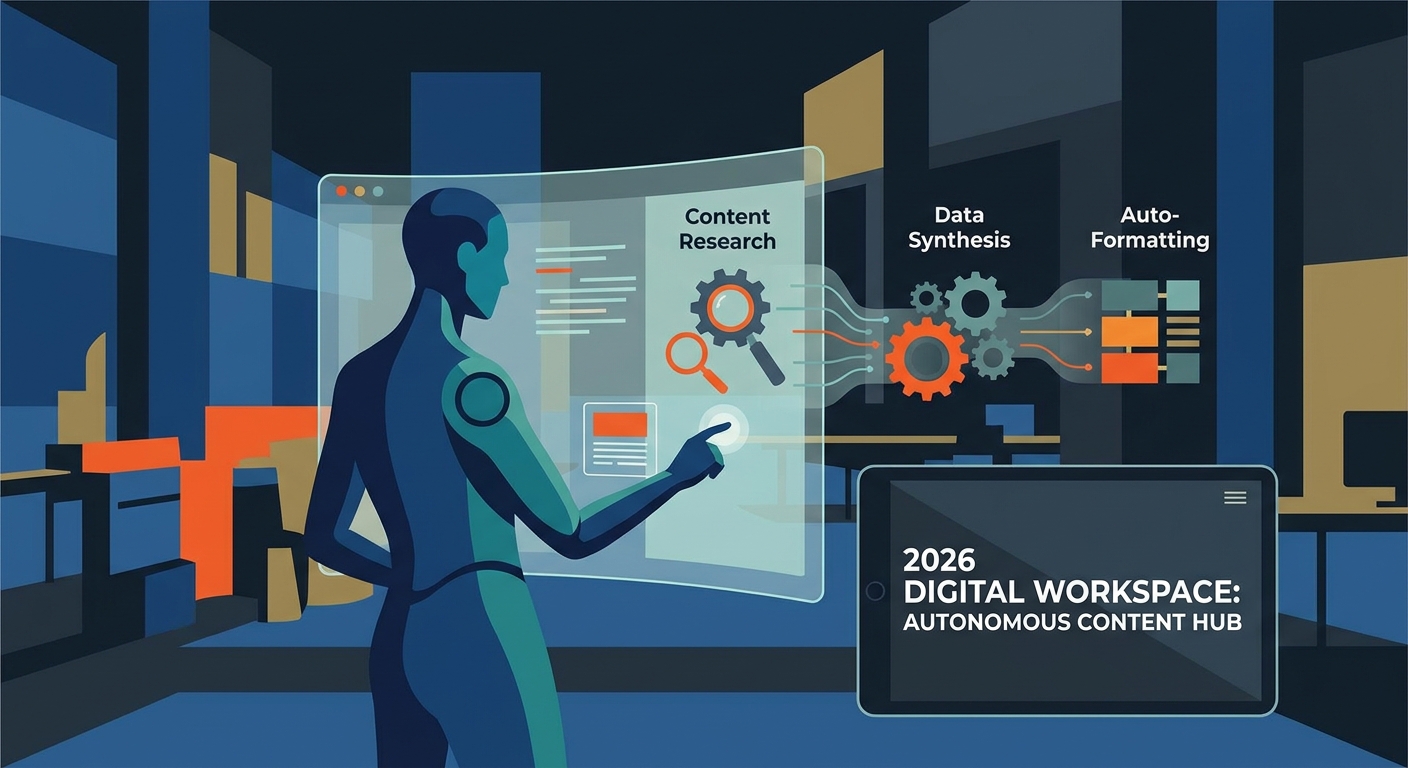
The 2026 standard is "Agentic AI." An agentic system doesn't just wait for a prompt; it understands the mission. You give it an objective—like "Build a whitepaper on Q3 trends using our internal sales data"—and it goes to work. It researches, pulls from your proprietary docs, drafts the copy, and formats it for your CMS. That is the fundamental shift: moving from a tool that writes to a tool that executes.
Why You’re Probably Picking the Wrong Tools
Most teams fall for the "shiny object" trap. They see a flashy demo on LinkedIn and sign the contract. That’s a tactical disaster. To build a stack that actually lasts, you need to vet your tools against five non-negotiable pillars.
1. Agentic Capabilities (The "Doer" Factor) Does the tool perform multi-step workflows, or is it just a text box with a fancy UI? If you’re still doing the research, then pasting it into the AI, then fixing the formatting, the tool isn't helping—it’s a liability.
2. Native Integration Context switching is the enemy of focus. Data shows that native AI, embedded directly into your CMS or project management tools, saves the average user 2.5 hours per week. If a tool doesn't plug into your existing ecosystem, it’s just another tab you have to close.
3. Brand Voice Engines Stop settling for "tone sliders." In 2026, an enterprise tool must ingest your brand guidelines, your historical wins, and your specific, idiosyncratic vocabulary. It should know your brand better than a new hire would.
4. Data Sovereignty Security isn't a "nice-to-have." If your AI vendor uses your proprietary strategy documents to train public models, you’re handing your competitive advantage to the competition. Ensure your vendor meets the AI Ethics & Privacy Standards required for real enterprise environments.
5. True Specialization A "jack-of-all-trades" chatbot is a master of none. Whether you’re writing deep technical documentation or punchy ad copy, look for specialized engines that leverage Generative AI Benchmarks to ensure the output actually hits the mark.
How to Audit Your Workflow
To find where your time is leaking, you need to map your process. Most teams are living in a fragmented nightmare of manual transfers.
Here’s a simple audit: track every minute your team spends moving text from one window to another. If that’s more than 15% of their day, your stack is broken. Consolidating into a single, agentic platform like LogicBalls Content Tools often pays for itself in reclaimed hours within the first month.
What to Look for in a 2026 AI Partner
When you’re vetting a long-term partner, look past the feature list. You’re looking for infrastructure.
- API Access & CMS Hooks: If the tool is a walled garden, it will eventually hold your content hostage. Demand interoperability.
- The "Anti-Tool" Perspective: This is the secret sauce. A great AI tool should also have "friction." It should be smart enough to flag when it can't fulfill a request accurately, or when a topic is too sensitive for AI. If a vendor promises they can do everything perfectly, they’re lying to you.
Agentic AI vs. The Rest: The Context Gap
The shift to Agentic AI is really about "Context-Awareness." Older models were trained on the open, noisy internet—like a generalist journalist who knows a little bit about everything but nothing about your specific business.
2026 tools are different. They use Retrieval-Augmented Generation (RAG) to pull data specifically from your documents. When you ask for a blog post, it isn't hallucinating generic facts; it’s citing your own case studies, your own product data, and your specific value props. That is the difference between "content filler" and "revenue-generating content."
How to Build a Future-Proof Content Stack
Future-proofing isn't about buying the most expensive tool. It’s about buying the most interoperable one.
- The Integration Checklist: Before signing, ask the hard questions. Does it have an open API? Can it push directly to HubSpot or Webflow? If the answer is no, walk away.
- Strategy over Tooling: No tool fixes a bad strategy. Before you turn on the AI, you need a crystal-clear brand style guide. AI is only as good as the guardrails you give it. Check out the LogicBalls Blog for deeper dives into how to structure your brand guidelines for AI performance.
When Should You Say "No" to AI?
There is a real danger in over-automating. If you use AI to generate every single piece of content, you’ll end up with a website full of "generic garbage"—content that is technically accurate but emotionally hollow.
"Human-in-the-loop" (HITL) is mandatory. Google’s algorithms are getting better every day at spotting low-effort, mass-produced AI content. Use AI for the structural work, the research synthesis, and the first-pass drafting. But for the final polish, the counter-intuitive insight, or the human story that actually resonates with your customers? That must come from a human expert. AI is your research assistant and your junior editor—not your lead strategist.
Frequently Asked Questions
How do I choose between an all-in-one platform and specialized tools?
If your primary bottleneck is consistency and workflow efficiency, an all-in-one agentic platform is the better choice. If you have a highly specific, high-volume need—like professional-grade video editing or code generation—a specialized tool will almost always outperform a generalist platform.
Is "Agentic AI" just a buzzword?
No. It represents a paradigm shift from simple text-generation to autonomous workflow execution. An agentic tool can perform multi-step tasks, such as conducting SEO research and publishing directly to your CMS, without requiring manual intervention at every step.
How can I ensure my brand voice stays unique with AI?
Avoid tools that only offer "tone sliders" (e.g., "Professional" or "Friendly"). Instead, look for tools that allow you to upload your proprietary style guides, brand vocabulary, and past high-performing content to train the model on your specific brand identity.
What should I look for in an AI tool regarding data security?
Always check for enterprise-grade compliance. A secure tool should offer private instances where your data is not used to train public models. If a vendor cannot provide documentation on how they handle your proprietary data, treat them as a risk.
How do I calculate the ROI of an AI content tool implementation?
Track the time saved on research, drafting, and formatting, then multiply those hours by your team's average hourly rate. Subtract the cost of the subscription. If the resulting figure is positive, you have a clear business case for the investment.