Exploring Automated Machine Learning Resources


TL;DR
- AutoML 3.0 focuses on context, compliance, and human-machine collaboration.
- Offload pipeline orchestration to free talent for ethical AI governance.
- Choose between enterprise platforms or custom stacks based on regulatory needs.
- Utilize Generative AI for synthetic data labeling and intelligent pipelines.
- Prioritize model explainability to ensure successful, scalable AI deployments.
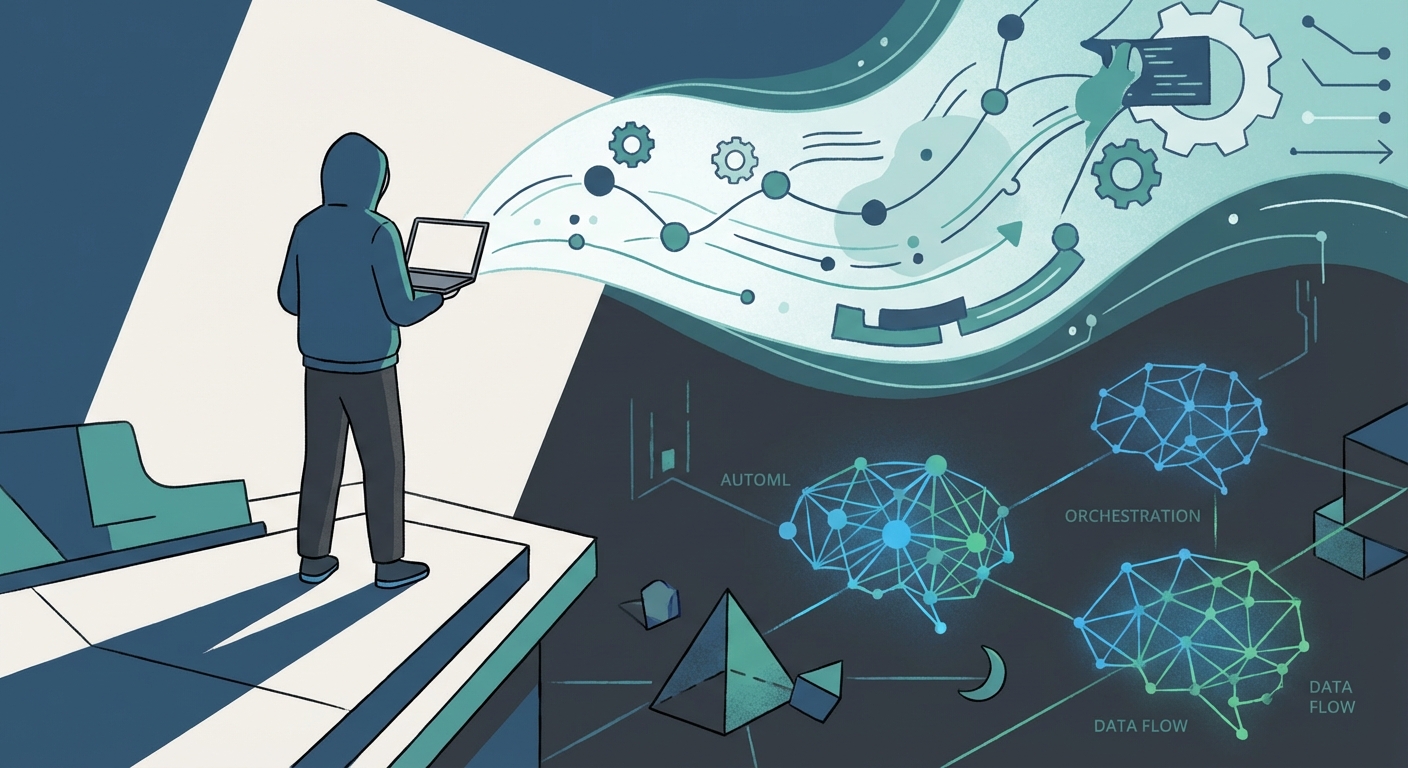
Automated Machine Learning (AutoML) isn't just a shortcut for data scientists anymore. It’s the backbone of modern enterprise AI. We’ve officially entered the "AutoML 3.0" era—a period defined not by how quickly you can brute-force hyperparameter tuning, but by how well your systems handle context, compliance, and human collaboration.
If you’re still treating AutoML like a "magic button" that spits out business solutions in a black box, you’re missing the point. The industry has moved on. Today, it’s all about interpretability, regulatory safety, and keeping your intelligence as close to the edge as possible.
The Strategic Shift: Why AutoML Matters in 2026
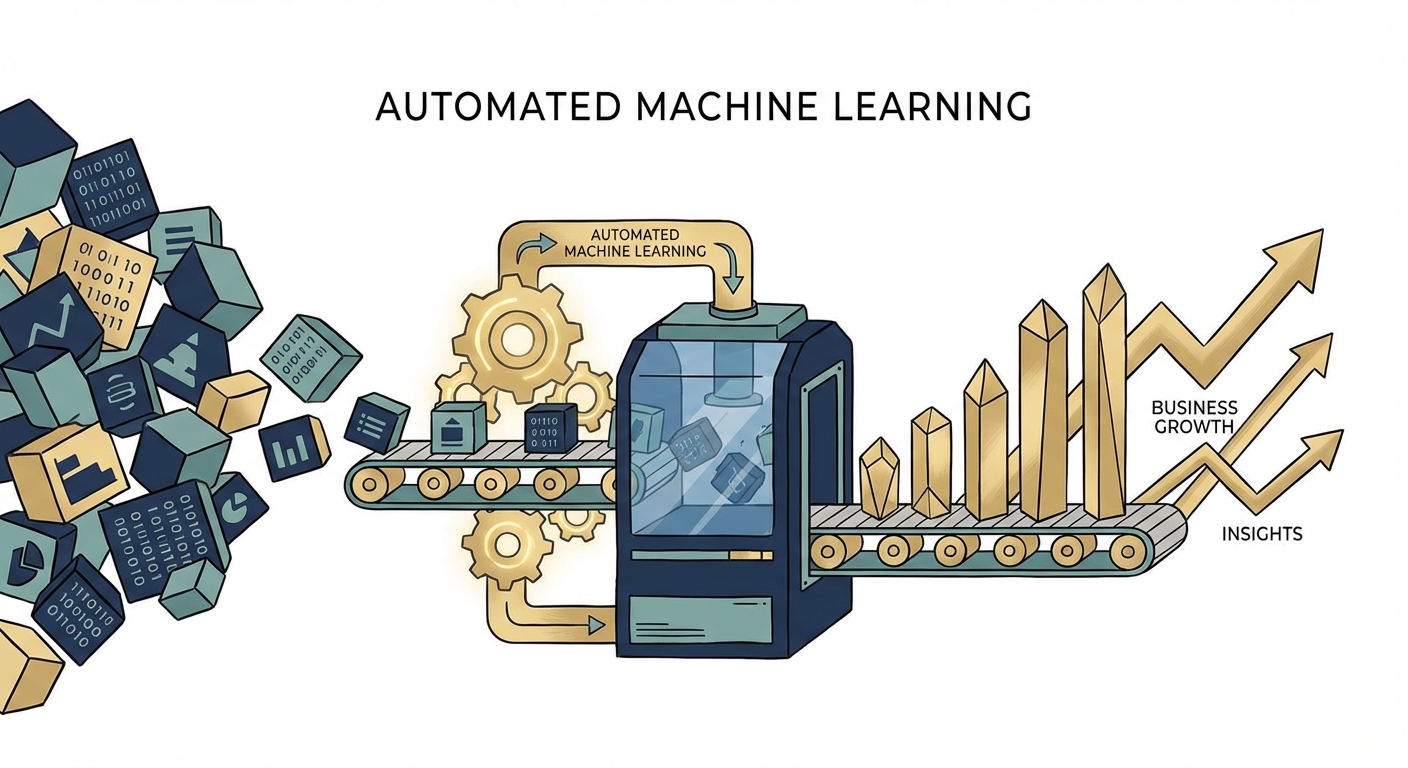
Sure, the main draw of AutoML is still speed. Who doesn't want a faster time-to-market? But the real strategic shift is about talent. There is a massive, global shortage of specialized data scientists. By offloading the grunt work—pipeline orchestration, feature engineering, and model selection—to machines, you free up your best people to focus on actual business logic and the messy, vital work of ethical AI governance.
Scaling these models, however, isn't just about throwing more GPUs at the problem. It’s about documentation. If you can’t explain your model, you can’t scale it. For teams struggling to keep their technical records in sync with their deployments, LogicBalls provides AI-powered automation tools that help synchronize your technical documentation and communication, ensuring that stakeholders understand the "why" behind every automated decision.
Choosing Your AutoML Path: Build vs. Buy
The fork in the road for any engineering lead is simple: Do you build a custom stack, or do you buy into an enterprise platform? It’s not necessarily about which tool has the most bells and whistles. It’s about which tool actually plays nice with your internal expertise and your regulatory reality.
The Three Pillars of AutoML 3.0
The current landscape rests on three non-negotiable pillars. If a tool doesn't hit these marks, it’s just a toy.
1. Generative AI Integration
We’ve moved past training models from scratch on raw, chaotic data. The new generation of AutoML tools uses Generative AI to automate synthetic data labeling and intelligent pipeline generation. By leaning on LLMs to parse the intent and schema of your data, these systems suggest preprocessing steps that would take a human engineer hours to identify. It’s smart, it’s fast, and it’s effective.
2. Explainability as a Requirement (XAI)
A few years ago, we were happy with high accuracy scores. We didn't ask questions. Now? The "black box" is a liability. Regulatory scrutiny in 2026 means if a model can’t explain itself, it doesn't get to leave the lab. Modern platforms now bake fairness metrics and SHAP/LIME-based interpretability right into the selection pipeline. If the model can't justify its output, it stays off the production server. Period.
3. Decentralized and Edge Learning
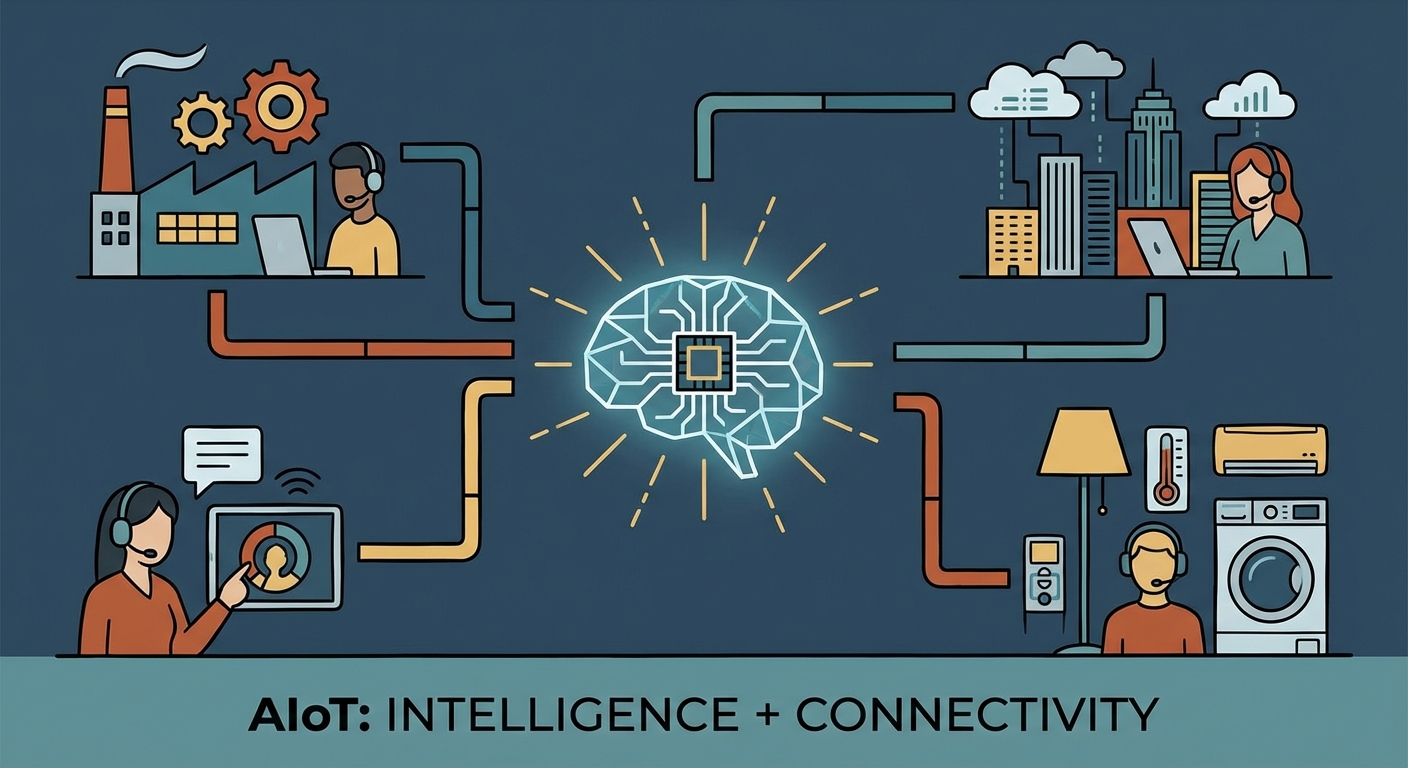
Privacy regulations have effectively killed the "collect everything into a giant data lake" strategy. We’re seeing a massive surge in Federated and Edge AutoML. The training happens locally on devices or in secure, siloed environments. The data never leaves its point of origin, but the model still gets smarter. For those looking to stay ahead of these shifts, this breakdown of 5 cutting-edge AutoML techniques offers a deep dive into the technical mechanics driving these changes.
Categorizing the Top AutoML Tools
Don't go shopping for a tool until you know your organization's maturity level.
Enterprise Platforms: These are your go-to if you care about auditability and scale. Tools like GCP's Vertex AI or AWS SageMaker offer the "guardrails" you need for GDPR, HIPAA, or the latest AI acts. They are designed to keep you out of legal hot water.
Open Source Frameworks: If you’re in research mode, or if you have an allergic reaction to vendor lock-in, you want Auto-Sklearn or H2O.ai. These are the gold standard for flexibility. They let you peek under the hood and tweak the algorithms to fit your specific, weird, non-standard use cases. For a broader view, you can explore the best machine learning tools of 2026 here to compare how these platforms stack up against your specific infrastructure requirements.
Implementing Human-in-the-Loop Workflows
True AutoML 3.0 isn't a "set it and forget it" situation. It’s a partnership. We’re moving toward Online Meta-Learning, where the system suggests optimizations, but a human expert provides the final nod. This is the only way to prevent model drift and keep the AI aligned with market conditions that change overnight.
When you bring humans into the loop, you need a way to track the feedback. You can’t just yell your suggestions at a screen. Leveraging an AI content strategy allows your team to maintain a living record of model iterations, which is essential for audit trails and keeping everyone on the same page.
Curated Learning Paths for 2026
If you’re new to this, the sheer amount of info is paralyzing. Don't try to learn every framework at once. It’s a trap. Master the boring stuff first: version control, data lineage, and model monitoring. Once those are second nature, start messing with the complex AutoML interfaces. For those seeking a structured approach, this comprehensive ML resource hub for self-study provides a syllabus that bridges the gap between basic Python proficiency and advanced automated model deployment.
Compliance Checklist for Decision-Makers
Before you sign a contract, put your chosen tool through the "2026 Compliance Test." Ask these three questions:
- Data Residency: Can I guarantee that my training data stays within specific geographic lines?
- Auditability: Is there a clear, immutable log of how the model arrived at its current state?
- Fairness Metrics: Does the platform have built-in bias detection that I can actually report to my compliance officer?
The Future of Automated ML
AutoML 3.0 isn't a destination; it's a fundamental change in how we work. We’re moving away from the era of "brute force" computation toward an era of thoughtful, compliant, and collaborative AI. As these tools get smarter, your value as a human increases, not decreases. Your job isn't to write boilerplate code anymore. Your job is to architect the systems that allow safe, explainable AI to thrive.
Start small. Prioritize explainability. Make sure your documentation is as robust as your code. The rest will follow.
Frequently Asked Questions
What is the difference between traditional ML and AutoML?
Traditional ML is a manual, iterative slog. Data scientists spend most of their time on feature engineering, picking algorithms, and tuning hyperparameters. AutoML automates the heavy lifting, running thousands of combinations to find the best model, which lets engineers focus on the high-level architecture instead.
Is AutoML replacing the need for Data Scientists in 2026?
No. The role is just changing. We’re moving from "model builder" to "system architect." As the technical barriers to entry drop, the demand for humans who can frame the right business problems, interpret the outputs, and ensure ethical compliance is higher than it’s ever been.
How does AutoML handle data privacy and regulatory compliance?
Modern platforms are leaning into Edge and Federated learning, which keeps sensitive data local to the source. Plus, the enterprise-grade tools now come with "Explainable AI" (XAI) modules. These provide the audit logs and fairness metrics you need to prove your model isn't acting like a loose cannon.
Which AutoML tool is best for beginners?
Start with low-code or no-code platforms with visual, drag-and-drop interfaces. They’re perfect for learning the flow of a project—from data ingestion to deployment—without getting tangled in complex syntax. Once you get the logic down, feel free to jump into the heavy, open-source libraries.
What is "Human-in-the-loop" AutoML and why does it matter?
It’s a workflow where human experts guide the optimization. It matters because machines, left to their own devices, can optimize for the wrong things or develop subtle biases. Expert oversight ensures the model stays aligned with reality, preventing drift and ensuring the AI evolves alongside your business.