Exploring Automated Machine Learning Resources

TL;DR
- Transition from manual model building to strategic AI architecture.
- Learn how Agentic AutoML automates complex data pipelines and feature engineering.
- Focus on MLOps, sustainability, and energy-efficient AI development.
- Understand the shift toward cyclical, human-in-the-loop machine learning workflows.
The era of hand-coding every feature transformation and manually twisting hyperparameter knobs is dead. Bury it. If you’re still spending your weekends scripting an XGBoost model from scratch, you’re doing it wrong. By 2026, a data scientist’s worth isn't tied to their ability to write boilerplate code. It’s measured by their ability to architect, govern, and audit the massive, complex AI pipelines that actually drive a business forward.
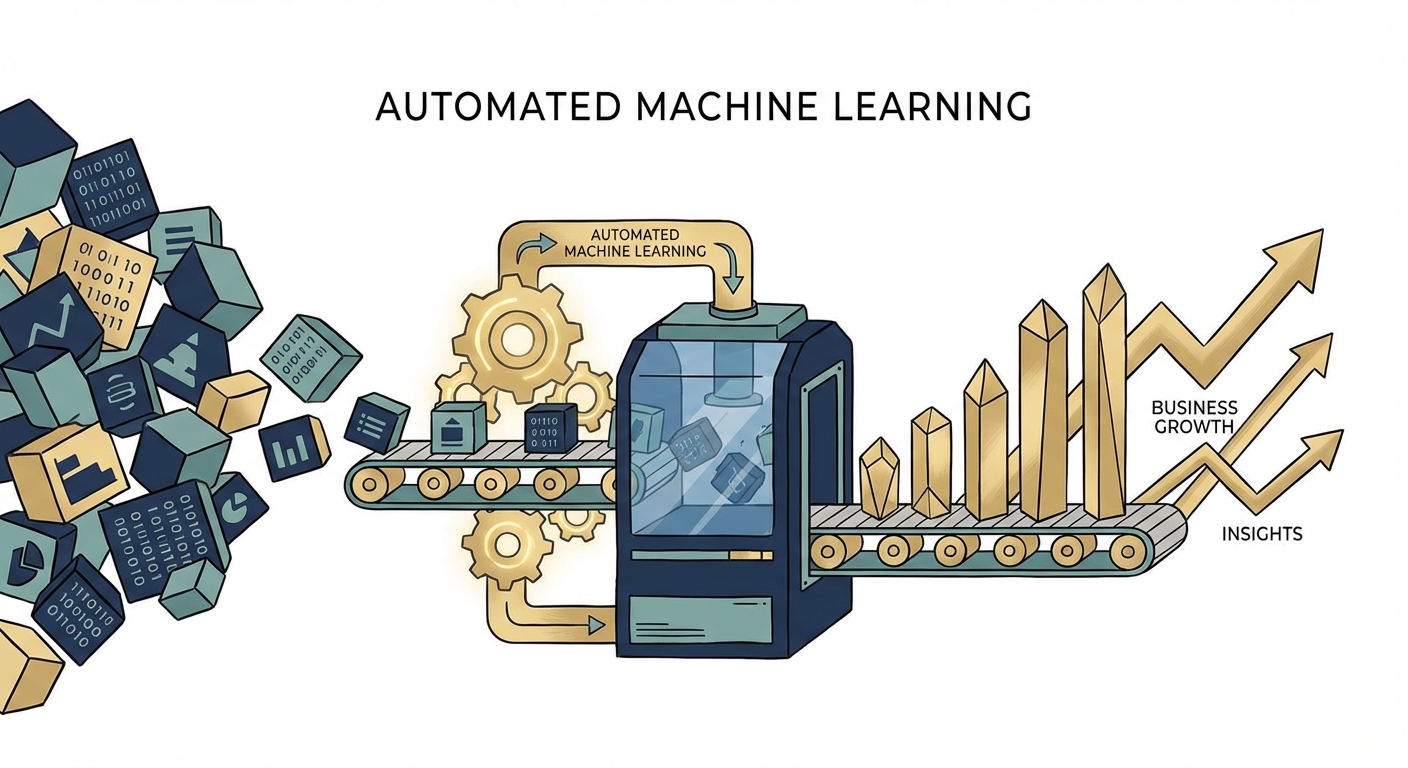
Automated Machine Learning (AutoML) has graduated. It’s no longer just a productivity hack for lazy coders; it’s the backbone of modern enterprise intelligence. We’re stepping into the age of "Agentic AutoML," where the focus shifts from the how of model building to the why of business impact.
Why AutoML Isn't Just About Tuning Anymore
Back in the early 2020s, AutoML was a narrow, boring utility. It was just a script designed to find an optimal learning rate or a decent tree depth. That definition is ancient history.
Today, we’re dealing with "Agentic AutoML." Think of these as autonomous agents acting as the lead operators of the entire ML lifecycle. They don't just pick a model; they look at your data schemas, scrub the junk, engineer the features, and validate the results without needing you to hold their hand every five minutes.
This evolution turns AutoML into a genuine strategic asset. By offloading the monotonous, repetitive grunt work, you finally have the bandwidth to focus on understanding MLOps basics. You need to ensure the code your agents spit out is actually maintainable, scalable, and secure. The transition is profound: we are officially moving from "model builders" to "model architects."
The 2026 Landscape: Autonomy, Efficiency, and Intelligence
What does the current landscape look like? It’s built on three pillars: autonomy, efficiency, and intelligence.
Agentic AutoML is the heavy hitter here. It handles the "dirty work" that used to eat up weeks of a data scientist's time. Instead of you spending three weeks manually cleaning missing values or encoding categorical variables, an agent scans your architecture and applies best-practice heuristics in a matter of seconds.
Then there’s the push for "Green AI." In 2026, sustainability is a core metric. Organizations aren't just asking, "How accurate is this model?" They’re asking, "What is the energy cost of training this thing?" This shift forces developers to prioritize energy-efficient architectures over brute-force computation. If you want to get into the weeds of these technical shifts, it’s worth reviewing 5 Cutting-edge AutoML Techniques to Watch in 2026. They highlight the industry's move toward modular, sustainable development.
The Lifecycle: How It Actually Works
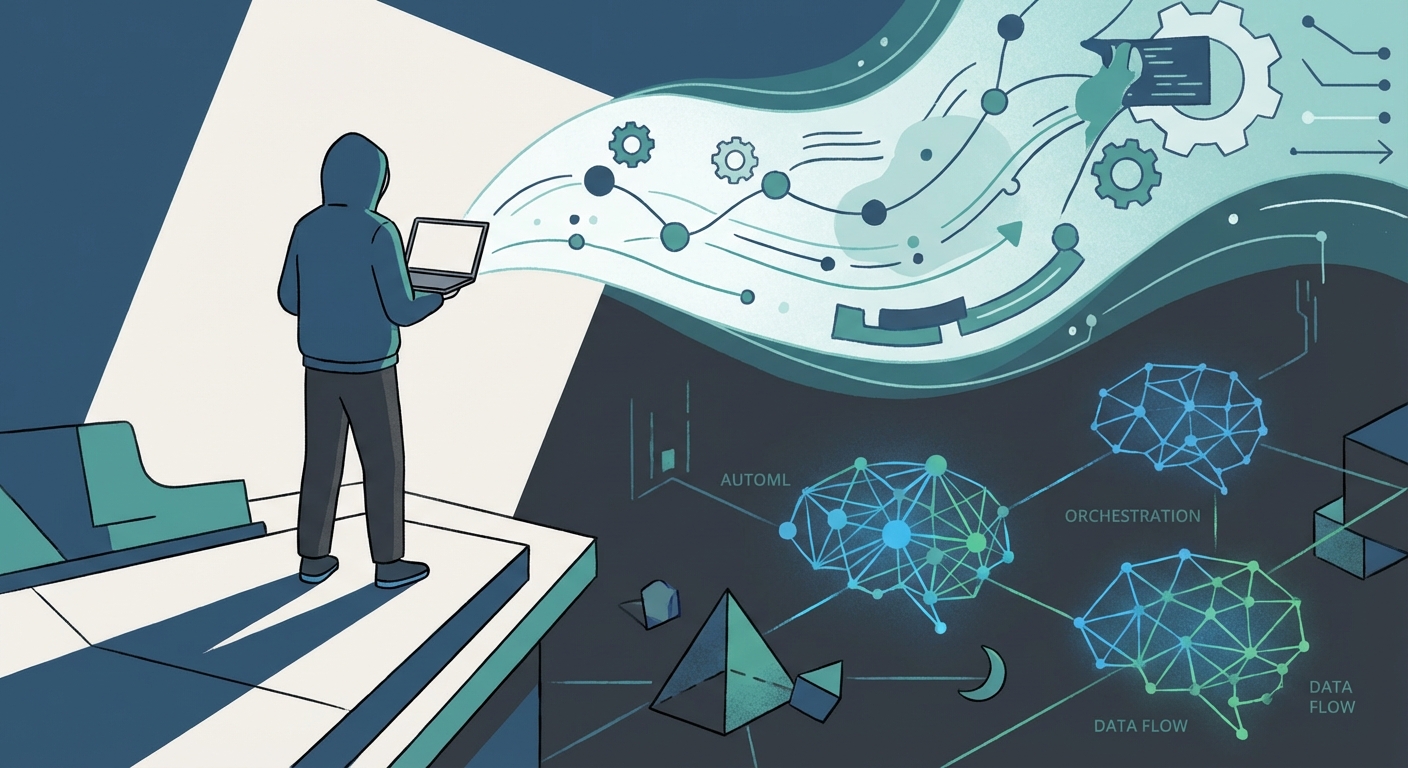
The days of linear, waterfall ML development are gone. Modern, agentic machine learning is cyclical. It’s a constant, rhythmic loop of automated generation followed by sharp, expert human oversight.
Picking Your Stack: Which Resources Matter?
Choosing the right tool depends entirely on your role. If you’re a seasoned data scientist, you don’t want a black box that hides everything. You want flexibility. Frameworks like PyCaret or H2O.ai remain staples because they let you maintain granular control while the tool does the heavy lifting of pipeline creation. They aren't replacements for your brain; they’re force multipliers.
For business analysts and cross-functional teams, the priority is different. You want no-code enterprise platforms that abstract away the complexity entirely. These platforms provide the guardrails necessary for non-technical stakeholders to build reliable models without accidentally creating a mountain of technical debt. If you’re currently evaluating your stack, this Best AutoML Frameworks Guide is the perfect starting point to weigh the pros and cons of open-source agility versus enterprise-grade managed services.
The "Decision Matrix": Balancing Speed and Control
When you sit down to pick a tool, you’re balancing two competing forces: Ease of Use vs. Customization.
Building a high-stakes system for healthcare diagnostics? You need maximum transparency. You need an open-source framework where you can audit every single line of logic. There’s no room for "black box" mystery when a patient's health is on the line.
Building a recommendation engine for a generic marketing campaign? The speed of a no-code enterprise solution will almost always pay dividends. You don't need bespoke, handcrafted code for a system where a 2% variance in accuracy is acceptable. Know the stakes before you pick the tool.
Why Human-in-the-Loop (HITL) is Non-Negotiable
As automation gets better, the human role becomes more critical, not less. An agent builds a model based on statistical patterns, not moral or ethical intuition. It doesn't care about bias, and it certainly doesn't care about the real-world fallout of a bad prediction.
In finance or healthcare, a "hallucination" or a biased decision isn't just an error—it’s a disaster. Human validation is the final, non-negotiable gate.
The shift from "Builder" to "Architect/Auditor" is the defining career pivot of this decade. You aren't just writing code; you’re overseeing an automated process and signing off on its outputs. This is where our AI consulting services often come into play. We help organizations bridge the gap between "we have an automated pipeline" and "we have a pipeline we can actually trust."
LLMs and the Auto-Fine-Tuning Revolution
Large Language Models have fundamentally shifted the goalposts. We aren't just automating tabular data classification anymore. We are seeing the rise of "Auto-Fine-Tuning" agents.
These agents ingest your enterprise documentation, figure out the optimal fine-tuning parameters, and deploy LLMs perfectly tailored to your internal tasks. It’s the end of the "one-size-fits-all" model. We’re moving toward hyper-specialized, efficient enterprise AI that actually knows your business. To keep up with the latest research in this space, keep an eye on the outcomes from the AutoML 2026 Conference Research.
The Biggest Threat: The Black Box Problem
The greatest risk in an automated world is the "Black Box." When an agent builds a model, it’s often incredibly difficult to trace why it made a specific decision. If you can't explain it, you can't govern it. If you can't govern it, you shouldn't be using it.
Explainable AI (XAI) is now a hard requirement. If your AutoML tool doesn't provide built-in explainability—like feature importance plots or SHAP value integration—it is not ready for production. Governance and compliance are the new frontiers. Automation is only as good as the audit trail it leaves behind.
Conclusion: The Rise of the ML Architect
The future of machine learning belongs to the architect. By embracing automated resources, we don't become obsolete; we become decisive. The goal of the 2026 practitioner is to leverage the raw speed of Agentic AutoML while maintaining the rigorous oversight that high-stakes applications demand.
Adopt a "Human-in-the-loop" mindset. Make your tools work for you, not the other way around. Audit your pipelines, demand explainability, and never, ever stop questioning the outputs of your agents.
Frequently Asked Questions
Does AutoML mean I don't need to learn data science anymore?
Absolutely not. AutoML shifts the focus from manual coding to architecture, oversight, and auditing. You still need to understand the underlying statistical principles to validate what the agents are producing; you just no longer need to spend your time writing boilerplate code.
What is the fundamental difference between AutoML and MLOps?
AutoML is primarily about the 'build' phase—using automation to create, tune, and select the best models. MLOps is the broader lifecycle, encompassing deployment, monitoring, versioning, and maintenance of those models in production.
Are free open-source AutoML tools reliable enough for production environments?
Many are, provided you have the internal engineering bandwidth to manage security, updates, and compatibility. Enterprise-managed platforms offer more out-of-the-box security and support, but they come with vendor lock-in. The choice depends on your organization's risk profile.
How do I ensure my AutoML-generated models aren't biased?
You must integrate Explainable AI (XAI) tools into your pipeline to visualize feature influence. Furthermore, human audit trails—where experts review model performance metrics and fairness benchmarks before deployment—are the only way to mitigate bias effectively.
How can my business start integrating Agentic AutoML?
Start with low-stakes internal pipelines, such as churn prediction or sentiment analysis for internal feedback. Once you have established a governance process for these, you can gradually move toward higher-stakes applications while keeping a human in the loop at every stage.