Guide to Building Intelligent Systems

TL;DR
- Move beyond simple chatbot wrappers to robust, autonomous Agentic Architecture.
- Build modular systems that separate reasoning cores from execution environments.
- Prioritize 'Change Fitness' to avoid technical debt as AI models evolve.
- Quantify performance using p99 latency and hallucination thresholds, not just hype.
If you’re still chaining together API calls to a language model and calling it a "system," stop. That’s the "AI wrapper" era—a fragile, brittle approach that prioritized speed over anything resembling actual substance. It’s 2026. Nobody is impressed by a chatbot that hallucinates your company’s revenue numbers anymore.
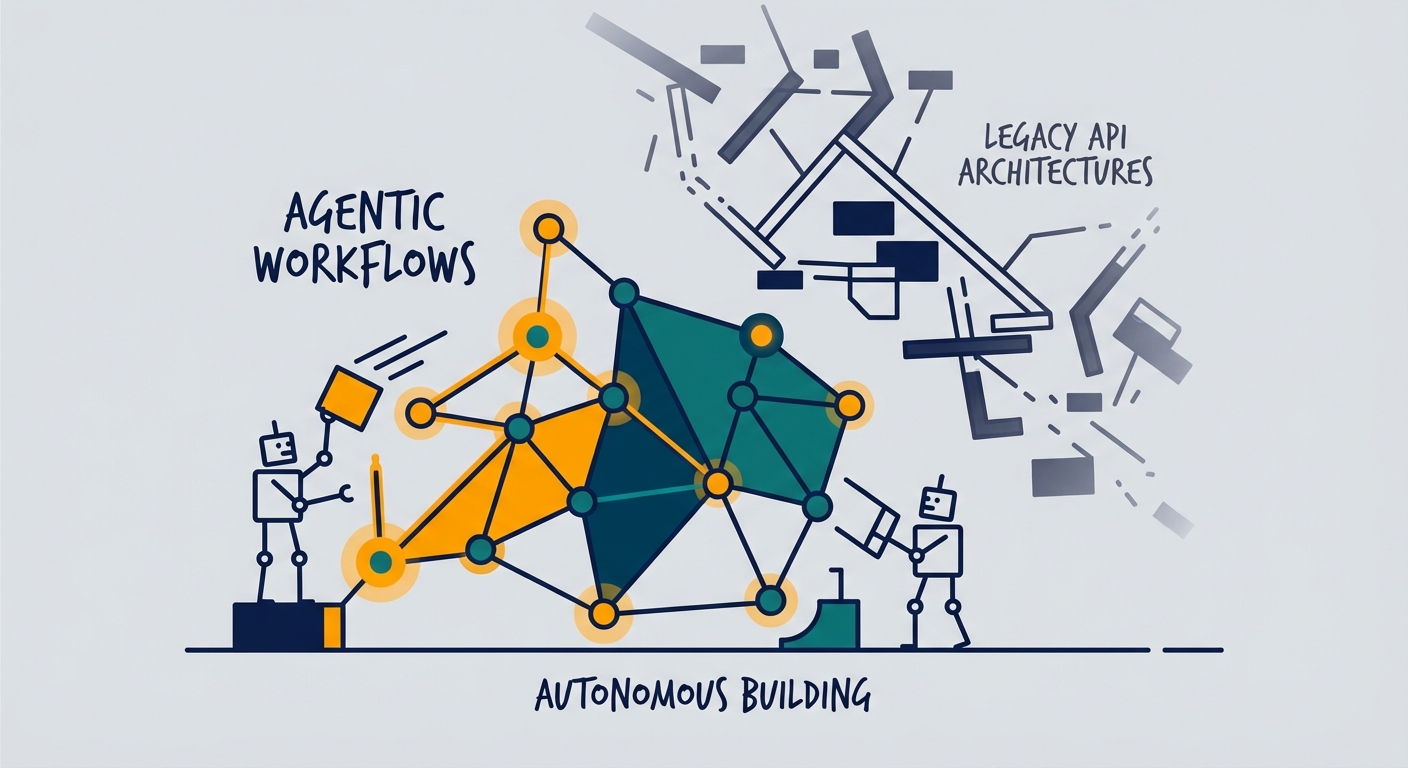
We’ve pivoted. We’re moving toward Agentic Architecture.
An intelligent system isn’t just a fancy prompt anymore. It’s a purposeful, autonomous engine. It reasons. It uses tools. It fixes its own mistakes. If your current stack relies on static prompting, you aren’t building a product; you’re building a liability. The jump from simple integration to agentic workflows is the difference between a toy novelty and a production-grade asset that hits your bottom line.
Beyond the Hype: Defining Agentic Architecture
The industry has finally outgrown the "AI-in-a-box" mentality. We need to distinguish between Predictive AI—the engines that crunch historical data—and Agentic AI, which acts as a living participant in your business logic.
An agentic system doesn't just predict; it plans. It decomposes high-level goals into sub-tasks, checks its own work, and reaches out to external tools to get the job done.
To build here, you need "Change Fitness." Models are moving at a breakneck pace. If you lock your architecture to a single provider or a rigid, hard-coded workflow, you’re just inviting technical debt to move into your house. Your system must be modular enough to swap out a reasoning engine while keeping your core logic intact. This is the bedrock of our AI Methodology—we treat model lifecycle management like real engineering. Because it is.
How to Scope a High-Performance Intelligent System
Before you commit a single line of code, define your success. In the early days, "it works" was the only metric. In 2026, you need to quantify p99 latency, hallucination thresholds, and the actual cognitive load your agent is offloading. If you can’t measure it, you don’t own it.
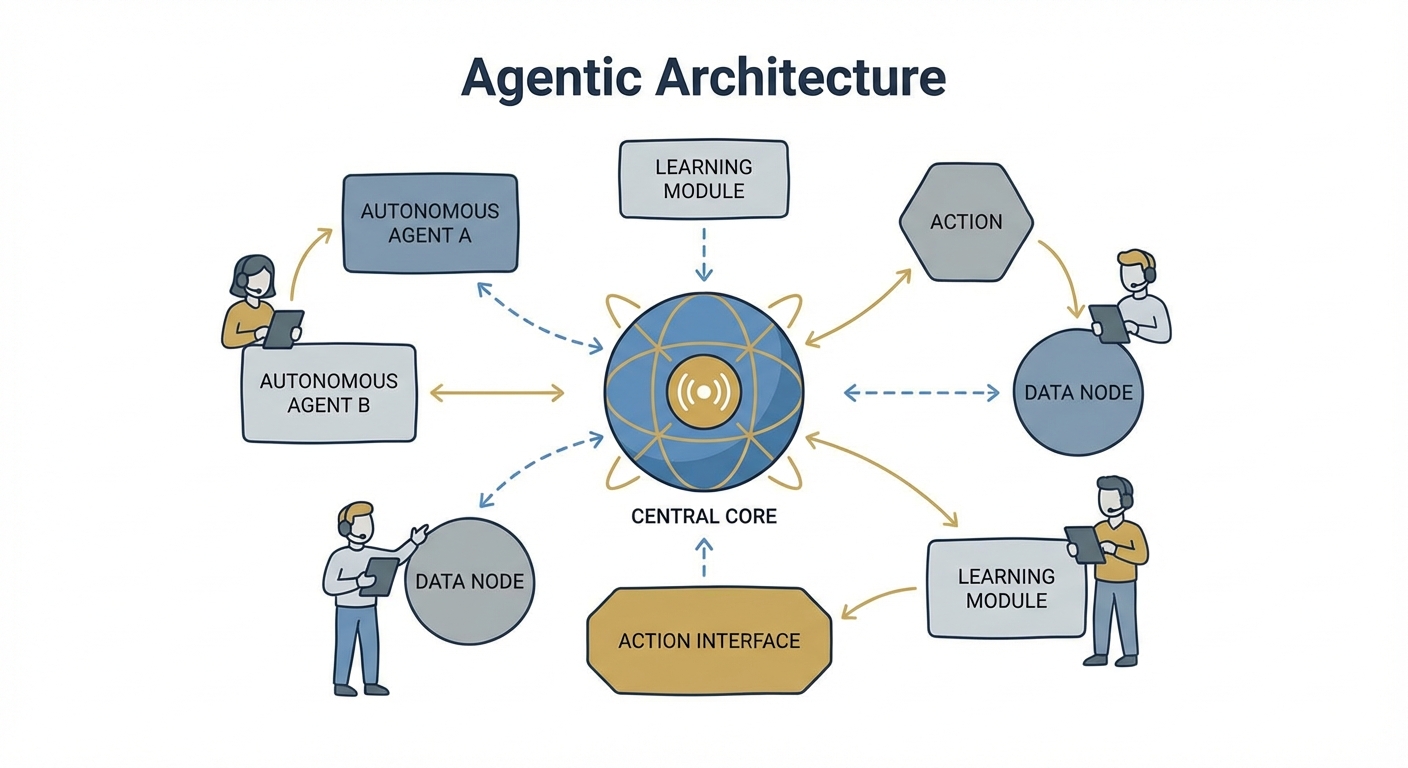
The biggest mistake I see? The "monolithic trap." Teams try to cram their entire application logic into one massive system flow. Don't do that. Build a modular architecture that separates the reasoning core from the execution environment.
The Core Architectural Layers
1. The Data Foundation: Killing Static RAG
Retrieval-Augmented Generation (RAG) is a dead end if your data is stale. Modern systems need a "Data Foundation" that treats context as a living asset. Stop using static batch-indexed documents. Move toward real-time streaming feature stores. Your system needs to know what happened five minutes ago, not five months ago.
2. The Model Layer: Right-Sizing the Brain
There’s a persistent myth that the biggest model is always the best one. Wrong. For high-frequency, low-latency tasks, a massive parameter model is just an expensive, slow bottleneck. Use a tiered approach. Use smaller, fine-tuned models for the repetitive grunt work and reserve the high-reasoning "frontier" models for the complex, multi-step orchestration.
3. The Inference & Action Layer: Interoperability
The biggest shift this year? The Model Context Protocol (MCP). By standardizing how agents talk to external data and tools, we’ve finally killed the need for custom-built, one-off integrations. MCP lets your agents interface with your databases, CRMs, and APIs using a common language. It keeps your system extensible. When new tools hit the market, you won't have to rebuild everything from scratch.
Why Agentic Design is the New Standard
We’ve graduated from "Prompt Engineering"—essentially the art of guessing the right words—to "Agentic Design Patterns." We aren't treating the LLM as a text generator anymore; we’re treating it as an autonomous process manager.
But autonomy brings risk. Governance isn't optional. You need audit logs, bias detection, and "circuit breakers" that kill the agent if it starts hallucinating or trying to access unauthorized tools. As noted in the Harvard Business Review: AI Trends 2026, organizational alignment on governance is the real divide between companies that scale automation and those that pull the plug because they’re terrified of the liabilities.
Future-Proofing Your Architecture
How do you build something that won't look like a relic in six months? You go AI-Native. Blend microservices with serverless LLM orchestration. Decouple your business logic from the model providers.
When you’re pitching your roadmap to stakeholders, don't just use buzzwords. Ground your choices in objective data. The Stanford HAI: AI Index Report 2026 gives you the benchmarking ammo you need to justify building modular, long-term infrastructure over cheap, tactical fixes. If you’re struggling to bridge the gap between "technical requirements" and "business value," our AI Development Services are built specifically to handle these future-proofed systems at scale.
Tactical Decision Matrix: RAG vs. Fine-Tuning vs. Agents
Tech leads are constantly hitting the "buy vs. build" or "tweak vs. agent" wall. This matrix should clear up the confusion based on task complexity and data volatility.
Building for the Long Game
The era of AI evangelism is over. The era of AI engineering has begun.
Building an intelligent system isn't about chasing the latest model release on Twitter. It’s about building a rigid, reliable scaffold. It’s about being able to swap in the best components as they arrive without the whole thing collapsing. It requires rigor, auditability, and a stubborn commitment to modular design.
If you want to move from experimental prototypes to a production-grade intelligent engine, stop worrying about the prompt. Focus on your data infrastructure. Focus on your agentic design patterns. Everything else is just noise.
Frequently Asked Questions
What is the difference between an AI model and an intelligent system?
An AI model is the "brain"—a statistical engine that predicts tokens. An intelligent system is the "body." It includes the memory, the tools, the orchestration logic, and the safety guardrails that let the model actually interact with the real world without breaking things.
How do you measure the ROI of an intelligent system in 2026?
ROI comes down to three things: the reduction of manual cognitive load, improvements in p99 latency for critical workflows, and a measurable decrease in error rates compared to human-only processes. If it doesn't improve efficiency at scale, it isn't ROI—it's an experiment.
What are the biggest risks when building autonomous AI agents?
The big ones are "hallucination loops," where an agent reinforces its own bad data; unintended tool usage, where an agent touches APIs it shouldn't; and governance gaps that leave you blind to how the agent is actually making decisions.
How do I ensure my AI system is "future-proof" against new model releases?
Use modular abstraction layers. Adopt protocols like the Model Context Protocol (MCP). If you decouple your core business logic from specific model providers, upgrading to the next generation of LLMs becomes a simple configuration update instead of a massive, expensive re-platforming project.