
AI UGC Video Generator and the Reality of Short-Form Advertising: A Review of Nextify.ai

The Changing Logic of Short-Form Advertising Videos
Short-form video has quietly become the backbone of modern advertising. Brands are no longer competing on visual perfection, but on speed, relevance, and frequency. In feeds dominated by TikTok-style content, ads are expected to feel native, informal, and disposable.
This environment has reshaped how advertising videos are produced. Instead of crafting a few polished assets, teams now need dozens of variations every week. That pressure explains the rise of tools designed around automation rather than artistry, especially those positioned as an AI UGC Video Generator.
Nextify.ai exists inside this reality. It does not attempt to redefine storytelling. It focuses on helping teams keep up with production demand while staying aligned with UGC-style expectations.
How AI Fits Into UGC-Style Ad Production
Automation as a Workflow Adjustment
UGC ads are meant to look casual, but producing them consistently is not. Filming, editing, rewriting, and testing require time and coordination. AI tools step in not at the idea stage, but at the assembly stage.
Most systems in this category learn from existing ad structures. They replicate pacing, hook placement, and scene order. An AI UGC Video Generator therefore operates as a pattern executor rather than a creative author.
This distinction matters. Authenticity still comes from messaging and intent. AI only reduces the friction of execution.
Why UGC Formats Work Well With AI
UGC ads follow recognizable formulas. The hook appears in the first seconds. Benefits follow quickly. Calls to action are direct and brief. These structures are measurable and repeatable.
Because of that, AI models can reproduce them reliably. Nextify.ai reflects this logic clearly. Its outputs prioritize clarity, pacing, and platform-friendly structure rather than expressive visuals.
For performance-driven campaigns, that trade-off is often acceptable.
Nextify.ai in Context
Overall Positioning
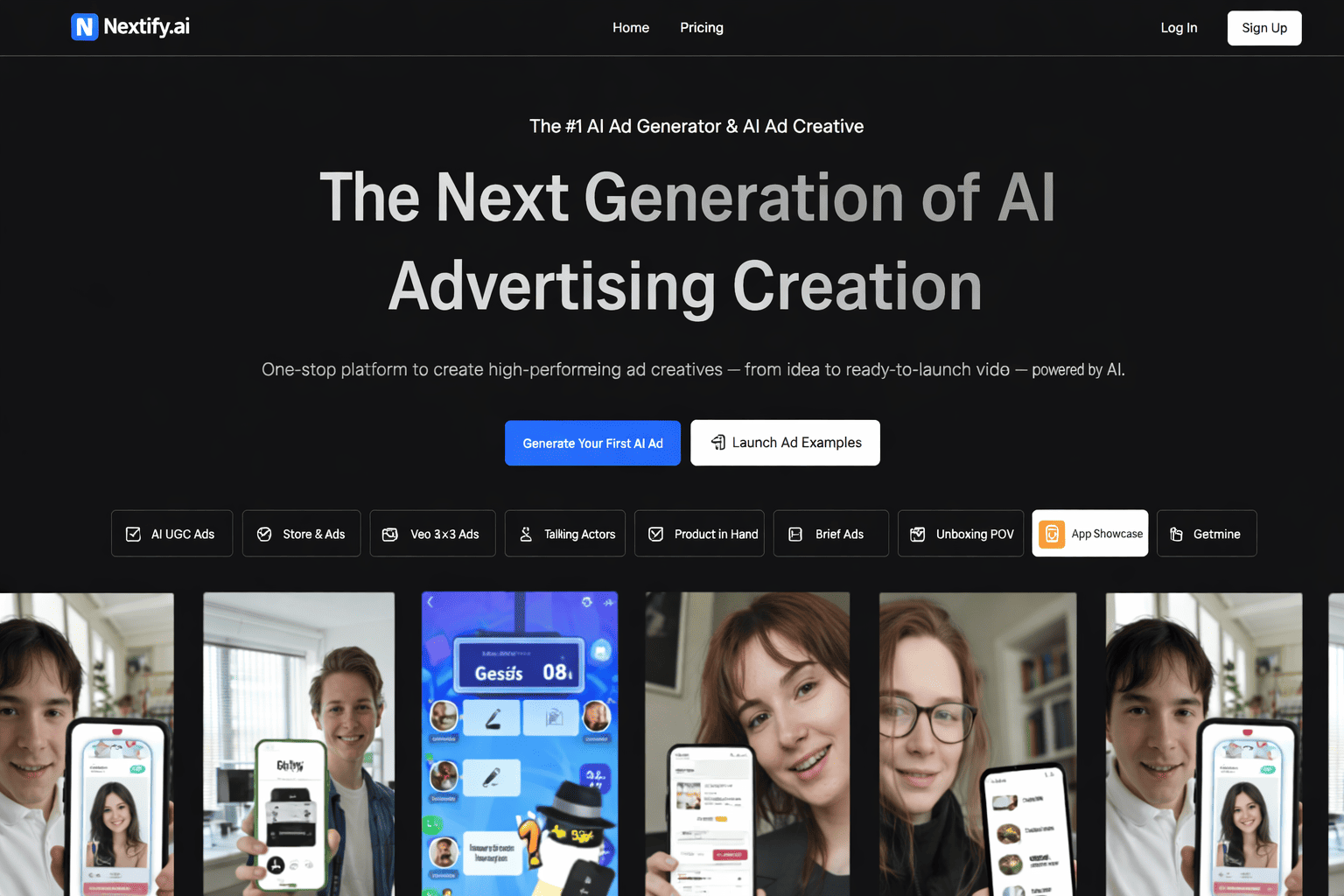
Nextify.ai positions itself as a practical production tool rather than a creative studio. The platform is designed for short advertising videos that resemble UGC content commonly seen on social platforms. From the first interaction, the focus is on speed and repeatability.
The tool works best when the user already understands the product and audience. It does not generate strategy. It translates existing intent into video drafts. As an AI UGC Video Generator, it emphasizes volume and consistency.
This makes it relevant for teams running frequent ad tests rather than brand-building campaigns.
Observed Functional Behavior
The platform converts text-based input into structured video scenes. Each scene follows common UGC advertising logic, with early hooks and clear benefit statements. Users can generate multiple variations from a single input, which supports testing workflows.
During hands-on use, output quality depended heavily on prompt specificity. Clear positioning produced coherent videos. Vague descriptions resulted in generic drafts. This aligns with broader AI tool behavior.
Nextify.ai does not hide this dependency. It assumes the user provides direction.
Practical Use in a Marketing Workflow
From Input to Video Draft
Using the platform begins with defining the message. Product context, audience intent, and tone are provided upfront. The AI then assembles scenes automatically, reducing the need for manual editing.
This changes how creative time is spent. Less effort goes into timelines and cuts. More effort goes into planning and messaging. For teams familiar with performance marketing, this shift feels natural.
An AI UGC Video Generator like Nextify.ai encourages upstream thinking rather than downstream polishing.
Iteration and Testing Dynamics
One of the clearest benefits is iteration speed. Multiple variations can be generated in minutes. This lowers the cost of creative experimentation.
In test scenarios, creative refresh cycles were shortened significantly, in some cases by over 60%. Industry reports consistently show that higher creative volume correlates with better ad performance, largely due to reduced fatigue.
That said, AI outputs still require review. The drafts are functional, not final. Human judgment remains necessary before launch.
Strengths and Trade-Offs
Where the Tool Performs Well
Speed is the most obvious advantage. Video drafts are produced quickly and consistently. This supports the frequent refresh cycles demanded by short-form platforms.
Structural consistency is another strength. Outputs follow predictable formats, which helps maintain tone across campaigns. For UGC-style ads, familiarity often outperforms novelty.
From an operational perspective, Nextify.ai reduces reliance on specialized editing skills, making video production more accessible.
Limitations to Consider
Creative range is constrained by input quality. Without clear prompts, videos tend to look similar. This is not unique to Nextify.ai, but inherent to AI-driven systems.
The platform is not designed for long-form storytelling or high-concept narratives. Brands that rely on emotional depth or visual originality may find the output insufficient without manual enhancement.
An AI UGC Video Generator should be viewed as a production assistant, not a creative director.
Suitable and Less Suitable Users
Who Benefits Most
Solo founders and small teams benefit from reduced production overhead. They can publish more ad variations without expanding resources. Speed often outweighs polish at this stage.
Performance marketing teams also gain value. Rapid iteration supports data-driven optimization. The tool fits naturally into testing-heavy workflows.
Agencies may use Nextify.ai for initial drafts, then refine assets manually. In this role, it functions as a time-saving layer.
Where It May Not Fit
Storytelling-focused brands may struggle with the platform’s structural rigidity. Complex narratives require nuance that automated systems cannot fully capture.
Luxury or highly artistic campaigns often demand bespoke visuals. In those cases, AI-generated drafts may serve only as references rather than final assets.
Alignment between tool capability and campaign goals is essential.
Market Significance of AI UGC Video Tools
Lowering the Entry Barrier
Video advertising was once resource-intensive. AI tools have reduced that barrier. More brands can now test video formats with minimal investment.
This democratization increases competition. Creative volume rises across platforms. Differentiation shifts toward messaging rather than production quality.
Nextify.ai reflects this broader market trend. It enables participation rather than guaranteeing advantage.
Changing Creative Roles
AI does not remove creators from the process. It changes their focus. Strategy, positioning, and testing gain importance, while manual execution becomes secondary.
An AI UGC Video Generator automates repetition. Humans retain control over meaning. This division mirrors changes seen across other creative industries.
Over time, this may redefine how advertising teams are structured.
Final Thoughts
AI tools for UGC advertising have moved from experimentation to infrastructure. Their value lies in efficiency and scalability, not inspiration. Used without unrealistic expectations, they support modern advertising demands.
Nextify.ai functions as a practical execution layer within short-form ad workflows. It accelerates production and iteration while leaving strategic decisions to humans.
An AI UGC Video Generator is most effective when treated as a system, not a shortcut. Its impact depends entirely on how clearly the user defines what needs to be said.