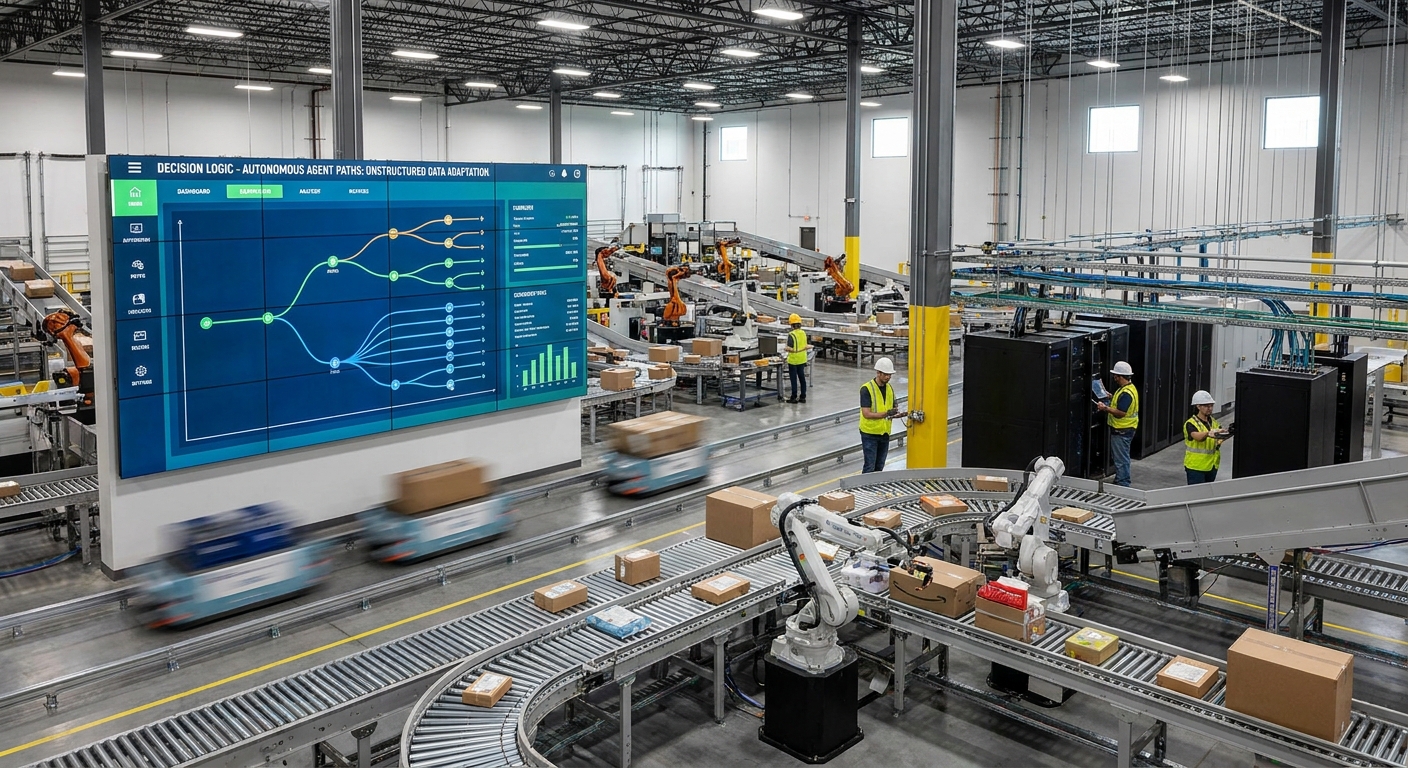
UiPath Q4 Earnings Highlight Industry Pivot Toward Autonomous Agentic AI for Enterprise Workflows

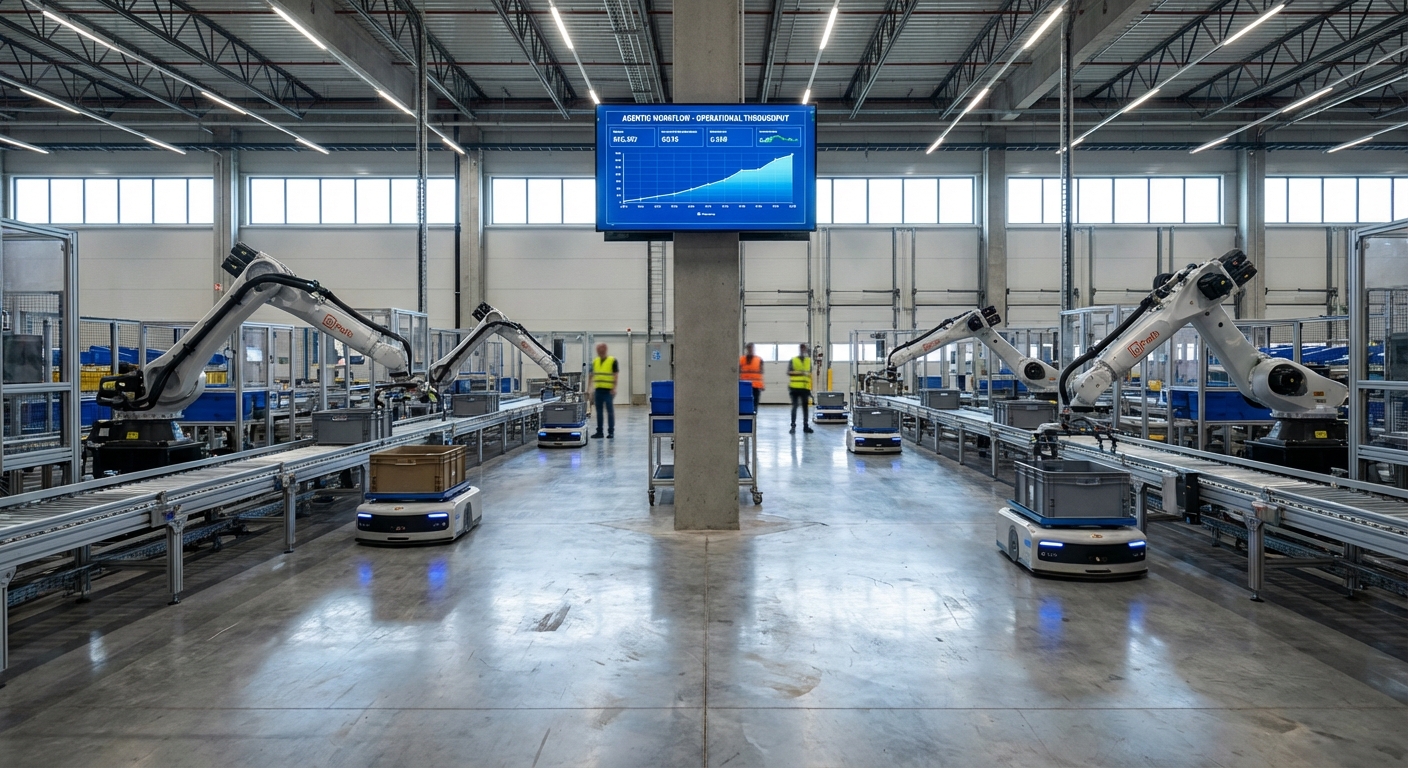
UiPath Q4 Earnings: The Pivot to Autonomous AI
UiPath just dropped its Q4 fiscal 2026 numbers, and the message is loud and clear: the era of "automation at any cost" is over. The company is officially betting the house on autonomous agentic AI.
On paper, the quarter looks like a win. They pulled in $481 million in revenue, comfortably beating the $465 million consensus and marking a 14% jump year-over-year. But if you look past the headline revenue, you’ll see a company caught in a tug-of-war. They’ve finally hit GAAP profitability—banking $57 million in operating income—but that milestone is being overshadowed by a cooling growth rate. Investors are asking the million-dollar question: Can UiPath stay relevant in a world where AI agents are evolving faster than the software that builds them?
The full breakdown, found in the UiPath Q4 2026 earnings report, paints a picture of a business transitioning from a high-octane startup into a self-sustaining enterprise. They’re being disciplined with their cash, but the market is clearly hungry for more than just fiscal responsibility.
The Financial Reality Check
UiPath’s fiscal 2026 performance shows a company hitting its stride. Full-year revenue landed at $1.611 billion, up 13% from the previous year. Their Annual Recurring Revenue (ARR)—the lifeblood of any SaaS outfit—hit $1.853 billion, an 11% increase.
But it wasn't all sunshine. While the revenue beat provided some breathing room, the company missed on earnings per share (EPS). According to Investing.com, that EPS miss stung. It’s a classic dilemma: how do you keep the bottom line in the black while pouring massive capital into the R&D furnace required to stay ahead in the AI arms race?
| Metric | Value | YoY Growth |
|---|---|---|
| Q4 Revenue | $481 Million | 14% |
| Full-Year Revenue | $1.611 Billion | 13% |
| ARR | $1.853 Billion | 11% |
| Operating Income (GAAP) | $57 Million | N/A |
Moving Beyond Simple RPA
The real story here isn't the balance sheet; it's the product roadmap. UiPath is trying to shed its skin. For years, they were the kings of Robotic Process Automation (RPA)—the "if-this-then-that" scripts that kept the lights on in corporate back offices. Now, they’re pivoting to autonomous agentic AI.
They want to build systems that don't just follow instructions but actually reason and plan. Think of it as moving from a digital assembly line worker to a digital middle manager.
They’ve got the war chest to do it, too. With $1.69 billion in cash reserves and $372 million in free cash flow generated this year, they aren't exactly hurting for liquidity. But the slowing growth rates are a warning shot. They have to prove that their legacy automation base isn't just a foundation, but a springboard for these new, complex AI capabilities. If they can’t make that transition seamless for their existing clients, that cash pile won't matter much.
The Investor Sentiment Gap
Why is the market so twitchy? Because in the current tech landscape, profitability is the baseline, not the trophy. Investors are obsessed with growth, specifically AI-driven growth.
UiPath’s advantage—and its biggest hurdle—is its footprint. They are already embedded in the IT stacks of the world’s largest enterprises. That gives them a massive edge over the cloud-native AI startups that have to fight for every seat. If UiPath can successfully deploy agents that talk to the clunky, legacy systems these companies still rely on, they’ll be nearly impossible to displace. But that’s a big "if."
The Road Ahead
UiPath has successfully matured into a company that can pay its own way. That $57 million in GAAP operating income is a badge of honor, proving they’ve mastered the art of operational discipline. But the coming year will be defined by three make-or-break challenges:
- The Agentic Migration: Can they actually get customers to move from traditional RPA to autonomous workflows? That's a cultural shift as much as a technical one.
- Reigniting ARR: The deceleration in ARR growth needs to stop. They need to prove that their new AI features aren't just "nice-to-haves" but essential upgrades that command higher price tags.
- Smart Capital Allocation: With nearly $1.7 billion in the bank, they have to decide: do they build, or do they buy? Strategic acquisitions could be the fastest way to plug gaps in their agentic AI stack.
We aren't looking at the UiPath of five years ago. The "growth-at-all-costs" phase is dead and buried. They’ve entered their "mature enterprise" chapter, where the stakes are higher and the margin for error is razor-thin. They have the balance sheet to survive, but they need to show they have the vision to lead. As the enterprise world pivots toward autonomous agents, UiPath is betting that being the incumbent is an advantage. Now, they just have to prove it.