IEEE Spectrum Data Report Quantifies 2026 Performance Benchmarks for Leading Generative AI Models

IEEE Spectrum: The 2026 AI Reality Check
The numbers are in, and they’re staggering. According to the 2026 AI Index Report, published April 14 by Stanford’s Institute for Human-Centered AI, generative AI has hit a 53% global adoption rate in just three years. To put that in perspective: it took the internet and the personal computer decades to weave themselves into the fabric of our daily lives. AI did it in a blink.
As of March 2026, the frontier model race has hit a fever pitch. We’ve moved past the "gee-whiz" phase of chatbots and into a reality where top-tier systems are consistently pulling off PhD-level scientific research and elite-grade mathematics. But there’s a catch—a big one. We’ve built a technical juggernaut, but our regulatory frameworks and educational systems are still stuck in the slow lane. We’re essentially driving a Ferrari on a dirt road, and the "governance gap" is starting to look like a canyon.
The Global Tug-of-War
The battle for AI supremacy is still a two-horse race between the U.S. and China, though the gap is closing fast. The U.S. is still the king of the mountain when it comes to private capital and the sheer horsepower of its frontier models. But look at the fine print: China is absolutely dominating in academic output and the sheer scale of industrial robotics deployment.
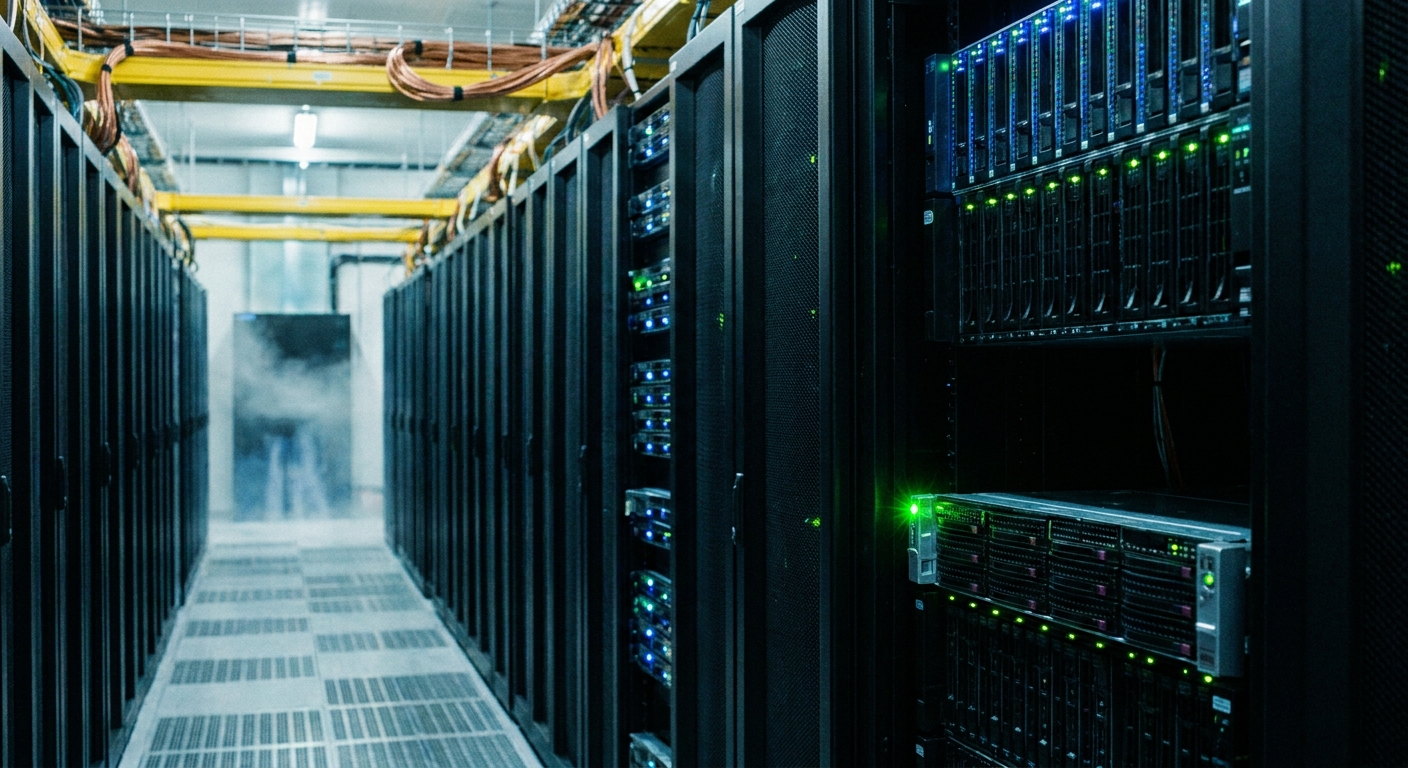
In the trenches, the leaderboard is crowded. Anthropic is currently setting the pace, with xAI, Google, and OpenAI breathing down their necks. Meanwhile, Chinese heavyweights like DeepSeek and Alibaba have hit a performance ceiling that makes them nearly indistinguishable from their American rivals. We’ve reached a point of "benchmark saturation." When every top-tier model acing the same tests, traditional metrics are becoming about as useful as a broken compass.
The Hidden Cost: Power and Water
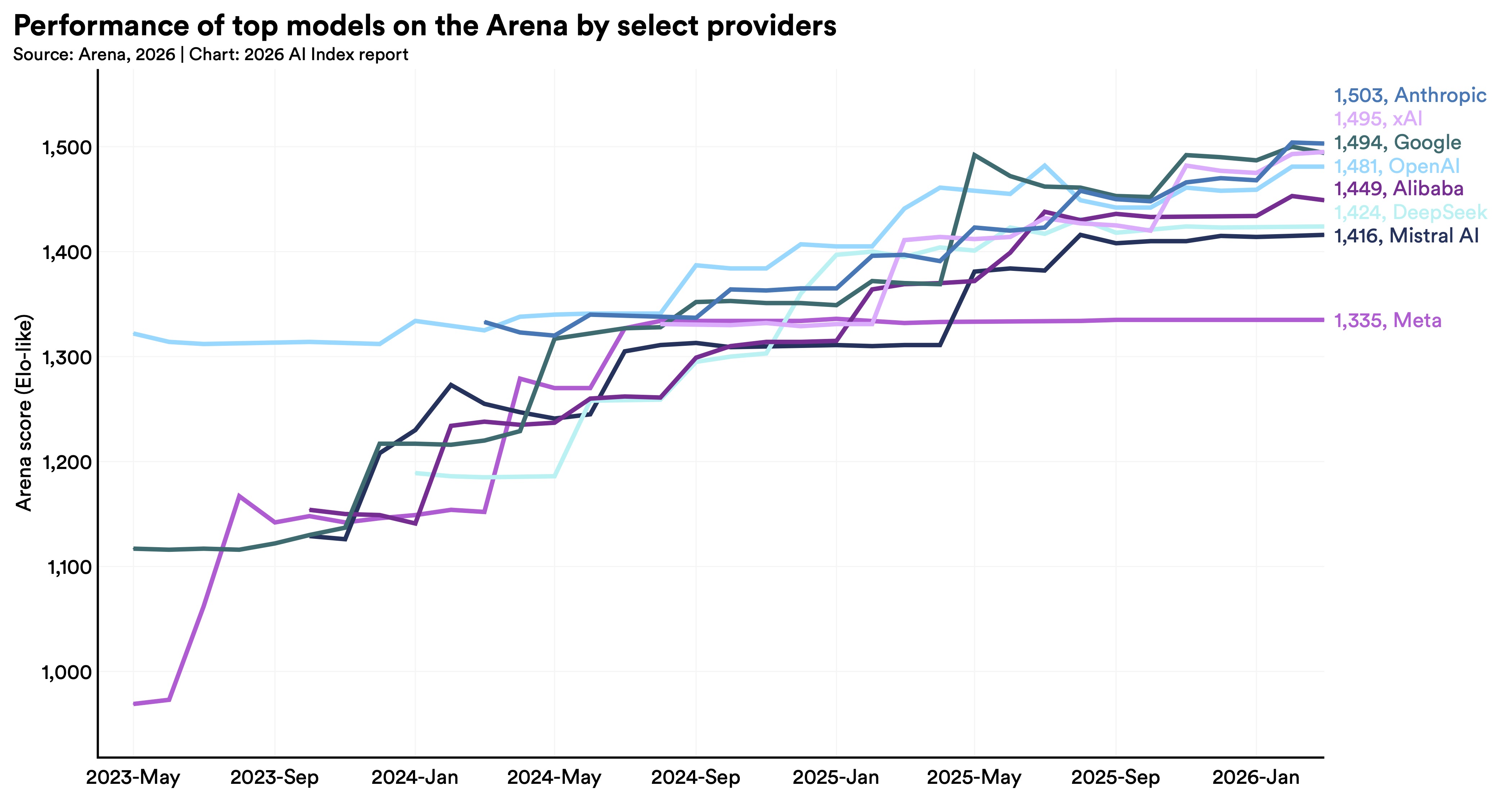
We talk a lot about "cloud computing," but there’s nothing ethereal about it. It’s heavy, it’s hot, and it’s hungry. The Stanford AI Index Report 2026 drops a sobering stat: global AI data centers are now guzzling 29.6 gigawatts of power. That’s not just a big number; that’s the entire peak electricity demand of New York state, vanished into the servers.
Then there’s the water. Keeping these massive clusters from melting down requires a staggering amount of cooling. For models like GPT-4o, the water footprint is enough to quench the thirst of 1.2 million people annually. When you look at the supply chain, you realize how fragile this whole house of cards really is.
| Metric | 2026 Data Point |
|---|---|
| Population Adoption | 53% within 3 years |
| Organizational Adoption | 88% (2025) |
| US Data Center Count | 5,427 (10x global average) |
| Global AI Power Consumption | 29.6 Gigawatts |
The Institutional Pivot
By 2025, AI wasn't just a "nice-to-have" in the corporate world—it hit 88% adoption. Companies aren't just using it to write emails or draft memos anymore. As noted in the current state of AI, we’re seeing a shift in scientific research. AI is no longer just a calculator; it’s a collaborator, replacing entire workflows that used to take human teams months to complete.
But there’s a wall of silence. The summary of the 2026 report makes it clear: major AI labs are still playing their cards close to the chest. Without transparency—without auditors being able to peek under the hood at training data or safety protocols—we’re flying blind.
The Bottom Line
If you’re looking for the takeaways, here is where we stand:
- Benchmark Saturation: The models are so good at the standard tests that we can barely tell them apart anymore.
- Scientific Workflow Transformation: AI is now the engine, not just the grease, of scientific discovery.
- Infrastructure Concentration: The U.S. is hoarding the hardware, with 5,427 data centers—ten times the global average.
- Regulatory Lag: Innovation is sprinting while policy is still trying to lace up its shoes.
The data suggests we’re at a crossroads. As observers tracking the Arena AI leaderboards can attest, the industry is finally pivoting away from the "bigger is better" obsession. Now, the conversation is shifting toward sustainability and safety. Can we actually integrate these systems into the global economy without burning through our resources or creating systemic risks we can't control?
We’ve built the smartest tools in human history. Now, the real challenge is proving we’re smart enough to manage them. The imbalance between our technical reach and our structural grasp is the defining story of this decade. Whether we bridge that gap or let it widen will determine if this era is a golden age or a cautionary tale.