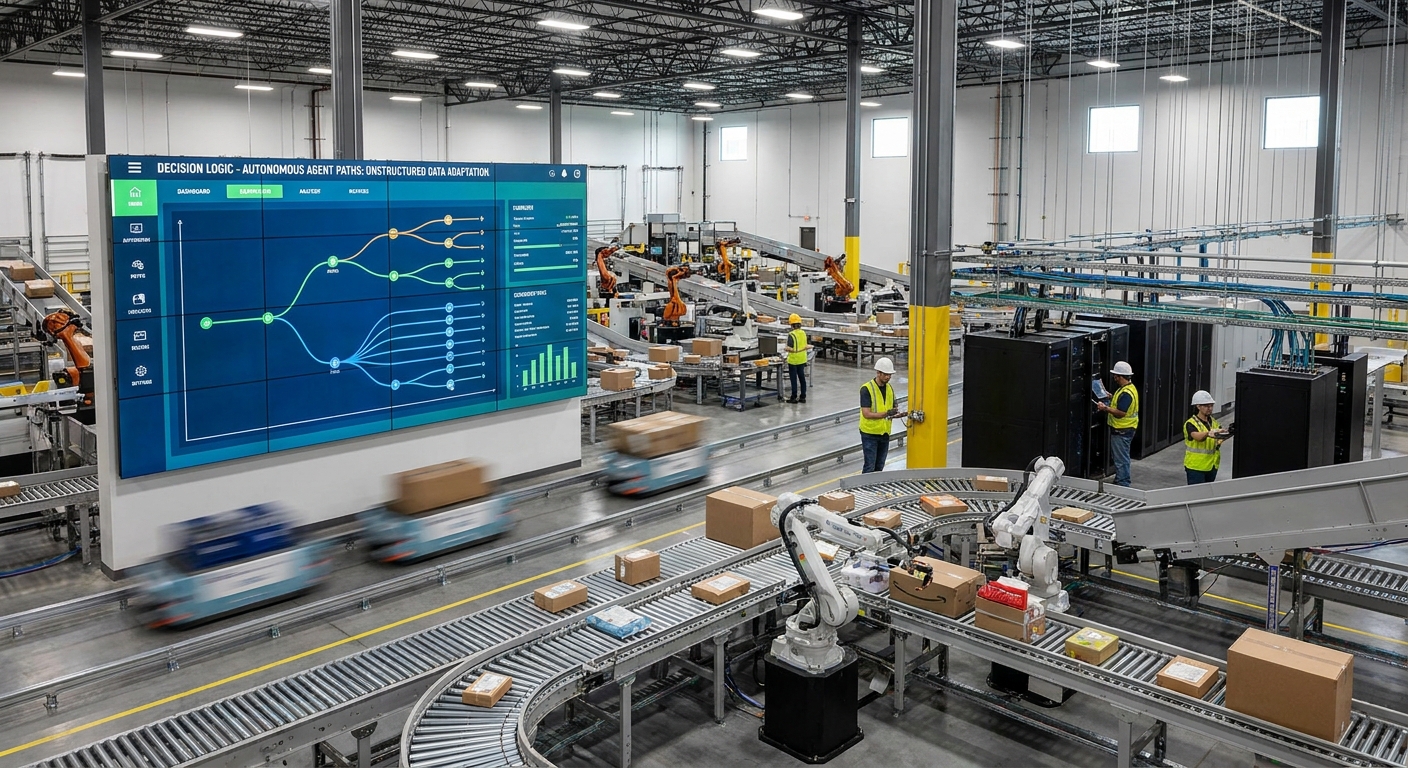
2026 Industry Performance Benchmarks Reveal New Rankings for Leading Generative AI Model Reliability and Accuracy

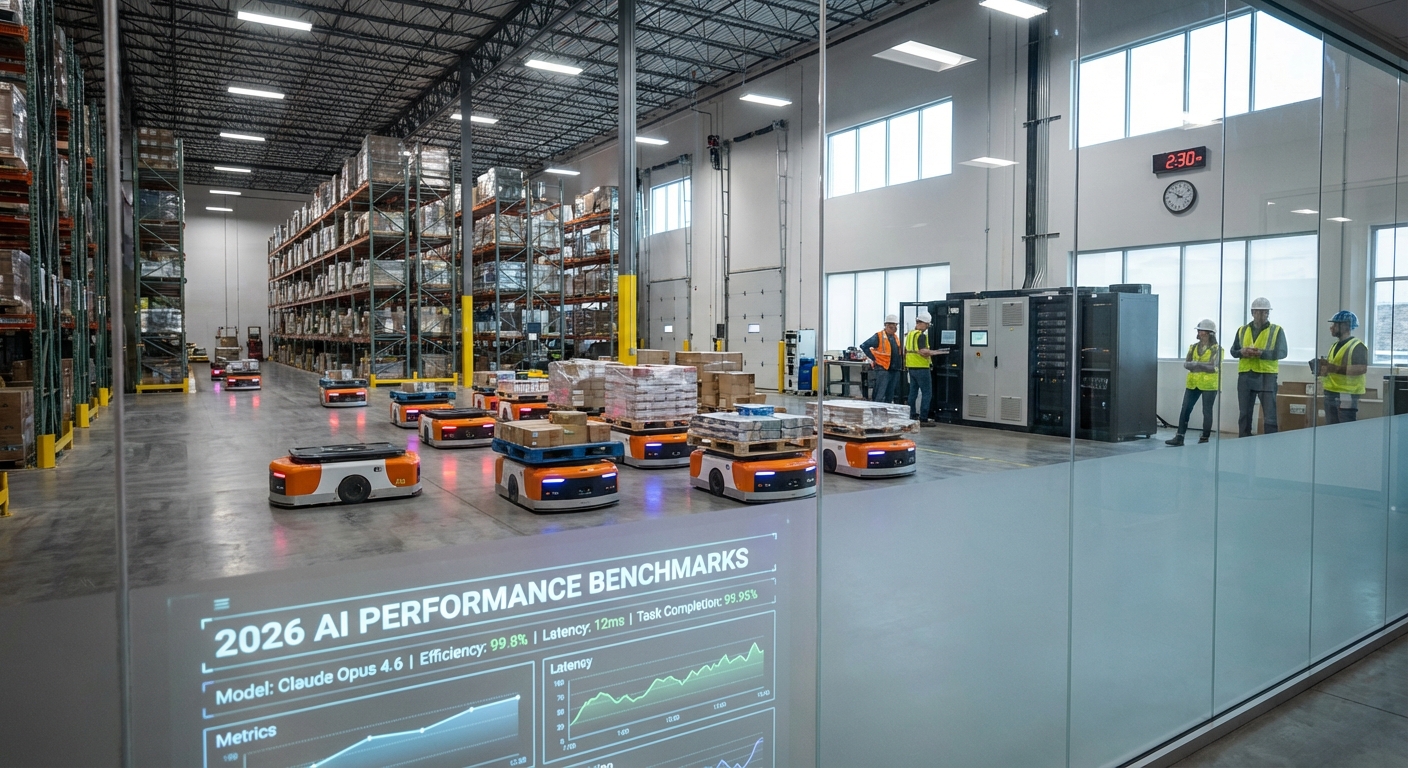
2026 Industry Performance Benchmarks: The New Reality of AI Reliability and Accuracy
The AI gold rush is officially over. If 2024 and 2025 were about the "wow" factor—watching chatbots hallucinate poetry or generate weirdly specific images—2026 is about the boring, necessary work of utility. We aren't looking for a single, all-knowing digital god anymore. Instead, we’ve entered an era of hyper-specialization.
The latest data from the Onyx AI LLM Leaderboard makes one thing clear: the gap between the "best" models has shrunk to almost nothing. For businesses, this is a massive win. It means the days of pinning your entire infrastructure on one provider are gone. Smart companies are now playing the field, mixing and matching models based on whether they need heavy-duty reasoning, clean code, or lightning-fast math.
According to Mixpanel’s 2026 benchmarks, AI has finally hit its "operational maturity" phase. Interestingly, the total volume of AI interactions has actually dipped. Don't let that fool you, though—it’s not because people are using AI less. It’s because they’re getting smarter. We’re achieving complex, multi-step outcomes with fewer prompts. The novelty has worn off, and AI has quietly become the plumbing of the modern enterprise.
The Heavyweights: Who’s Actually Winning?
The leaderboard is no longer a US-centric playground. We’re seeing a fierce, global dogfight between established labs and international challengers. Claude Opus 4.6 is currently the king of the hill for reasoning-heavy tasks, while models like Kimi K2.5 are proving that you don’t need to be the biggest model in the room to be the best at writing code.
| Model | AIME 2025 | MMLU | HumanEval | Key Strength |
|---|---|---|---|---|
| Claude Opus 4.6 | 100.0 | 92.4 | 98.5 | Reasoning |
| Gemini 3.1 Pro | 100.0 | 91.8 | 97.2 | 1M Context Window |
| Kimi K2.5 | 98.5 | 91.0 | 99.0 | Coding |
| DeepSeek V3.2 | 97.2 | 90.5 | 96.8 | Cost Efficiency |
Beyond the big names, DeepSeek R1 and V3.2 have completely disrupted the pricing model. When you can get near-top-tier performance for a fraction of the cost—input costs sitting at $0.28 per 1M tokens—the "proprietary-only" argument starts to fall apart. For organizations watching their bottom line, these models aren't just an alternative; they’re the new standard.

Geography and the Cooling Trend
Where you are in the world changes how you use AI. North America is still the volume leader, with roughly 2 billion devices plugged into AI-driven workflows. But look toward the Asia-Pacific (APAC) region, and you’ll see the real fire. They’ve logged a 45% year-over-year jump in usage, fueled by a mobile-first philosophy and a rapid embrace of multimodal experiences.
Then there’s EMEA. The region saw a 14% drop in new AI adoption this year. Is the market saturated? Maybe. But it’s more likely that the weight of new governance and compliance frameworks is finally being felt. Companies there aren't just hitting "go" on every new tool that drops anymore; they’re checking the legal boxes first. It’s a cooling trend, but it’s a healthy one.
How to Choose Your Stack
If you’re building software, the "best" model is a moving target. You’re no longer asking, "What’s the smartest model?" You’re asking, "What’s the most efficient model for this specific slice of my stack?"
For developers, the best LLM for coding is usually the one that balances a high HumanEval score with low latency. If you’re self-hosting, the Self-Hosted LLM Leaderboard is your best friend for keeping data inside your own walls. Meanwhile, the Open LLM Leaderboard remains the go-to for keeping tabs on the open-source ecosystem.
The Takeaways
We’ve moved past the hype. Here’s the reality of the 2026 landscape:
- Efficiency is the new growth: We’re doing more with less. The "spray and pray" prompt method is dead.
- Specialization wins: General-purpose models are great, but the winners are the ones picking the right tool for the specific job—whether that’s scientific research or automating a backend service.
- Global parity is here: The idea that all the innovation happens in one zip code is officially outdated. The performance gap between US labs and their counterparts in China and France has vanished.
- Cost sensitivity is mandatory: When you’re running billions of events, price matters. High-performance, low-cost models are forcing the industry to rethink its pricing tiers.
With over 290 billion AI events analyzed across 2.6 billion devices, the data is undeniable. AI isn't an experiment anymore. It’s infrastructure. It’s the electricity of the digital age—you don't notice it until it's gone, and you certainly don't treat it like a novelty. It’s just how we get work done now.