Why Frontline Workers Need Specialized Social Media Management Tools

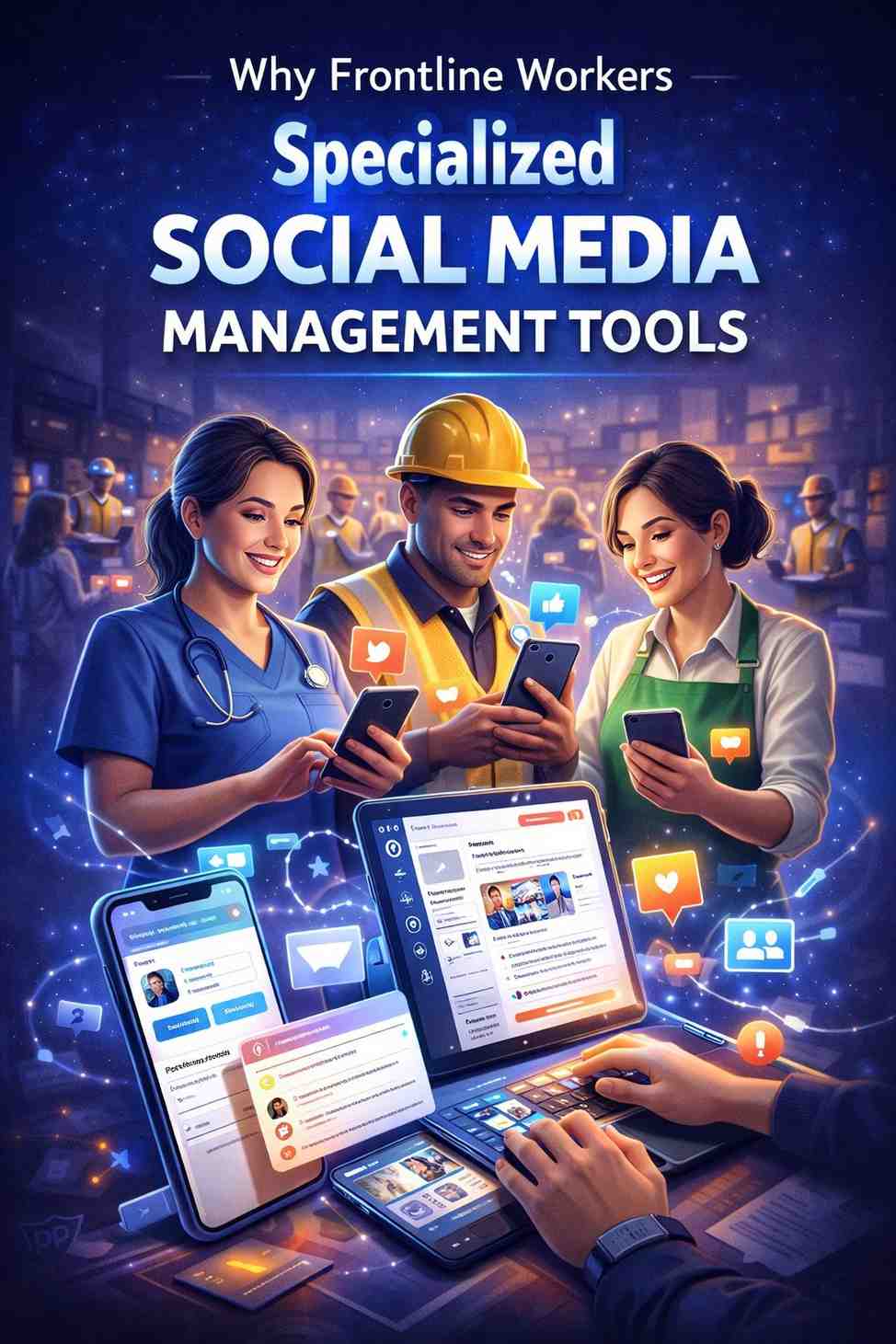
Most organizations treat social media as a desk job. Marketing teams schedule posts from laptops, review analytics on dual monitors, and collaborate through project management dashboards built for office environments.
But the employees closest to the action, the ones interacting with customers, responding to emergencies, and delivering services in the field, rarely have access to these tools. Frontline workers generate some of the most authentic, compelling content an organization can share. Yet they're often locked out of the very platforms that could amplify their stories.
This article explores why generic social media platforms fail frontline teams, what features actually matter for distributed workforces, and how AI is closing the gap between field operations and digital marketing.
The Frontline Social Media Problem Nobody Talks About
Organizations with large distributed teams face a unique tension. They want authentic content from the field, but they can't hand over social media credentials to hundreds of employees. The result is a communication bottleneck that frustrates everyone involved.
When "Post It Yourself" Goes Wrong
Picture a hospital network encouraging nurses to share patient success stories. Without proper tools, a well-meaning employee might post a photo that violates patient privacy regulations. Or a retail associate might respond to a negative comment using language that contradicts the brand's tone.
These aren't hypothetical scenarios. They happen regularly when organizations push social media responsibilities to frontline workers without providing the right infrastructure. The consequences range from embarrassing brand inconsistencies to serious compliance violations.
Why Generic Scheduling Tools Miss the Mark
Platforms like Hootsuite and Buffer were designed for marketing professionals sitting at desks. They assume users have consistent internet access, familiarity with content calendars, and time to craft polished posts during business hours.
Frontline workers operate under completely different conditions. A paramedic can't pause during a shift to log into a desktop dashboard. A construction supervisor doesn't have time to learn a complex content calendar interface. Organizations searching for social media management tools for frontline teams quickly discover that most platforms weren't built with these realities in mind.
The Compliance Minefield
Regulated industries face an additional layer of complexity. Healthcare organizations must comply with HIPAA. Government agencies follow strict communication protocols. Financial institutions navigate disclosure requirements with every public statement.
Generic social media tools rarely include the multi-level approval workflows these organizations need. Content might require sign-off from a direct supervisor, a compliance officer, and a communications director before it goes live. Without built-in approval chains, organizations resort to email threads and spreadsheet tracking that slow everything down.
What Makes a Social Media Tool "Frontline-Ready"
Not every platform can serve distributed workforces effectively. The gap between traditional social media management and frontline-ready tools comes down to three core capabilities.
Mobile-First Content Capture
Frontline workers live on their phones. Any tool designed for them must treat mobile as the primary interface, not an afterthought. This means intuitive camera integration for capturing photos and videos on-site, simple text editors that work on small screens, and offline functionality for locations with limited connectivity.
The best mobile-first tools let a field technician snap a photo, add a caption, and submit it for review in under 60 seconds. If the process takes longer than that, adoption drops significantly.
Multi-Level Approval Workflows
According to a 2025 Grand View Research report, the global social media management market is projected to grow at over 23% annually through 2030, driven partly by enterprise demand for governance and compliance features.
This growth reflects a real need. Organizations want approval workflows that match their actual hierarchy. A franchise location manager should be able to review content before it reaches the corporate communications team. A hospital department head should approve clinical content before the compliance office sees it.
Effective approval systems also include rejection feedback, so frontline contributors understand why content was sent back and how to improve future submissions.
Role-Based Access Without Full Account Control
The most important distinction between generic and frontline-ready tools is access architecture. Frontline workers need the ability to create and submit content without ever seeing login credentials for the organization's social media accounts.
This separation protects both the organization and the employee. If a worker leaves the company, there are no passwords to change. If someone makes an error, the approval workflow catches it before publication. The organization maintains full control while still empowering hundreds of contributors.
How AI Is Transforming Frontline Social Media Management
Artificial intelligence is solving several persistent challenges that made frontline social media management impractical at scale.
AI-Powered Content Assistance
Most frontline workers aren't professional copywriters, and they shouldn't need to be. AI writing assistants can take a rough caption submitted from the field and suggest improvements that align with brand voice guidelines. The worker's authentic perspective stays intact while the language gets polished for public consumption.
This capability dramatically reduces the editing burden on marketing teams. Instead of rewriting every submission from scratch, they review AI-enhanced drafts that already meet basic quality standards.
Smart Scheduling and Audience Optimization
AI algorithms analyze historical engagement data to recommend optimal posting times for each platform. For organizations managing content across multiple time zones and locations, this eliminates the guesswork that typically requires a dedicated social media strategist.
The same technology can identify which types of frontline content perform best with specific audiences, helping organizations double down on what works rather than relying on intuition.
Automated Compliance Screening
Perhaps the most valuable AI application for frontline teams is automated content screening. AI models can flag potential compliance issues before content enters the approval workflow, catching problems like identifiable patient information in healthcare photos or unauthorized use of trademarked materials.
This pre-screening layer saves compliance teams significant time and reduces the risk of violations slipping through manual review processes.
Building Your Frontline Social Media Strategy
The technology only works if the strategy behind it is sound. Organizations rolling out social media tools to frontline teams should follow a deliberate implementation approach.
Start With a Pilot Program
Choose one department or location to test the workflow. Gather feedback from actual frontline users about what works and what creates friction. Their insights will shape a rollout plan that scales effectively across the organization.
Define Clear Content Guidelines
Frontline workers need simple, concrete guidance on what to share and what to avoid. A one-page visual guide outperforms a 30-page policy document every time. Include examples of approved content alongside examples of what not to post.
Measure What Matters
Track adoption rates alongside engagement metrics. A tool that generates impressive analytics but only gets used by 10% of the workforce isn't delivering value. The goal is broad participation that produces consistent, authentic content across the organization.
Conclusion
Frontline workers represent an untapped content resource for most organizations. They witness the moments that resonate with audiences, the patient recovery, the successful project completion, the community interaction that no stock photo can replicate.
Giving them the right tools means choosing platforms built for their reality: mobile-first interfaces, structured approval workflows, and AI assistance that bridges the gap between raw field content and polished brand communication. Organizations that invest in frontline-ready social media management will find themselves with a content advantage their competitors can't easily replicate.
Related reading
- The 2026 Guide to AI Tools & Software for Social Media Management
- The Impact of AI Tools on Social Media Content
- Free AI Video Generation Tools for Social Media
- We're Outgrowing Hootsuite, What's a Better Enterprise Social Media Management Platform?
- AI Productivity Tools Don’t Work Without Clarity Behind The Wheel. 5+1 Solutions
- AI-Powered Creativity: Transforming Social Media Copy