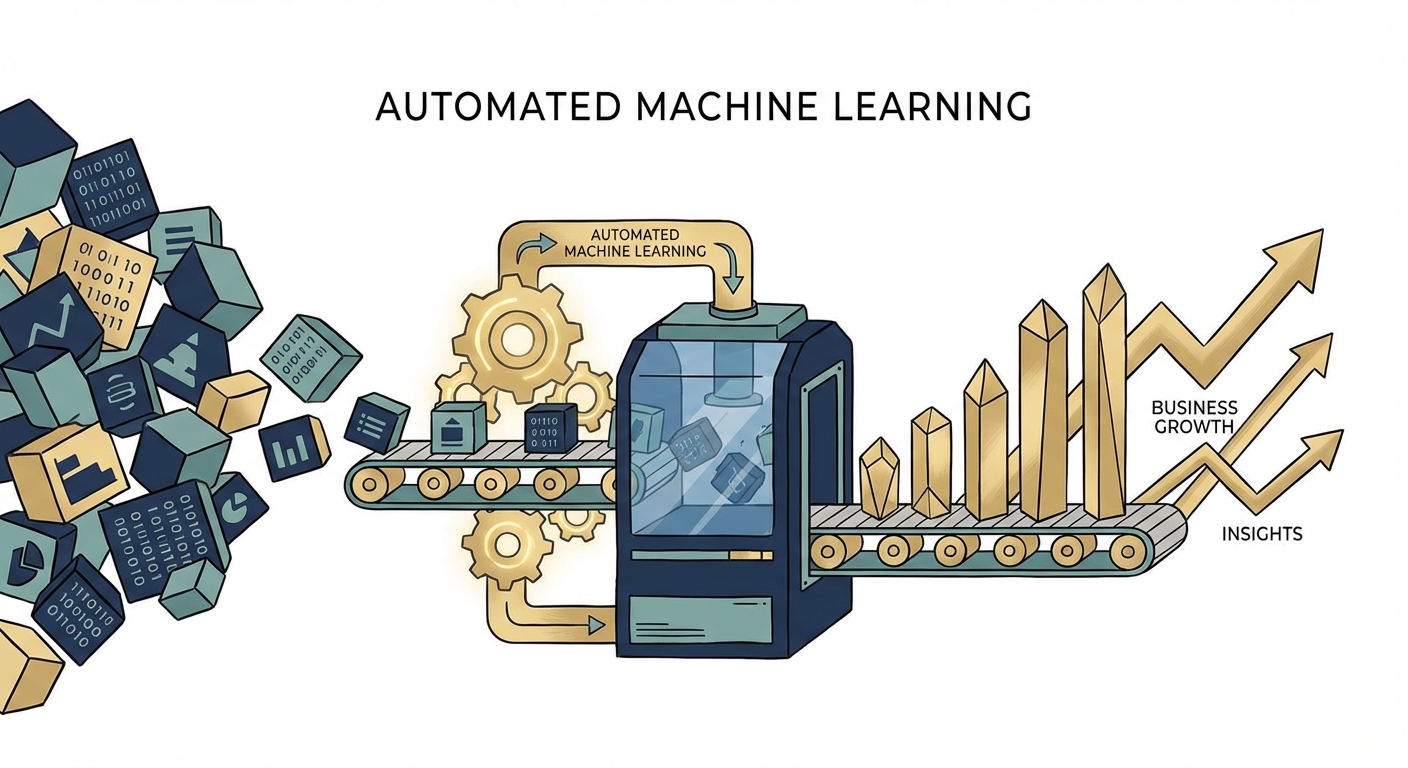
An Introduction to Automated Machine Learning


TL;DR
- This article covers the fundamentals of automated machine learning (AutoML), including its key components, benefits, and applications. We'll explore how AutoML streamlines the machine learning workflow, making it accessible to both experts and non-experts, and discuss various tools and platforms available. You'll also gain insights into the challenges and future directions of this exciting field.
Understanding the Growth Share Matrix: A Quick Overview
Okay, so the Growth Share Matrix, huh? Bet you’re wondering if this is just another one of those business buzzwords that consultants love to throw around. Well, kinda, but this one’s actually got some staying power.
Basically, it's a tool to help companies figure out where to put their money. Think of it as a guide for prioritizing which parts of the business get the most love (and funding). It was all the rage back in the day, used by like half the Fortune 500 companies according to the Boston Consulting Group (bcg), the very people who came up with it! Bruce Henderson, a key figure at bcg, really championed the matrix, pushing it forward in 1970 as part of a broader effort to help businesses manage their portfolios more strategically. It emerged from bcg's extensive research into what made companies successful, aiming to provide a clear visual framework for resource allocation.
Here's the lowdown:
- It's a portfolio management framework. It helps companies decide how to prioritize their different businesses, or even different product lines.
- The Boston Consulting Group (bcg) gets the credit. Bruce Henderson, one of their main guys, really pushed it in 1970, but it was a group effort.
- The whole point is to prioritize businesses – deciding where to invest and where to maybe cut your losses. It's all about resource allocation, you know?
So, how does it actually work? It boils down to two main things:
- Market Growth Rate: This tells you how attractive a market is. High growth? Hot stuff. Low growth? Maybe not so much.
- Relative Market Share: This shows how strong you are compared to the competition. Big fish in a small pond? Good. Tiny fish in a huge ocean? Could be trouble.
You plot your businesses (or products) on a chart using these two measures. High/low growth, high/low market share—and that puts them into one of four boxes. Yeah, it’s that simple.
These boxes are the "stars," "cash cows," "question marks," and "dogs." Each one has its own strategy.
- Stars: High growth, high share. Invest like crazy!
- Cash Cows: Low growth, high share. Milk ‘em for all they're worth.
- Question Marks: High growth, low share. Risky... do you invest or ditch?
- Dogs: Low growth, low share. Probably time to say goodbye.
It's a way to see where your money is best spent. It's not perfect, but it’s a solid starting point.
So, that's the Growth Share Matrix in a nutshell. Now that we've got a handle on the basics, let's dive deeper into each of those quadrants and see what makes them tick.
Diving Deeper: The Four Quadrants Explained
Ever wonder where companies decide to throw their cash? The Growth Share Matrix is like a treasure map, guiding them to the most promising spots.
Okay, so we’ve got these four boxes, right? Each one represents a different type of business or product, and each has its own strategy. Let's break 'em down:
Stars: These are the rockstars. High growth, high market share. Think about when Apple's iPhone first hit the scene? Everyone wanted one, and Apple was killing it. Investment here is key – gotta keep that momentum going! They need lots of cash to maintain their position, but the payoff is usually worth it.
Cash Cows: These are the steady eddies. Low growth, high market share. Gillette's razors? People always need 'em, but it's not like razors are suddenly gonna be the next big thing. You milk these for profit, but don't invest too much back in. The goal is to extract as much cash as possible with minimal investment.
Question Marks (or Wild Cats): High growth, low market share. These are the risky ones. Like a new tech startup trying to break into a crowded market. Do you invest and try to turn them into stars, or cut your losses? It's a gamble, honestly. It really depends on whether you think they can gain market share.
Dogs: Low growth, low market share. Ouch. These are the ones you gotta be honest with yourself about. Blockbuster in its final years? Sad, but true. Usually, it's best to sell 'em off or just shut 'em down. They're not generating much cash, and they're not likely to turn around.
So how do you actually use this thing? It's not rocket science, I promise.
First, you gotta figure out the market growth rate and your relative market share for each of your products or businesses. Then, you plot them on the matrix. Easy peasy.
Let's say you're a company that sells both smartphones (high growth, high share – a Star) and basic feature phones (low growth, high share – a Cash Cow). You'd probably invest heavily in developing new smartphone features, while just keeping the feature phone line ticking over.
It's not just for product decisions, though. You can adapt the Growth Share Matrix to marketing too, according to Smart Insights. Instead of market share, think about ROI. And instead of market growth, think about channel growth. So, your "cash cow" marketing channels might be email or TV ads – reliable, but not exactly booming. Your "question marks" might be newer platforms like TikTok or Snapchat – potential, but unproven.
Using the matrix to allocate marketing budgets can help ensure resources are directed to the most promising areas, while also maintaining the effectiveness of established channels. It's about balancing innovation with what already works.
So, there you have it. The Growth Share Matrix, demystified. It's a simple tool, but it can be a powerful way to think about where to put your money. Remember, it's not a perfect science. But it's a good starting point.
Next up, we'll look at some of the advantages and disadvantages of using this matrix.
Applying the Growth Share Matrix in Business Strategy
Alright, so you wanna know how to actually use this Growth Share Matrix thing? It's not just about drawing pretty boxes, is it? Let's get into the nitty-gritty of applying it in your business strategy.
First things first, you gotta identify your strategic business units (sbus). Think of these as mini-companies within your company. For a massive healthcare conglomerate, that might be their pharmaceuticals division, their medical devices arm, and their health insurance biz, each run more or less independently. An SBU is essentially a division or product line that can be planned for independently from other business units, with its own set of competitors and market. Identifying SBUs is crucial because the Growth Share Matrix is designed to analyze and manage a portfolio of distinct business entities.
Next, you need to assess the market growth rate and relative market share for each sbu. Market growth rate is how fast the market's expanding, right? Relative market share is how big you are compared to your top competitors. Don't skimp on market research here; garbage in, garbage out, ya know?
Then comes the fun part: plotting your sbus on the matrix. Slap 'em into those "star," "cash cow," "question mark," and "dog" quadrants based on your assessments. It's kinda satisfying, like organizing your sock drawer, but with way higher stakes.
With everything neatly mapped, you can start developing investment strategies. Stars get aggressive investment to maintain their lead. Cash cows get milked for profit, and question marks are a gamble – do you invest to try and turn them into stars, or cut your losses? Dogs? Well, nobody likes to admit they have a dog, but sometimes, you gotta face facts.
It's important to have a balanced portfolio. You don't want to be too reliant on cash cows, because what happens when that market dries up? You gotta invest in future stars, even if they're risky question marks right now. Don't put all your eggs in one basket, as they say.

Thinking about diversifying, right? It's not a bad idea. That means managing risk associated with question marks. Not everything will work out, and that's fine. Fail fast, learn faster, and move on.
Now that we've got a handle on the application, let's talk about the downsides of leaning too hard on this matrix. It's not all sunshine and rainbows, folks.
Adapting the Growth Share Matrix for Marketing Budget Allocation
Okay, so you're thinking, "Can I really use this Growth Share Matrix for my marketing budget?" Short answer: Heck yeah! It's not just for deciding which product lines to ax, you know?
Instead of just market share, think about ROI. What's bringing in the dough right now? And for growth rate, consider channel growth – where are you seeing the most action?
- Map your marketing channels onto the matrix. It's kinda like sorting your socks, but with potentially bigger payoffs.
- Think of it this way: email marketing might be your cash cow – reliable, consistent returns, but not exactly setting the world on fire. Meanwhile, something like influencer marketing could be a question mark – huge potential, but still trying to figure out if it's worth the investment.
- For instance, a local bakery might find that their email campaigns generate steady sales with minimal effort, while their TikTok presence is growing rapidly but not yet translating into direct revenue. To quantify ROI, you'd look at metrics like customer acquisition cost (CAC) and lifetime value (LTV) for each channel. For channel growth, you'd track metrics like follower growth, engagement rates, and website traffic originating from that channel.
Now, what do you do with this fancy matrix?
- Milk those cash cows. Keep them humming along, but don't pour tons of cash into them.
- Invest in the stars and question marks. They need the love to really shine. Maybe that TikTok strategy just needs a little tweaking, or more budget for better content...
- And, yeah, it sucks but – divest from the dogs. If it's not working, it's not working. Don't be afraid to cut your losses.
- It's all about balance, right? You gotta keep the short-term gains coming in, but you also gotta invest in the future.
Think of a SaaS company, they might allocate a bigger chunk of their budget to content marketing and webinars (potential stars) while maintaining their investment in paid search (cash cow).
So, how does this matrix work with other business models? Next, we'll take a look at some of the benefits and drawbacks of using the matrix.
Advantages and Disadvantages of the Growth Share Matrix
Alright, so we've talked about what the Growth Share Matrix is and how to use it. But like anything in business, it's not a magic bullet. There are definitely some upsides and, yeah, some downsides to consider.
Advantages:
- Simplicity and Visual Appeal: It's super easy to understand and visualize. You get a clear snapshot of your business portfolio at a glance. This makes it great for communicating strategy to different teams.
- Strategic Prioritization: It forces you to think critically about where to allocate resources. Do you double down on stars, milk cash cows, take a chance on question marks, or cut your losses with dogs?
- Portfolio Balance: It encourages a balanced portfolio, ensuring you're not just relying on current cash cows but also investing in future growth.
- Foundation for Strategy: It provides a solid foundation for developing specific strategies for each business unit or product.
Disadvantages:
- Oversimplification: The world isn't always as black and white as four boxes. Market growth and market share are just two factors, and they don't tell the whole story. What about competitive advantages, brand loyalty, or technological disruption?
- Defining Market Share Can Be Tricky: What exactly constitutes "the market"? Is it global, national, or regional? And how do you accurately measure "relative" market share, especially in rapidly evolving industries?
- The "Dog" Trap: Sometimes, a "dog" can be strategically important, even if it's not profitable. It might be a necessary loss leader, or it could be a stepping stone to a new market. Simply divesting might be short-sighted.
- "Stars" Aren't Always Profitable: High growth markets often require massive investment, and even "stars" can consume more cash than they generate in the short term. There's no guarantee of future success.
- Ignores Synergies: The matrix often treats business units in isolation, ignoring potential synergies between them. A "dog" in one area might support a "star" in another.
- Static Snapshot: It's a snapshot in time. Markets change, competitors shift, and what looks like a "star" today could be a "question mark" tomorrow. It needs regular updating.
So, while it's a useful tool, it's important to remember its limitations. Don't let it be the only thing guiding your decisions.
Real-World Examples and Case Studies
Alright, let's wrap this Growth Share Matrix thing up with some real-world perspective, shall we? It's all well and good to talk theory, but how does this actually shake out in the trenches?
Picture a big tech company – one of those that does a bit of everything, right? They used the Growth Share Matrix to sort their product lines. Smartphones were clearly "stars," raking in the dough and growing like weeds. They doubled down on those, of course. But here's where it gets interesting, their tablet division? A "question mark." They poured cash into it, hoping it'd catch up to the iPad, but it never really did. Eventually, they scaled back, focusing on niche uses instead. This is a classic example of a company investing heavily in a high-growth, low-share segment, hoping to convert it into a star, but ultimately deciding to manage it differently when the expected market share gains didn't materialize.
It's not always about winning; sometimes, it's about not losing too badly.
Now, let's switch gears to a retailer, maybe a clothing chain. They adapted the matrix for their marketing budget, as Smart Insights mentioned earlier. Their loyalty program? A "cash cow" – steady, reliable, but not exactly thrilling. So, they kept it ticking over. Meanwhile, their Instagram ads were a "question mark" – lots of potential, but hard to pin down the ROI. They experimented with different campaigns, tracking everything like hawks, and eventually found a formula that worked, turning it into a star. The lesson? Don't be afraid to tinker, but know when to pull the plug. This shows how the matrix can be applied beyond just products, guiding marketing spend and demonstrating the iterative process of nurturing question marks.
So, there you have it. Some real-world food for thought. Time to put this matrix to work, yeah?