Exploring the Different Types of AI Tools

TL;DR
- Categorizes AI tools by specialized capability versus functional intelligence
- Distinguishes between Narrow AI specialists and theoretical General AI
- Explains the shift from Reactive Machines to Limited Memory AI
- Provides a strategic framework for selecting tools by utility
- Highlights the 2025 market shift from access to mature implementation
Here is the paradox of the modern workplace. Stanford HAI's AI Index reports that "78% of organizations reported using AI in 2024, up from 55% the year before" (Stanford HAI, 2025 AI Index Report, retrieved 2026-09-02). SOURCED Adoption is near-universal; maturity is not. We are drowning in tools but starving for strategy.
An earlier version of this sentence paired that figure with a "1% have reached mature implementation" statistic as though both came from one study. They do not — the maturity figure is from separate McKinsey research, which we could not retrieve to quote directly, so it has been removed rather than cited second-hand.
The market has exploded from a niche curiosity into a massive ecosystem. By 2030, this industry is projected to hit $1.81 trillion. But right now? Most professionals are just trying to figure out which login does what. With 378 million users globally and 71% of them leaning heavily on generative AI, the noise is deafening.
You don't need another listicle of "100 Best Apps." You need a framework. You need to understand what these tools actually do and how they fit into your workflow without breaking it.
According to McKinsey's State of AI Report 2025, the surge in adoption is real, but the challenge has shifted. It's no longer about access; it's about selection. Whether you want to automate grunt work, generate creative assets, or analyse mountains of data, understanding how these tools are categorised is the first step from using AI to using it well.
How Are AI Tools Categorized?
Before we start naming names, let's look under the hood. You will often hear AI discussed in two ways: by what it is (capability) and by how it thinks (functionality).
In terms of capability, almost every tool you touch today is Narrow AI. These are specialists. A chess bot beats grandmasters but can't boil an egg; a writing assistant creates sonnets but can't drive a car. While theorists love to talk about General AI (AGI) or Super AI—machines that equal or surpass human intelligence—those remain firmly in the realm of research labs and sci-fi novels.
Functionality is where the practical differences lie. As outlined in IBM's Guide to Artificial Intelligence Types, we have moved past simple "Reactive Machines" (like Deep Blue) that couldn't learn from the past. Today's ecosystem is dominated by Limited Memory AI. These tools absorb data, learn from context, and improve over time. They don't just react; they remember.
Now, let’s leave the theory behind and look at the tools you can actually log into today.
What Are the Main Types of AI Tools by Use Case?
The most practical way to understand this chaotic market is by utility. Forget the underlying code for a moment—what problem is the tool solving? In the 2026 landscape, seven major categories have emerged as the dominant forces.
AI Assistants & Conversational Tools
These are the frontliners. If you have used ChatGPT, Claude, Gemini, or Grok, you have used a conversational AI. These tools function as the "brain" for general tasks—answering questions, brainstorming strategies, debugging logic, or simply acting as a sounding board.
They represent the foundation of the 71% adoption rate we see globally. But they are evolving. In customer service, for instance, these isn't just chatbots anymore; they handle complex inquiries for 42% of major healthcare networks. The shift here is critical: we are moving from reactive Q&A bots to proactive assistants that understand context and nuance.
AI Content Creation Tools
This is the category that made the headlines. Content creation remains the number one use case for generative AI in marketing.
- Writing: Tools like Jasper, Copy.ai, and Writesonic aren't just spellcheckers; they are drafting engines.
- Images: Midjourney, DALL-E, and Stable Diffusion have upended graphic design.
- Video: Platforms like Synthesia and Runway are doing for video what Photoshop did for photography.
However, the smart money is moving away from "generation" toward "co-creation." It is less about typing a prompt and getting a finished product, and more about iterating with the AI to refine a human idea. If you are looking to integrate these into your strategy, check out our guide on How to Use AI for Content Marketing to see how professionals are maintaining quality control.
AI Productivity & Automation Tools
If content tools are the artists, these are the project managers. Tools like Notion AI, Motion, Reclaim.ai, and Zapier AI are designed to kill the "work about work." They handle the scheduling tetris, the email triage, and the workflow connections that bleed time from your day.
The promise here is massive: a projected 40% improvement in employee productivity. We are seeing the early stages of "Agentic" behavior here (more on that later), where a tool doesn't just tell you when you're free—it negotiates meeting times with your team based on your energy levels and priorities.
AI Coding & Development Tools
Nowhere is the impact of Limited Memory AI more visible than in development. GitHub Copilot, Tabnine, and Amazon CodeWhisperer have become non-negotiable for many engineering teams.
The adoption here is highest in the IT/Telecom sector (63%), and for good reason. By handling boilerplate code, documentation, and unit testing, these assistants reduce development time for routine tasks by 30-50%. They learn the context of your specific codebase, effectively becoming a junior developer who has memorized every line of your repository.
AI Data Analysis & Business Intelligence Tools
This is where the ROI lives. While writing emails with AI is nice, analyzing terabytes of data is profitable. Tools like Tableau AI, Julius AI, and Microsoft’s Power BI Copilot are turning natural language into SQL queries.
The BFSI (Banking, Financial Services, Insurance) sector is leading here with nearly 20% market share. A widely quoted return figure comes from IDC, not from academic research: "For every $1 a company invests in generative AI, the ROI is $3.7x" (IDC, The Business Opportunity of AI InfoBrief #US52699124, November 2024, sponsored by Microsoft, reported via Microsoft, retrieved 2026-09-02). SOURCED ANALYSIS: it is a self-reported survey average from a vendor-sponsored study, so treat it as an industry talking point rather than an independent benchmark. This article previously attributed it to Stanford HAI's AI Index, which does not contain the figure. Much of the reported value comes from data-driven insights—predicting customer churn, forecasting sales, or identifying risk vectors that human analysts might miss.
AI Design & Creative Tools
Beyond simple image generation, we have a suite of tools democratizing professional design. Canva AI, Adobe Firefly, and Uizard allow non-designers to prototype UI/UX, generate color palettes, and create brand assets.
The magic here is integration. These features are rarely standalone anymore; they are embedded directly into the creative suites professionals already use, making the "AI" part feel invisible and intuitive.
Industry-Specific AI Tools
Finally, we have the specialists. These are vertical-specific engines trained on highly technical datasets.
- Healthcare: PathAI helps pathologists diagnose diseases, while Butterfly IQ works on imaging. Growth-rate figures circulating for this sector trace back to marketing aggregators rather than to a named research publisher, so none is quoted here.
- Manufacturing: Predictive maintenance tools are expected to generate $3.8 trillion by 2035.
- Legal: Tools like ROSS Intelligence analyze contracts and case law faster than any paralegal army.
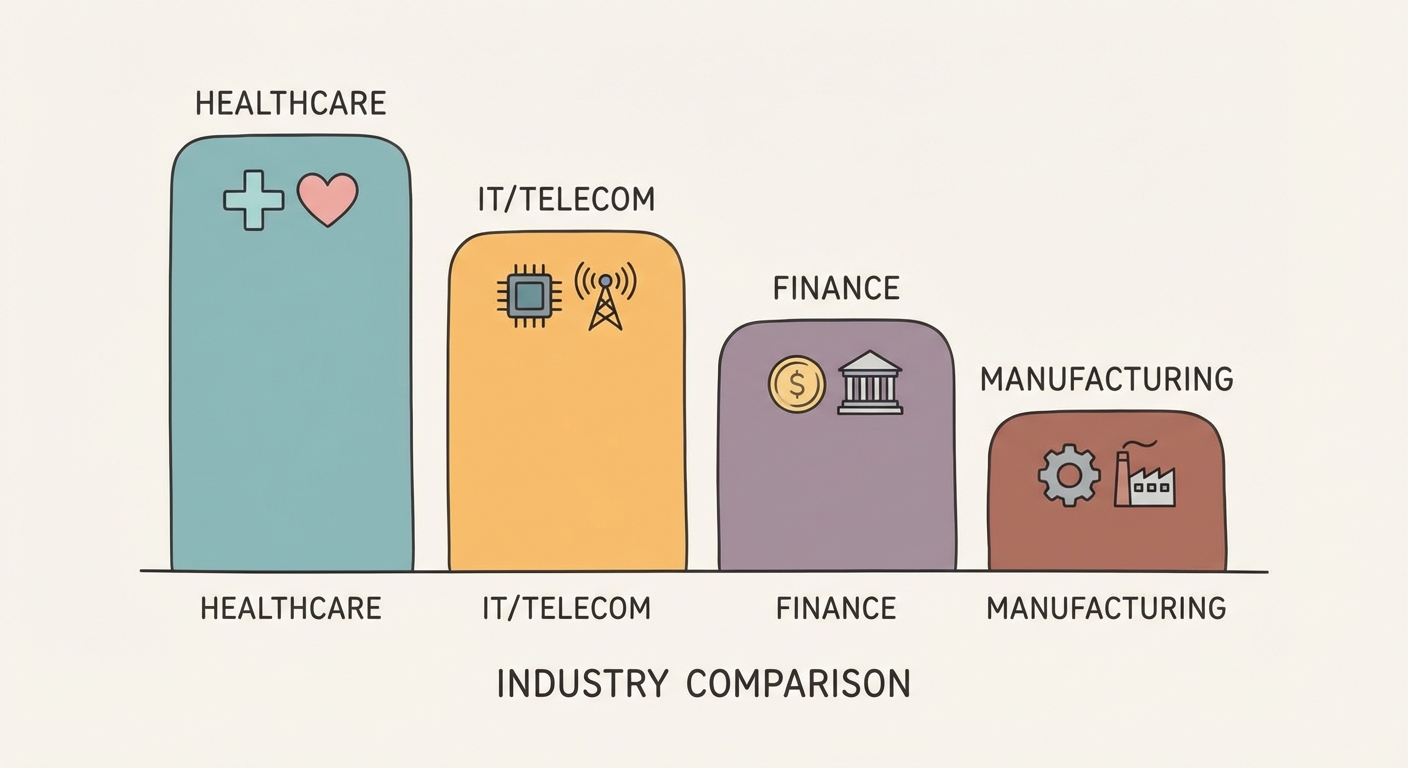
The strategic insight here is the gap between enterprise and SMEs. Large enterprises are adopting these tools at nearly 4x the rate of small businesses, largely due to cost—though that pricing floor is dropping fast.
Generative AI vs. Agentic AI: What's the Difference?
If 2023-2025 was the era of Generative AI, 2026 is the dawn of Agentic AI. Understanding this distinction is vital for future-proofing your stack.
Generative AI is a tool you use. You sit at the keyboard, you type a prompt, and the AI produces an output (an email, an image, a block of code). It requires your constant attention and oversight. It is a reactive loop: User Prompt → AI Generation → User Review.
Agentic AI is an agent that works for you. It is goal-oriented. You don't tell it how to write the email; you give it an objective: "Book travel for the conference in Austin next month under $1,500." The Agentic AI then breaks that goal down into steps, searches for flights, checks your calendar, compares hotel prices, and executes the booking, only asking for help if it hits a roadblock.
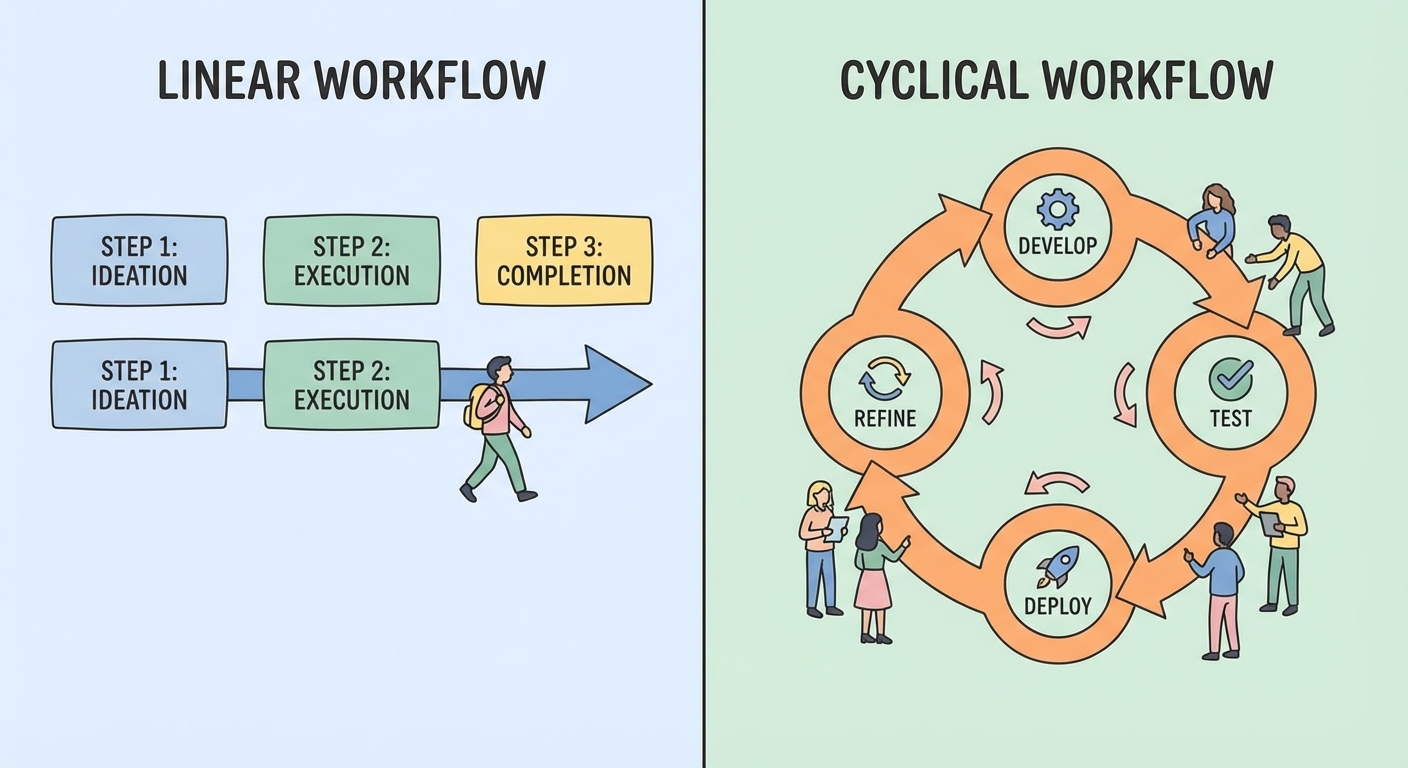
This shift changes how we select tools. For creative work, you want Generative (human-in-the-loop). For workflows and operations, you want Agentic (autonomous execution).
How Do You Choose the Right AI Tools?
With thousands of SaaS products slapping an "AI" sticker on their logo, selection paralysis is real. Don't just buy the hype. Use this framework to cut through the noise.
Step 1: Identify Your Specific Use Case
Do not start with the tool. Start with the pain. Map your workflow and identify the bottlenecks. Are you drowning in customer support tickets? Is your video editing process taking three days? If you identify that you spend 10 hours a week on social media captions, then you look for a content creation tool.
Step 2: Start with Free Tiers
Here is a secret: 97% of AI users are not paying a dime initially. The free tiers on tools like ChatGPT, Notion, or Canva are incredibly robust. Test 3-4 tools in a specific category before you swipe the corporate card. The trigger to upgrade should be hitting a usage limit or needing specific team collaboration features, not just "FOMO."
Step 3: Consider Integration Capabilities
A tool that lives on an island is a tool that gets ignored. If your team lives in Slack and Google Workspace, your AI tool needs to play nice with those platforms. Look for API availability and data portability. Friction kills adoption.
Step 4: Calculate ROI Potential
Do the maths on your own numbers: (Time saved × Hourly rate) + (Value of quality improvement), minus subscription cost. Factor in the learning curve, which usually takes 2-4 weeks. ANALYSIS — resist planning against a published ROI multiple. The widely circulated 3.7x figure is a vendor-sponsored survey average (see above); your return depends on your own hourly rates and how much of the work actually gets displaced. If the math doesn't work, neither will the tool. You can use our AI Tools ROI Calculator to plug in your specific numbers.
Moving from AI Experimentation to Maturity
Remember that 78% vs. 1% statistic? That is the maturity gap. Most companies are stuck in the "Experimentation Phase"—individual employees using random tools with no strategy.
To reach the "Maturity Phase," you need a roadmap.
- Audit: Who is using what? You likely have Shadow AI (unauthorized tools) running rampant.
- Prioritize: Align tool selection with business goals, not cool features.
- Governance: Establish data privacy and ethical guidelines.
- Training: This is the biggest failure point. You cannot buy a Ferrari, hand the keys to a teenager, and expect them to win a race. Invest in training your team.
For a detailed breakdown on bridging this gap, read our AI Implementation Strategy for Businesses. Small businesses actually have an advantage here; without the bureaucratic red tape of enterprise, an SME can deploy and mature a specific AI workflow in weeks rather than months.
What's the Future of AI Tools?
We are moving toward an invisible interface. By 2027, the distinction between "AI tools" and "software" will blur—AI will just be a standard feature of everything we use.
Expect Agentic AI to expand rapidly, handling complex multi-step workflows that currently require human hand-holding. We will see massive consolidation as big players acquire specialized tools (see Synthesia's 45 Best AI Tools for 2026 for a look at the current leaders).
Regionally, while North America dominates investment, the Asia-Pacific region is growing at 19.8% CAGR. But the most exciting trend is personalization. Tools will stop being generic and start learning your specific work style, effectively becoming a digital twin of your professional self.
Conclusion
The AI revolution isn't coming—it's here. We have explored the seven major categories, from the creative engines of Generative AI to the autonomous power of Agentic AI. The tools exist to transform your business, but they require active selection, not passive consumption.
Start small. Identify one bottleneck. Test free tools. Calculate the ROI. The difference between the 78% who "use" AI and the 1% who master it is strategy. The question isn't whether you should use these tools; it's whether you'll lead the change or scramble to catch up.
If you are just beginning this journey, check out our guide on Getting Started with Generative AI.
FAQ SECTION
What are the main types of AI tools available in 2026?
The seven main categories are: (1) AI assistants and conversational tools (ChatGPT, Claude, Gemini), (2) Content creation tools for writing, images, and video, (3) Productivity and automation tools, (4) Coding and development assistants, (5) Data analysis and business intelligence platforms, (6) Design and creative tools, and (7) Industry-specific solutions for healthcare, manufacturing, legal, and education. As of 2025, 71% of organizations use generative AI tools specifically, with agentic AI emerging as the next major category.
How do I choose the right AI tool for my needs?
Start by identifying your specific use case rather than browsing tools randomly. Map your workflow bottlenecks and prioritize high-impact, repetitive tasks. Begin with free tiers to test 3-4 options before committing—97% of users don't initially pay for AI tools. Consider integration capabilities with your existing software stack. Calculate ROI on your own figures: multiply time saved by your hourly rate, add quality improvement value, subtract subscription cost, and factor in the 2-4 week learning curve. Published ROI multiples are vendor-sponsored survey averages and are not a planning benchmark.
What's the difference between generative AI and agentic AI?
Generative AI creates content (text, images, code, video) based on user prompts—you direct it, and it produces output. Examples include ChatGPT writing an email or DALL-E creating an image. Agentic AI, the emerging 2026 trend, autonomously takes actions to achieve goals you set. Given an objective like "organize next week's meetings," it determines the necessary steps and executes them independently. Think of generative AI as a tool you use, while agentic AI is an agent that works for you.
Are free AI tools as good as paid versions?
Free tiers are surprisingly robust for individual users and small projects—only 3% of AI tool users currently pay for premium services. Free versions typically offer core functionality with limitations on usage volume, advanced features, or priority access to new models. Upgrade when you hit usage limits consistently, need team collaboration features, require faster processing, or want access to the latest model versions. For testing and learning, free tools are excellent starting points.
Which industries are adopting AI tools the fastest?
Healthcare, financial services, manufacturing and IT are the sectors where AI tooling is most visibly deployed — healthcare in diagnostics and imaging, financial services in risk and fraud, manufacturing in predictive maintenance. ANALYSIS — this answer previously quoted precise growth rates, market-share splits and utilisation percentages for each sector. Every one of them traced back to marketing aggregators that cite no original research, so they have been removed rather than repeated. Sector-level AI market figures vary enormously between research houses; check the methodology of any you plan to rely on.
Related reading
- Exploring the Different Types of AI Technology
- 25 Types for Tone in Writing: A Guide for Writers
- The Ultimate Guide: 15 Types of Social Media Content that Work
- Exploring Sludge Content in Digital Media
- The 7 best all-in-one messaging apps in 2025
How This Guide Was Sourced
Written and maintained by the LogicBalls editorial team (logicballs.com).
Disclosure: LogicBalls builds AI writing tools, several of which fall into the categories described here.
Primary sources, with retrieval dates:
- Stanford HAI, 2025 AI Index Report — organisational AI adoption. Retrieved 2026-09-02.
- IDC, The Business Opportunity of AI (InfoBrief #US52699124, November 2024, sponsored by Microsoft), reported via Microsoft — the 3.7x ROI figure. Retrieved 2026-09-02.
A correction. An earlier version of this guide attributed the 3.7x ROI figure to Stanford HAI's AI Index and linked that report. The AI Index does not contain it — the figure comes from a Microsoft-sponsored IDC InfoBrief. The attribution has been corrected in all three places it appeared, and the figure is now presented with its sponsorship disclosed.
Figures removed rather than cited. Sector growth rates (a 36.8% healthcare CAGR), market-share splits (19.6% BFSI), adoption percentages (42% of major healthcare networks, 63% IT/telecom utilisation) and a maturity statistic all appeared without sources. Each traced back either to marketing aggregators that cite no original research, or to a report we could not retrieve. Where a number cannot be checked at its source, this guide now omits it.
No LogicBalls telemetry is used in this guide.