Gartner Report Forecasts Major 2026 Shifts in AI-Powered Document Automation and Security
generative AI enterprise automation trends 2026AI-powered document automation market shifts 2026verticalized AI deploymentsenterprise AI infrastructure 2026

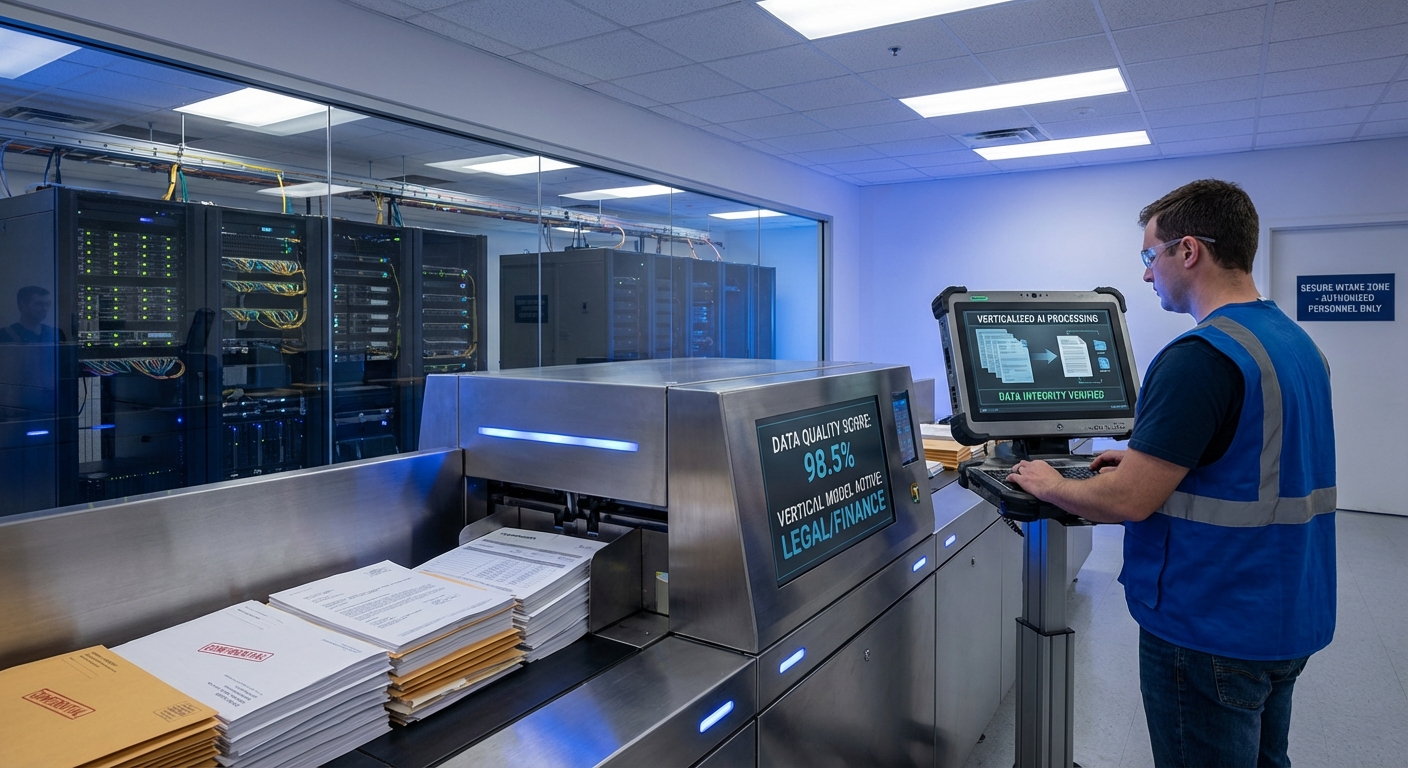
The honeymoon phase with "general-purpose" AI is officially over. If you’ve been waiting for the dust to settle on the enterprise tech landscape, consider this your wake-up call: 2026 is the year we stop playing with chatbots and start building infrastructure.
According to the latest word from Gartner, the industry is pivoting hard. We’re moving away from the "throw it at the wall and see what sticks" era of AI experimentation. Instead, the focus is sharpening onto verticalized, specialized deployments. It’s no longer about having a clever LLM that can write a poem; it’s about having a machine that actually understands your specific industry’s headaches.
This shift kills off the "one-size-fits-all" dream. Enterprises are realizing that to stay ahead, they need tools built for their specific trenches. As highlighted in this industry analysis on Gartner’s 2026 specialized AI trends, the real win isn't just having AI—it's how seamlessly that AI weaves into the existing, messy reality of your daily workflows.
This isn't just a software update; it’s a total rethink of data and risk. If your data hygiene was sloppy during the experimental phase, you’re in trouble. Gartner makes it clear: poor data quality is the single biggest barrier to getting a real return on investment in document management and automation. You can’t build a skyscraper on a swamp, and you certainly can’t build a high-performance AI on junk data.

So, what does the 2026 roadmap actually look like for the people in the boardroom and the server room? It boils down to a few non-negotiables:
- Verticalization: We’re ditching generic LLMs. The future belongs to models trained on industry-specific jargon, regulatory hurdles, and niche operational logic.
- Predictive Analytics: Stop looking at what happened yesterday. We’re moving toward predictive modeling that spots a bottleneck before it actually breaks your supply chain.
- Adaptive Security: Reactive security is a relic. The new standard is an adaptive, living framework that evolves as fast as the AI-driven threats it’s designed to stop.
- Silo Elimination: If IT and the business units aren't talking, the AI project is already dead. We have to break down those walls to ensure tech deployments actually serve business goals.
Document management remains the heartbeat of this research. There is a massive, ongoing debate about whether to buy into a massive, all-in-one platform or to stitch together a collection of highly specialized, single-purpose tools. As noted in recent coverage regarding Gartner’s AI in document management report, this isn't just a technical choice—it’s a financial one. Managing risk while avoiding budget creep is the tightrope every leader is walking right now.
| Strategic Focus Area | 2024-2025 Approach | 2026 Outlook |
|---|---|---|
| Model Type | General-purpose LLMs | Verticalized, specialized AI |
| Data Strategy | Quantity-focused | Quality-focused |
| Security | Reactive | Adaptive |
| Organizational | Siloed experimentation | Unified mission-critical deployment |
The pressure is mounting. As specialized AI becomes more prevalent across professional sectors, firms are being forced to rethink their long-term digital infrastructure. Innovation is great, but fiscal discipline is the reality. AI isn't a "set it and forget it" investment. It requires constant training, constant data maintenance, and a budget that doesn't stop growing once the initial project is launched.
If you’re leading the charge, transparency is your best friend. You need to pick the right tools, sure, but more importantly, you need a governance framework that isn't just a document gathering dust in a drawer. You need to know exactly how data is handled, stored, and utilized.
The divide in the market is becoming clear. On one side, you have organizations that treat AI as a core component of their business fabric—a foundational pillar. On the other, you have those treating it like a shiny add-on. The latter group is going to have a very difficult 2026.
The era of "let’s see what this AI can do" is over. The era of "let’s make this AI drive our bottom line" has arrived. It’s time to get serious.
Related Articles
 generative AI enterprise automation trends 2026Gartner Report Forecasts Major 2026 Shifts in AI-Powered Document Automation and SecurityGartner reports 2026 marks the end of general AI. Discover why industry-specific, specialized automation is now critical for enterprise survival and security.Deepak Gupta4 min read
 AI-powered document automationCompetitive Market Pressures Drive Rapid Adoption of AI-Powered Document Automation in Enterprise WorkflowsDiscover why enterprises are shifting from legacy OCR to AI-powered document automation to boost productivity by 45% and navigate competitive market pressures.Deepak Gupta5 min read
 generative AI enterprise adoption trends 2026New Industry Report Forecasts Generative AI Enterprise Adoption and Market Growth Through 2034Discover the latest generative AI enterprise adoption trends. Learn how the market is scaling to $1.26T by 2034 and which players are leading the revolution.David Brown5 min read
 ChatGPT Enterprise PDF editorChatGPT Launches Custom PDF Editor, Signaling Strategic Shift Toward Specialized Enterprise AI Document AutomationOpenAI launches a custom PDF editor in ChatGPT Enterprise, signaling a strategic shift toward full-stack document automation and industrial-grade AI workflows.David Brown4 min read