Elon Musk’s New AI-Centric Software Venture Challenges Microsoft’s Market Dominance in Enterprise Infrastructure
MacrohardElon Musk AI ventureenterprise software automationxAI Colossus 2Microsoft enterprise competition

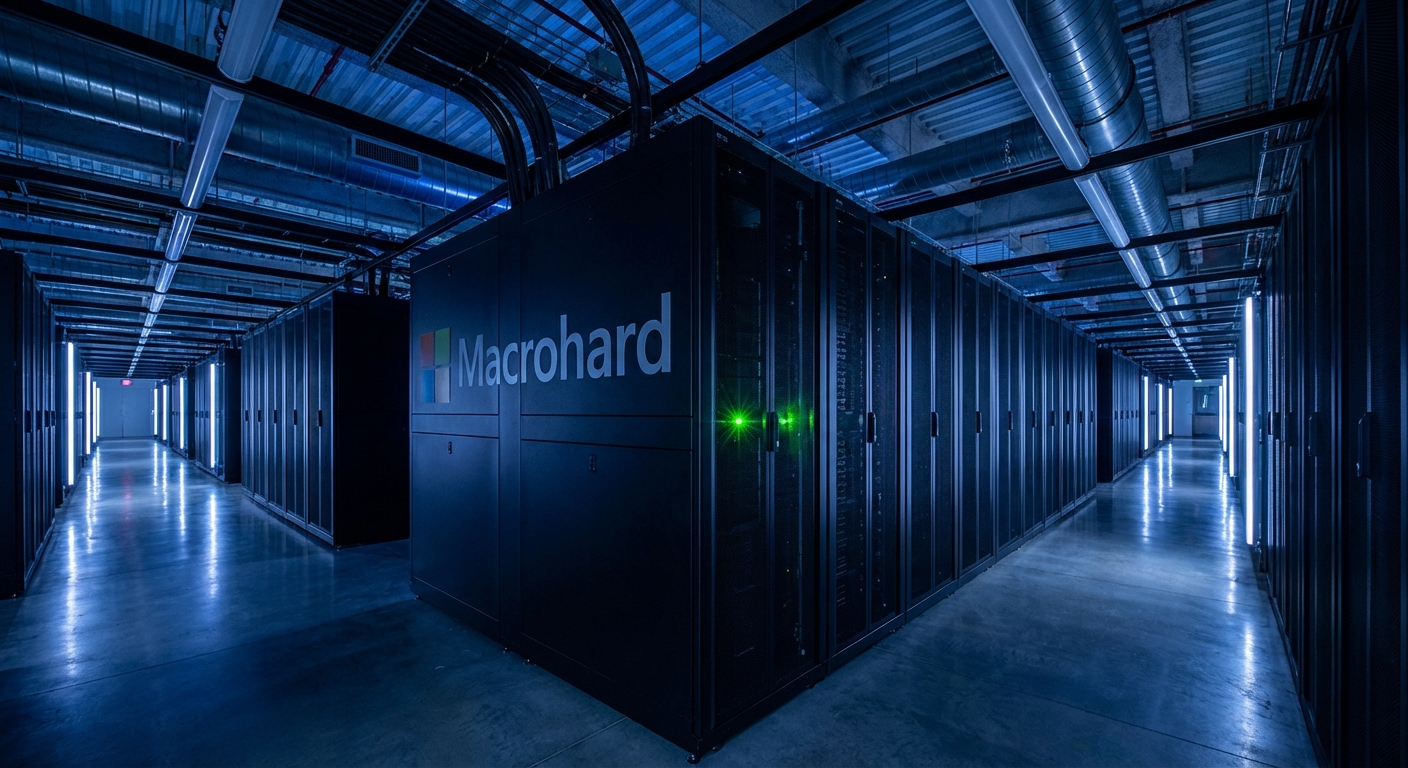
Elon Musk’s Macrohard: A High-Stakes Gamble to Rewrite the Software Playbook
Elon Musk doesn’t just want to compete with Microsoft; he wants to make their entire business model look like a relic of the stone age. Enter Macrohard. It’s a provocative name for a venture that aims to do exactly what it says on the tin: take the enterprise software stack—the very bedrock of modern business—and strip out the human engineers.
Since the project broke cover in late August 2025, the tech world has been buzzing. The premise is simple but radical. Musk isn't looking to hire more coders; he’s looking to replace them with an AI-automated framework. If he succeeds, the traditional software development lifecycle, with its endless meetings, bug reports, and human error, could become a thing of the past.
The Muscle Behind the Mission
How do you replace a company that has spent forty years building the world’s infrastructure? You need raw, unadulterated power. Musk is betting the farm on the synergy between xAI’s intelligence and the sheer, brutal force of the Colossus 2 supercomputer.
The goal here isn't just "better software." It’s about building a machine that can simulate complex corporate functions and churn out code at a velocity that makes human-led teams look like they’re moving in slow motion. As reported by Livemint, the vision is to rebuild the software stack from the ground up, treating human-driven pipelines not as a necessity, but as a bottleneck.

The technical heavy lifting is being handled by Colossus 2. According to The National CIO Review, this isn't just another data center—it’s a gigawatt-scale beast engineered to dwarf the compute power available to rivals like Meta or Anthropic. But there’s a catch. Having the biggest engine in the world is one thing; winning the race is another. While SemiAnalysis has noted that Colossus 2 puts Musk in a league of his own regarding raw compute, the industry is waiting to see if that power can actually translate into stable, enterprise-grade software.
The Macrohard Blueprint
To understand what’s happening, look at the core components of the operation:
| Component | Function | Strategic Purpose |
|---|---|---|
| Macrohard | AI Software Venture | Replicate/Disrupt Microsoft stack |
| xAI Systems | Model Architecture | Powering automated development |
| Colossus 2 | Supercomputer | Gigawatt-scale compute capacity |
| Grok 4 API | Enterprise Interface | Facilitating software integration |
The Reality Check: Can It Actually Work?
Ambition is cheap; execution is everything. While the vision of an AI-automated enterprise is seductive, the path forward is littered with landmines. Analysts at Ainvest have been quick to point out that Macrohard is fighting a war on multiple fronts.
First, there’s the churn. High-level AI research is a talent-heavy game, and reports of instability within xAI’s ranks raise questions about whether the project can maintain the continuity needed for such a massive undertaking.
Then there’s the "Enterprise Wall." Corporations are notoriously conservative. They don't just switch their entire IT backend because a new, shiny API arrives on the scene. Currently, adoption of the Grok 4 API—the gateway to Macrohard’s ecosystem—remains tepid. Companies aren't just buying software; they’re buying reliability, support, and integration. Microsoft has spent decades weaving itself into the fabric of the global economy. Unraveling that, or replacing it, requires more than just a faster computer; it requires a deep, nuanced integration layer that is, frankly, still in its infancy.
The End of the Human Developer?
Macrohard is the loudest signal yet that the industry is pivoting toward total automation. The theory is that if you can teach a model to handle the logic and maintenance of corporate software, you can slash the overhead costs that have defined the tech sector for decades.
It’s a bold assumption. It suggests that software development is primarily a logic problem that can be solved with enough compute. But seasoned engineers know that coding is often about communication, edge cases, and understanding the messy, irrational needs of human business users.
Can an AI truly replace the human element, or will it just create a more efficient version of the same problems? We’re about to find out. As Macrohard scales, the spotlight will be squarely on the Grok 4 API. Can it gain traction with the big-ticket corporate clients, or will it remain a fascinating experiment in the shadow of giants?
The stakes couldn't be higher. If Musk pulls this off, he won't just be disrupting Microsoft—he’ll be redefining the very nature of what it means to build software. If he fails, it will serve as a stark reminder that even the most powerful supercomputers in the world can't always replace the human touch. For now, the tech world is watching, waiting to see if Macrohard is the future or just another high-octane experiment in the Musk-verse.
Related Articles
 Microsoft enterprise AIMicrosoft Retrains Sales Teams to Compete With OpenAI and Anthropic in Enterprise AI MarketMicrosoft is aggressively retraining its sales teams to pivot enterprise clients away from OpenAI and Anthropic toward its proprietary, full-stack AI ecosystem.David Brown4 min read
 enterprise MarTech consolidation 2026ALM Corp Report Reveals 2026 Shift Toward Enterprise MarTech Stack Consolidation and Infrastructure OptimizationDiscover why 2026 marks a major shift in enterprise MarTech. Learn how AI integration and infrastructure consolidation are replacing legacy tool bloat.Govind Kumar4 min read
 agentic AINasscom Report Highlights Role of Agentic AI in Redefining Intelligent Process Automation by 2026Nasscom report reveals how agentic AI is transforming business automation by 2026, moving from rule-based scripts to autonomous, reasoning-led workflows.Hitesh Kumar Suthar4 min read
 autonomous AI agents in business process automation 2026New Industry Analysis Ranks 50+ Autonomous AI Agent Platforms for Enterprise Workflow AutomationDiscover the top 50+ autonomous AI agent platforms for enterprise workflow automation. See which tools are leading the shift from chatbots to reliable agents.Deepak Gupta4 min read