What is AI SEO? Complete Guide to AI-Powered Search Optimization in 2026
AI SEOAnswer Engine OptimizationAEOAI OverviewsLLM search optimization
 Ankit AgarwalMarketing Head
Updated 6 min readHow we fact-check
On this page
- Why Traditional SEO is Toast
- What is AI SEO, Actually?
- The Power of the "Zero-Click" Reality
- How AI Evaluates Your Content
- Building Topical Authority in the Entity Age
- The Tactical Playbook: How to Get Cited
- The Toolkit for 2026
- The Future: Your Brand as the "Trusted Choice"
- Frequently Asked Questions
- Related reading
Let’s get one thing straight: the era of hunting for "high-volume keywords" is officially dead.
For twenty years, the SEO playbook was predictable. You’d find a keyword, stuff it into a thousand-word blog post, buy a few backlinks, and pray to the algorithm gods that you’d land in the top three blue links. It was a game of cat and mouse. It was messy. And honestly? It was boring.
That era died the moment AI-powered search engines—like Google’s AI Overviews and Perplexity—became the default way people navigate the web.
We are now in the age of Answer Engine Optimization (AEO).
Why Traditional SEO is Toast
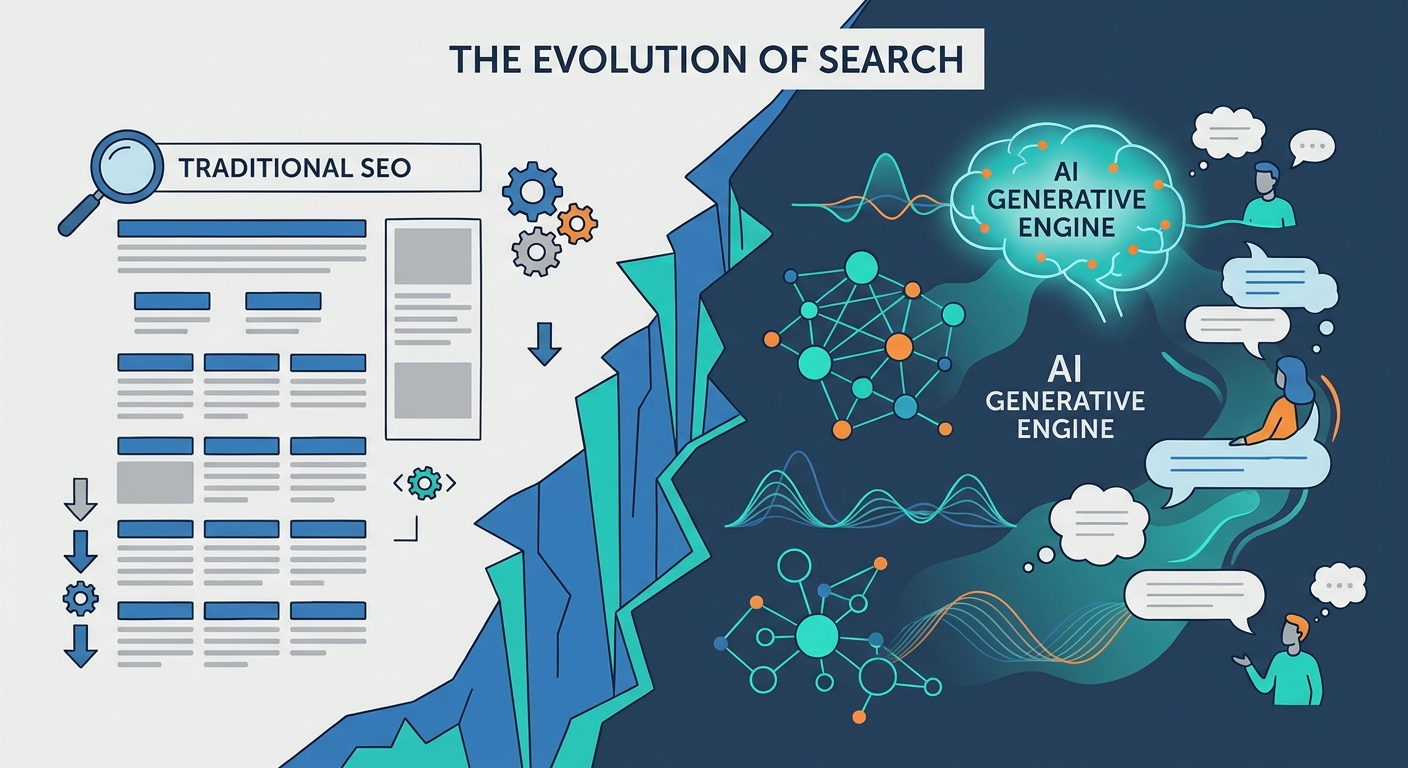
Traditional search engines were retrieval machines. They looked for a match, scanned their index, and served you a list of potential pages. You clicked, you searched, you clicked again.
LLM-driven search is different. It doesn't "find" your page—it reads it. It evaluates the logic. It compares your claims against a massive knowledge graph. Then, it synthesizes a new, original answer. As highlighted in these industry definitions and trends from Search Engine Land, the goal has shifted. Ranking no longer matters if you aren't the source the AI cites when it delivers a zero-click answer.
What is AI SEO, Actually?
There is a massive, dangerous misconception floating around: that AI SEO just means using ChatGPT to pump out blog posts faster.
That isn't strategy. That is content pollution.
True AI SEO is a technical, semantic discipline. You aren't writing for a crawler anymore; you’re writing for a machine’s training data and its real-time inference engine. You need to prove your site is the primary library from which the AI should borrow its facts.
If you write fifty articles about "running shoes" but offer zero unique research, no proprietary data, and no expert voice, the AI will ignore you. It will move on to the source that actually provides an evidence-based answer. In 2026, you either provide the signal, or you become the noise.
The Power of the "Zero-Click" Reality
The "Zero-Click" experience isn't some distant threat; it’s the standard. This shift has also increased demand for AEO services that help brands optimize their content for AI-generated answers rather than traditional search results
When a user asks, "What’s the best CRM for a mid-sized agency?" they don't want to open five tabs and read five sales pitches. They want a clean, synthesized table. They want the answer now.
If your site isn't in that AI-generated response, you effectively do not exist. But there is a silver lining. The citation is the new backlink. Being cited in an AI Overview signals to the model that your domain is a reliable, high-authority source.

How AI Evaluates Your Content
AI models are obsessed with "Helpful" content. But how do they define helpful? They look through the lens of E-E-A-T (Experience, Expertise, Authoritativeness, and Trustworthiness).
Since AI can churn out generic summaries in milliseconds, you have to do what the machine can't: be human.
The AI cannot interview a subject matter expert. It cannot conduct a proprietary survey. It cannot share the battle scars of your specific industry experience. When you provide data that cannot be found anywhere else, you stop being a "derivative" and start being a "source." AI models are programmed to prefer high-fidelity, unique information because it reduces hallucinations. You are literally making the AI’s job easier by being an expert.
Building Topical Authority in the Entity Age
To win, stop thinking in keywords and start thinking in Entities.
An entity is a distinct concept, person, or organization in a knowledge graph. If you want to own the topic of "Sustainable Logistics," you can't just spam the keyword "sustainable shipping." You need to map the relationships between "carbon-neutral warehousing," "last-mile delivery," and "supply chain regulations."
Your moat is your proprietary data. If you have internal case studies or unique datasets, put them front and center. Use human-led content optimization services to ensure your site structure reinforces these entity relationships. When the AI crawls your site, it should see a logical hierarchy that screams "Authority."
The Tactical Playbook: How to Get Cited
AI models hate ambiguity. If your content is buried in flowery, vague prose, the model will skip right over it. Here is how you get noticed:
-
The "Golden Paragraph" Strategy: Every piece of content needs a concise, objective summary at the very top. Answer the "who, what, when, where, and why" immediately. This is the snippet the AI is most likely to "read" and extract.
-
Structured Data (Schema): Use Schema markup. It’s the roadmap for the machine. If it's a guide, use
HowToschema. If it's a review, useProductschema. Don't make the AI guess what your page is about; tell it. -
Entity Linking: Build a web. Connect related concepts internally so the AI understands the depth of your site. If you mention a niche concept, link it back to a foundational page that defines it.
The Toolkit for 2026
Forget the old keyword trackers. You need tools that monitor site health, crawlability, and schema implementation in real-time.
When you’re in the creation phase, leverage high-efficiency AI content tools to handle the structural heavy lifting, but never let the machine do the final polish. Inject those human anecdotes, those specific data points, and that unique voice that AI can’t synthesize. The machine provides the structure; you provide the soul.
The Future: Your Brand as the "Trusted Choice"
We are heading toward a future of personal AI agents. These agents will act as gatekeepers, making purchases and curating info on our behalf.
Getting your brand into their "consideration set" is the ultimate evolution of SEO. As the web shifts toward conversational search, the traditional search box is disappearing. Your goal is simple: when a user asks their personal agent for a recommendation, you want your brand to be the only logical, trusted choice returned.
Frequently Asked Questions
Is AI SEO different from traditional SEO?
Yes. Traditional SEO is about gaming blue links through keyword density and backlinks. AI SEO is about becoming a "source of truth"—it’s about entity recognition, topical authority, and making your content digestible for a LLM.
Will AI make my website obsolete if it answers in the search results?
Not if you’re the one providing the answer. While AI reduces the need for users to click for simple facts, it increases the value of deep, authoritative content. If you are the source the AI cites, you get the traffic and the brand authority.
How can I optimize for AI Overviews (AIO) in 2026?
Focus on the "Golden Paragraph" strategy, provide clear and concise answers to specific questions, implement robust Schema markup, and prioritize proprietary data that AI can't find elsewhere.
Are AI-generated content and AI SEO the same thing?
Absolutely not. AI-generated content is just using a machine to write text. AI SEO is the strategic effort to structure your site so that AI models recognize you as an expert. One is a shortcut; the other is a competitive advantage.
Related reading
- How to Use AI for SEO Content Writing (Complete Workflow)
- How to Adapt Your SEO Strategy for AI Search Engines
- How to QA and Edit AI-Generated SEO Content
- Advanced SEO Content Techniques: What Experts Do Differently
- 7 Common SEO Content Mistakes (And How AI Can Fix Them)
- Answer Engine Optimization (AEO): Complete Guide for 2026
Related Articles
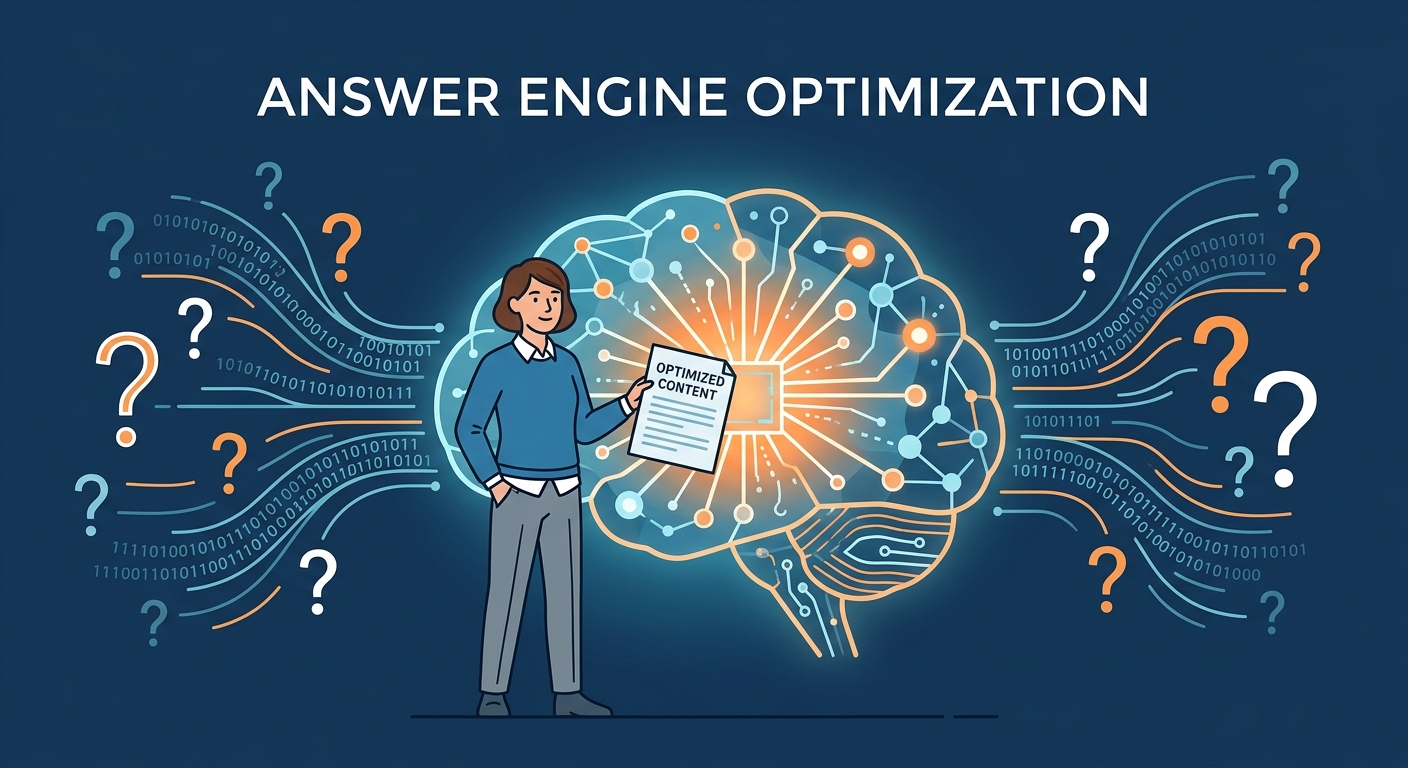 Answer Engine OptimizationHow to Create SEO Questions & FAQs That Rank in AI Search VisibilityStop chasing blue links. Learn how to optimize your SEO questions and FAQs for AI search engines and secure your spot in AI-generated citations.Ankit Agarwal7 min read
 ai powered content optimization7 Common SEO Content Mistakes (And How AI Can Fix Them)Stop chasing blue links. Learn how to fix common SEO content mistakes, leverage AI-powered optimization, and rank in the era of AI-driven search engines.Mohit Singh6 min read
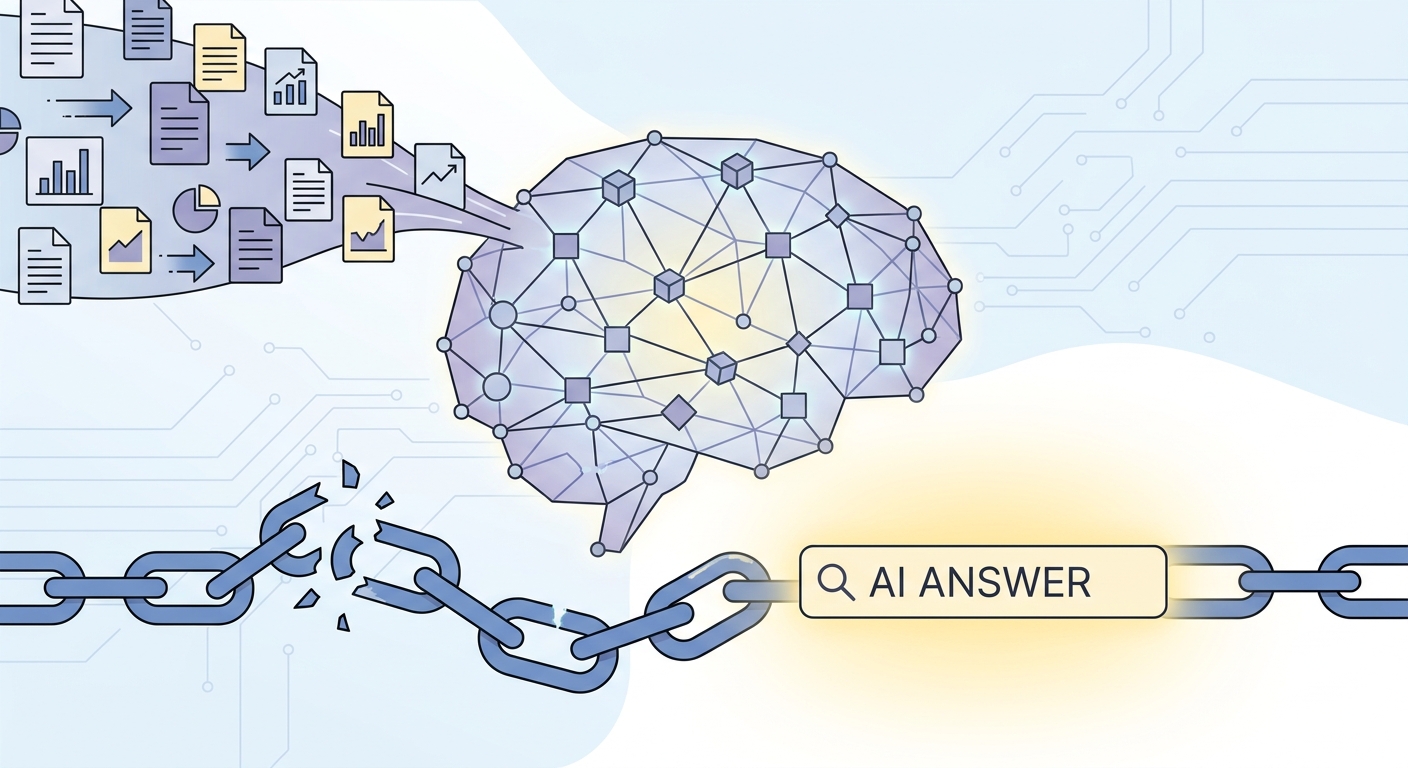 answer engine optimizationAnswer Engine Optimization (AEO): Complete Guide for 2026Stop chasing blue links. Learn how to optimize for AI answer engines, master RAG, and earn citations to win in the new era of search. Your 2026 AEO guide.Ankit Agarwal5 min read
 AI SEOTraditional SEO vs AI SEO: What's Different in 2026?Learn the shift from crawling to ingestion. Discover how to master Generative Engine Optimization (GEO) and secure AI citations in the new zero-click era.Deepak Gupta6 min read