
5 Best Context Management Platforms for SaaS

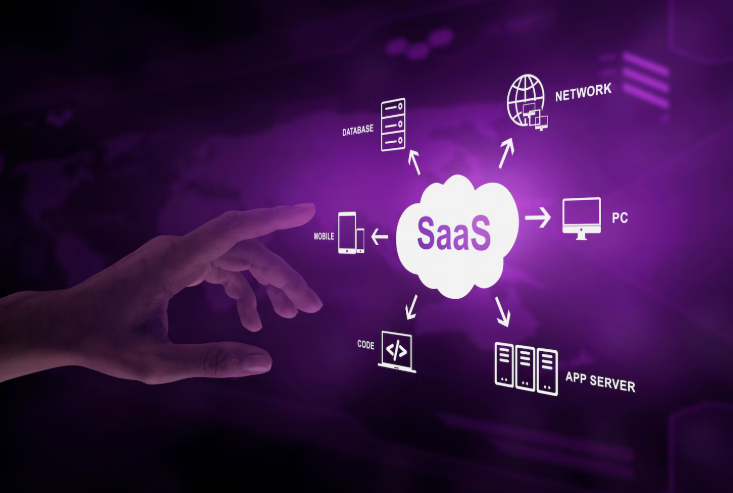
SaaS companies generate data at a pace that most governance tools were not built to handle. Product telemetry, customer usage data, event streams, feature flags, and third-party integrations produce a constantly shifting landscape of data assets that need to be understood, trusted, and acted on quickly. When context is missing, analysts spend hours tracking down definitions, engineers duplicate datasets, and product decisions get made on data no one can fully verify.
Context management platforms solve this by providing a shared layer of metadata, lineage, and ownership that makes every data asset understandable and actionable across the organisation. For SaaS teams, the right platform needs to move at product speed, support developer-native workflows, and scale without becoming a governance overhead that slows engineering down.
This review covers five of the strongest options for SaaS companies in 2025, what each one does well, and which type of team will get the most value from it.
1. DataHub
DataHub is the strongest overall choice for SaaS teams that need a context management platform built for scale, developer workflows, and AI-readiness without locking into a proprietary vendor ecosystem.
Built to handle metadata at hyperscale for engineering-led organisations, DataHub is trusted by an open-source community of 3,000+ organisations and 15,000+ members, with over 3 million downloads per month. Unlike traditional data catalogues that function as passive inventories, DataHub operates as an active infrastructure that provides real-time context to both human analysts and AI agents simultaneously. That distinction matters significantly for SaaS companies where autonomous workflows, ML pipelines, and real-time feature stores are part of the production stack.
The platform's graph-based metadata architecture captures column-level lineage, usage statistics, data quality metrics, and ownership across every asset in the data stack. Its AI-powered governance layer keeps context continuously current, with agents proposing new metric definitions and business context while experts review, approve, and refine. Freshness, volume, and column checks are delivered to agents at query time rather than after the fact, which removes a critical bottleneck in AI-driven workflows.
DataHub integrates with production-grade connectors across cloud data warehouses, BI tools, AI and ML systems, and data pipelines, including Snowflake, Databricks, Microsoft Fabric, and Dataplex. It is MCP-native, with integrations across Claude, Cursor, LangChain, CrewAI, and the Agent Development Kit, making it the natural foundation for SaaS teams building agentic data workflows. Structured data, unstructured data, business applications, and semantic knowledge are all ingested into a unified context graph.
Customer results reflect what this looks like in practice for SaaS organisations. Slack collapsed six years of metadata complexity into three days of progress using DataHub's extensible discovery and lineage tools. Visa replaced its custom-built catalogue with DataHub to scale governance across a distributed ecosystem.
Netflix uses DataHub to empower teams with self-serve metadata workflows that improve flexibility and governance at scale. Notion uses DataHub Cloud to improve impact analysis, self-serve discovery, and GDPR compliance. Trusted organisations on the platform also include Apple, Chime, Etsy, Foursquare, FIS, and Pinterest.
For SaaS teams evaluating their options, DataHub is available as both a self-hosted open-source deployment through DataHub Core and a fully managed enterprise offering through DataHub Cloud, making it practical at every stage of company growth.
Best for: Engineering-led SaaS teams managing distributed data ecosystems who need real-time lineage, AI-ready governance, MCP-native agent integrations, and developer-first extensibility without vendor lock-in.
2. Alation
Alation built its reputation around behavioural metadata, surfacing which datasets analysts actually query and certifying trusted assets based on real usage patterns rather than manual annotation. For SaaS data teams where analysts and BI developers are the primary users, this approach significantly reduces the time spent finding and trusting the right data.
The platform combines AI-powered suggestions, a collaborative catalogue, and integrations with Tableau, Looker, and Power BI. Alation is recognised as a Forrester Wave Leader in Data Governance Solutions and has strong adoption among analytics-first organisations where self-service access is the primary goal.
Where Alation is less suited is in environments that require deep policy enforcement automation or developer-native integrations with production pipelines. Its governance workflow capabilities are less mature than DataHub's, and it is better positioned as a discovery and productivity tool than as an active governance infrastructure. For SaaS teams whose primary challenge is analyst productivity rather than engineering-scale governance, it remains a strong option.
Best for: Analytics-driven SaaS teams where data discovery and self-service access for analysts and BI users is the primary use case.
3. Atlan
Atlan is built specifically for modern data teams and positions itself as an active metadata platform designed for the cloud-native stack. It integrates with dbt, Airflow, Fivetran, and the major cloud warehouses, and its Slack-native interface makes it practical for SaaS teams that live in collaborative tools rather than standalone dashboards.
The platform offers automated lineage from dbt models, column-level impact analysis, and a governance layer that maps ownership and stewardship to the tools engineers and analysts already use. Atlan is particularly strong for teams running a modern data stack where dbt is central to transformation workflows and lineage needs to propagate automatically without manual maintenance.
The limitation for larger SaaS companies is depth at hyperscale. Atlan works well for teams in the 20 to 200 person data organisation range, but very large data estates with complex multi-cloud architecture may find its governance automation thinner than DataHub's graph-based approach.
Best for: Mid-stage SaaS companies running a modern data stack centred on dbt and Fivetran who want collaborative, Slack-native metadata management.
4. Microsoft Purview
Microsoft Purview is the practical choice for SaaS companies already standardised on the Microsoft Azure ecosystem. It integrates natively with Azure Data Lake, Synapse Analytics, Power BI, and Microsoft 365, providing data discovery, classification, lineage, and access control within the environments Azure-heavy organisations already operate in.
The platform offers automated sensitive data classification, which is relevant for SaaS companies managing customer PII across multiple tenants. For organisations where most of the data estate lives in Microsoft infrastructure, Purview eliminates the integration overhead that comes with deploying a separate catalogue platform.
Outside of Azure-centric environments, Purview's connector depth is limited compared to dedicated catalogue platforms like DataHub or Atlan, and its governance workflow automation is less mature. SaaS companies running multi-cloud or AWS-primary architectures will find it difficult to get full value from Purview without significant customisation.
Best for: SaaS companies primarily running on Microsoft Azure who want native governance and compliance capabilities without deploying a separate catalogue tool.
5. Collibra
Collibra is one of the most established platforms in the data governance category and remains a strong choice for SaaS companies operating in regulated sectors such as fintech, healthtech, and legal technology, where formal governance workflows are non-negotiable. The platform centralises policy management, data stewardship workflows, metadata search, lineage visualisation, and compliance reporting in a single solution.
Its configurable approval chains and audit trail capabilities make it well-suited to SaaS companies that need to demonstrate governance maturity to enterprise customers or comply with frameworks like GDPR, CCPA, or SOC 2. Collibra serves over 700 enterprise customers globally and is consistently recognised in Gartner evaluations for governance depth.
The trade-off is implementation complexity and cost. Collibra typically requires three to nine months to reach production and relies heavily on professional services. For early-stage SaaS companies or those without dedicated data governance teams, the overhead is likely to outweigh the benefit. For SaaS companies in regulated verticals with mature data teams, the investment is more defensible.
Best for: SaaS companies in regulated verticals such as fintech, healthtech, and legaltech where formal governance workflows and compliance documentation are required by enterprise customers or regulatory frameworks.
How to Choose
The right platform for a SaaS company depends primarily on the size of the data team, the complexity of the data stack, and whether the primary use case is engineering-scale governance or analyst productivity.
For engineering-led teams at the growth and enterprise stage, DataHub's open architecture, real-time lineage, AI-agent readiness, and 80+ production connectors make it the strongest technically capable option. For analytics-first teams where self-service discovery is the priority, Alation's usage-driven catalogue accelerates adoption faster. For modern data stack teams centred on dbt, Atlan's collaborative interface removes friction at the tool layer. For Azure-first environments, Purview eliminates integration overhead. And for SaaS companies in regulated verticals that need formal governance workflows, Collibra's depth is hard to replace.
Run a proof-of-concept against your actual data sources before committing to any platform. The catalogue that gets used consistently by your team is the right one, regardless of which platform wins on paper.
Related reading
- Comprehensive List of Software Development Tools & Platforms
- Top 6 AI Tarot Reading Platforms to Explore in 2025 — A New Era of Digital Divination
- 7 Top Voice of Customer Platforms for Customer Service
- 3 Best Nonprofit Donor Management Software: Free to Premium
- Must-Have Features in Revenue Optimization Software for B2B SaaS
- Best SaaS Black Friday Deals In 2023