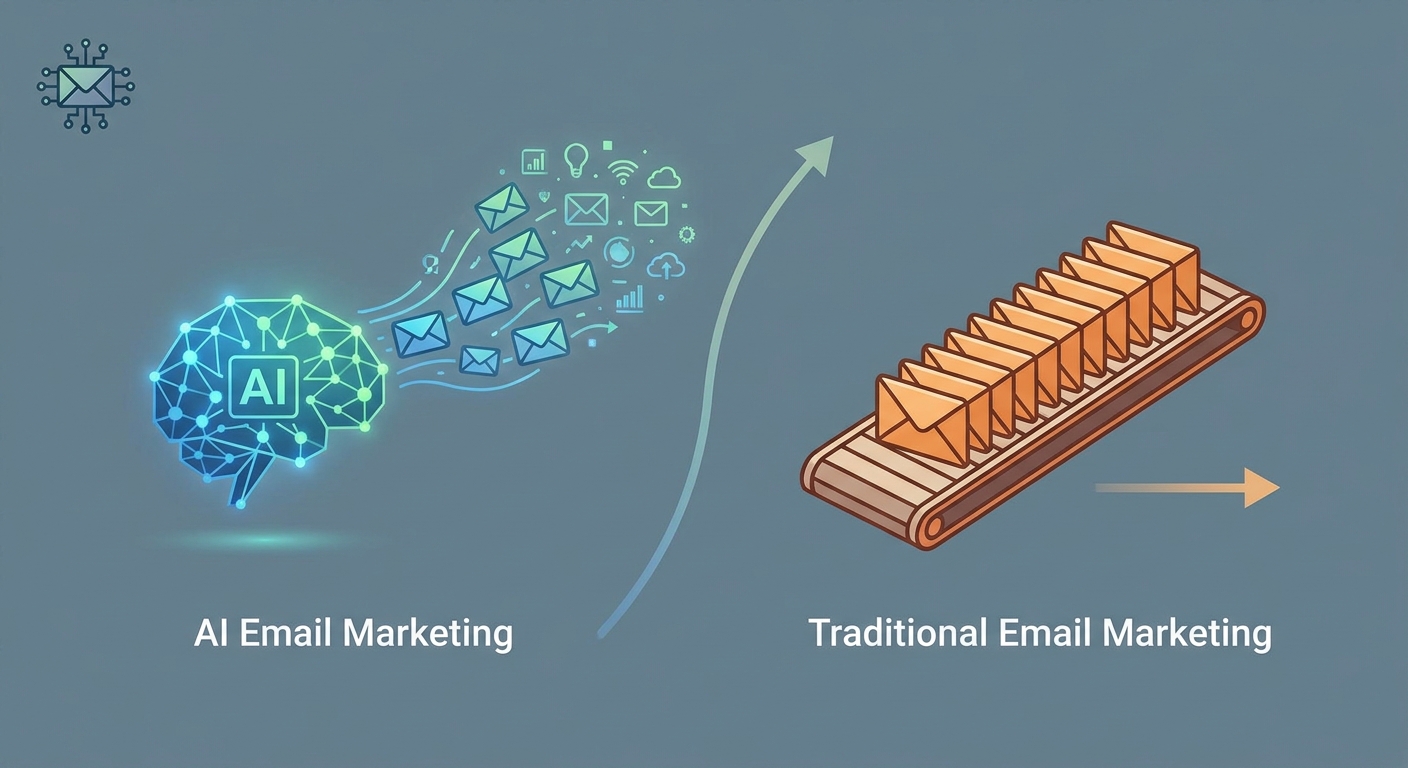
Answer Engine Optimization (AEO): How to Structure Your Blog to Rank in ChatGPT and Perplexity


Search is breaking. You can feel it.
The era of ten blue links is ending. Fast. You write a brilliant, three-thousand-word masterpiece. You obsess over the meta description. You hit publish. Crickets. Nothing happens. Your analytics dashboard stays completely flat.
Why? Because the game changed overnight.
While you sit around agonizing over keyword density reports from outdated SEO software, an entirely new generation of users is completely bypassing Google. They do not want to scroll through five pages of bloated text just to find a simple answer. They want immediate synthesis. They ask ChatGPT. They query Perplexity. They converse with Claude.
These platforms are Answer Engines. They do not give you a list of websites to read. They read the websites for you. They feed you the perfect answer.
But that raises a massive question. Where are these bots actually getting their facts?
They pull it from the live web. They scrape. They synthesize. They cite. If you want your brand to survive the next five years of digital marketing, you have to be the source they cite. You have to rank inside the chatbot.
Welcome to Answer Engine Optimization. AEO. Adapt or become entirely invisible.
The Death of Fluff
Let us be completely honest. Most SEO content is absolute garbage.
We trained ourselves to write for an ancient algorithm. We padded articles with hundreds of useless words just to hit an arbitrary word count. We buried the actual answer under six different H2 tags about "The History of Our Topic."
Humans hate reading this. Bots hate reading it even more.
Large Language Models (LLMs) operate on efficiency. They scan for entities, facts, and structured relationships. When Perplexity crawls your page looking for an answer to a user's prompt, it does not care about your clever introduction. It scans for the raw data. If your data is buried inside a massive, unstructured paragraph, the bot simply moves on. It finds another site that made its job easier.
You have to hand-feed the machine.
Stop burying the lead. The inverted pyramid style of journalism is back. State the most important fact immediately. Give the direct answer in the very first sentence of your section. Then use the rest of the paragraph to provide context.
Say a user asks about the best green tea brewing temperature. Steal it. Make that exact question your H2. Then drop the facts in line one. "The optimal temperature is between 160°F and 180°F." Boom. Direct. Factual. You just gave the LLM exactly what it needs to generate a response and cite your link.
Structure is Your Ultimate Weapon
You cannot just write plain text anymore. It is not enough. You have to format your content like a database.
Bots love structure. They crave it. When an AI agent is trying to parse information, HTML tags act like massive neon signposts.
Are you comparing two different software tools? Do not just write a narrative comparing them. Build a table. Use the tag. Label your rows and columns clearly. ChatGPT eats tables for breakfast. It can instantly understand the relational data inside a grid. It will often lift your entire table, display it to the user, and slap a highly visible citation link pointing straight to your domain.
Use bulleted lists. Use numbered steps. Use bold text to highlight key entities.
Think about how you naturally explain a complex process to a friend. You break it down. Step one. Step two. Step three. Giant walls of text are useless.
Use <ol> and <ul> tags instead. When you deploy these correctly, you map the exact semantic meaning directly for the crawlers. You are telling the AI, "Here is a sequential process." When a user asks an AI how to do something, the AI looks for lists. Be the list.
The Hallucination Factor
LLMs lie. We all know this.
They hallucinate facts with terrifying confidence. They invent statistics. They make up historical events. Why does it lie? It's just a prediction engine. It just guesses the next word. But when the training data gets messy? The model totally freaks out. It just starts inventing facts out of thin air.
This is a massive problem for users. But it is a massive opportunity for you.
Answer engines are actively trying to solve the hallucination problem. Tools like LogicBalls exist specifically to verify and ground AI outputs in factual reality, ensuring intent matches output without the guesswork. Search-focused AIs are doing the same thing. They are actively hunting for "ground truth" data on the web.
They want authoritative, unambiguous facts. If your website provides aggressively factual, verified, and well-structured information, the AI algorithms will lock onto your domain as a trusted source.
You need to become the anti-hallucination source.
Do not use vague language. Do not say, "Many people believe that email marketing has a high ROI." That is weak. The bot cannot use that. Say, "Email marketing generates an average ROI of $36 for every $1 spent." Quote a specific study. Link to the primary data.
When you provide concrete numbers, exact dates, and verified names, you become an anchor of truth in a sea of AI-generated noise. The answer engines will preferentially cite your content because it grounds their own outputs and prevents them from looking foolish.
The Semantic Knowledge Graph
A single optimized article is practically useless. It really is.
You cannot write one perfect post about "Machine Learning" and expect Perplexity to treat you as an expert. Answer engines evaluate your entire domain. They look at your topical authority. They want to know if you actually understand the subject matter or if you just got lucky with one piece of content.
They determine this by looking at your internal link graph.
Everything is connected. Your website needs to reflect those connections. If you write an article about "AutoML," it must link out to your other articles on "Neural Networks," "Data Training," and "Algorithm Bias."
This creates a semantic web. When the bot crawls your site, it follows these links. It maps the relationships between entities. It sees that you have comprehensively covered every sub-topic within a broader category. It builds a mathematical model of your authority.
But here is the ugly truth. Doing this by hand is absolute torture.
Tracking hundreds of internal links on a spreadsheet is a waste of human potential. You will forget to link older posts to newer ones. Your anchor text will get repetitive. The semantic web will break down.
This is exactly why smart marketing teams rely on a purpose-built ai article writer to automate the entire process. You need a system that understands your existing site architecture. When it generates a new piece of content, it should automatically weave in contextual, semantically relevant links to your older posts. Instantly. Without you lifting a finger.
The structure is built automatically. The web tightens. Your topical authority scores skyrocket.
Automating the AEO Pipeline
You cannot win the AEO game with low volume.
The machines are hungry. These bots chew through infinite data every single second. Want them to see you as an authority? You have to pump out highly structured, heavily researched content constantly. Dropping one post a month is a joke. ChatGPT won't even know you exist.
Content velocity matters. A lot.
But you also cannot sacrifice quality for speed. If you just spin up cheap, low-effort AI articles without proper formatting or factual grounding, you will get filtered out as spam. The major answer engines are getting incredibly good at ignoring thin content.
You need to scale quality.
Stop doing the tedious work yourself. Automate it. Give the boring formatting tasks to the machines so you can obsess over the strategy and the truth. You let the software build the tables. You let the software format the lists. You let the software handle the internal linking and the HTML tags.
If you want a step-by-step breakdown of exactly how to build this automated pipeline, check out this guide on how to use an ai article writer. It explains how to go from a raw keyword idea to a fully formatted, auto-published article that is structurally optimized for LLM retrieval.
Your job is to provide the unique perspective. The expert insight. The proprietary data. You give the AI the raw materials. Then you use a platform to structure those materials into a format that Perplexity and ChatGPT can instantly digest and cite.
Optimize for the Answer, Get the Click
People panic about Answer Engines. They think chatbots will steal all their traffic.
They are wrong.
Yes, purely informational queries are getting answered zero-click. If someone asks "What time is it in Tokyo?", they are never clicking a website again. Accept it. Move on.
But complex queries? Buying decisions? B2B software comparisons? Deep technical tutorials? Users still want to click through to the source. They want to verify. They want to read the full context.
When Perplexity gives a synthesized answer about the best backlink monitoring tools, it lists sources at the top of the screen. Those sources get clicked. heavily. It is highly qualified, high-intent traffic. The user has already read the summary. Now they want to buy.
If your table, your list, or your factual data was used to generate that summary, your logo is sitting right at the top of the chat interface.
Stop fighting the bots. Start feeding them.
Audit your existing blog. Rip out the massive blocks of text. Break them into lists. Add tables. Inject hard facts. Fix your internal linking. Use an automated platform to scale your output without losing that rigid, machine-readable structure.
The search algorithms of the past decade are fading away. The future belongs to the answer engines. Make sure they know exactly who you are.