Sound of Success: The Top AI Music Generators Transforming Business Audio

In the fast-paced world of digital marketing, silence is expensive. Every TikTok ad, corporate explainer, and podcast intro needs a soundtrack. But for years, businesses were stuck in "copyright hell." You either paid a fortune for licensing or risked a lawsuit.
Four of the tools below are one operation, not four choices. Verified 2026-09-03. FreeMusic AI, MusicAI, MusicArt AI and OpenMusic AI are presented in this article as separate products. They are built from the same codebase and run as branded instances of one template: 23 JavaScript bundles are byte-identical across all four sites (Next.js derives those filenames from content hashes, so identical hashes mean identical compiled code); all four carry the same FAQ sentence reproduced typo-for-typo; all four leak the same unrendered template placeholder,
{brandName}, in their upload terms; and all four use the same arbitration clause with only the shell company name swapped — FreeMusic Inc., OpenMusic Inc., MusicAI Technologies Ltd., MusicArt Technologies Ltd.They may still do the job. But comparing them against each other tells you nothing, and if one of these entities fails or disappears, they are not four independent suppliers to fall back on.
That era is over. Enter the AI music generator.
This technology isn't just a toy for bedroom producers anymore. It has become a critical asset for businesses scaling their content production. We are seeing a shift from "hiring a composer" to "prompting an algorithm."
In this guide, we dive deep into the tools reshaping the industry. We will look at how they function, their commercial viability, and the reality of using them for business.
Let’s turn up the volume.
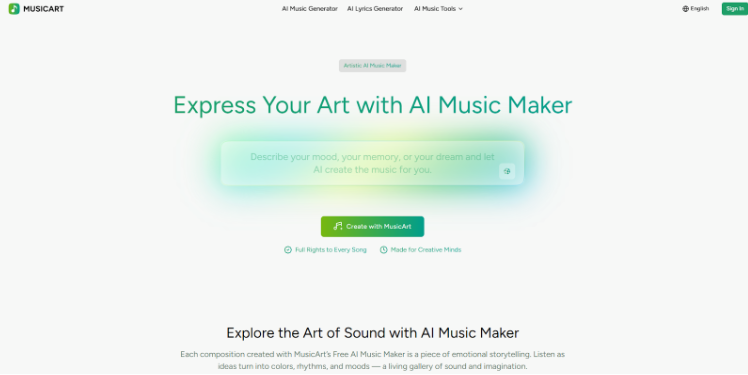
1. MusicArt: Visualizing Your Brand Sound
The Concept
Most marketing teams think visually first.
MusicArt understands this workflow. It bridges the gap between image and audio. Instead of struggling with musical jargon, you use visual cues to dictate the sound.
It turns the abstract into the audible.
Business Application
The Workflow: You upload an image—perhaps a mood board or a product shot. The AI music generator analyzes the aesthetic and generates a track to match.
Market Fit: This is perfect for fashion brands and design agencies. If you need the audio to match a specific color palette or vibe, this tool gets you there fast.
The Reality: It is highly creative but can be unpredictable. It’s great for inspiration but might require a few tries to get the perfect corporate jingle.
2. OpenMusic AI: The Startup’s Best Friend
The Lowdown
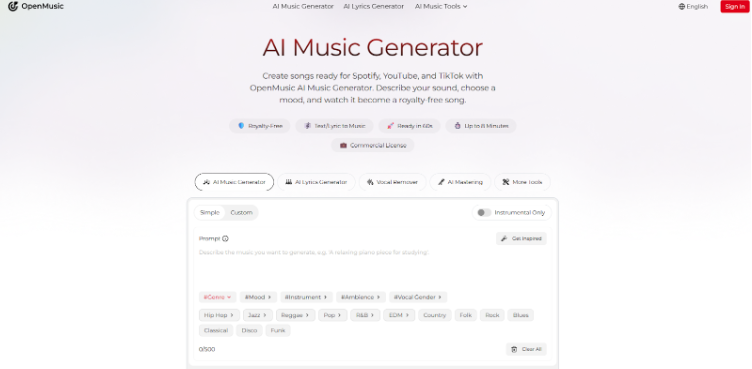
OpenMusic AI leans on accessible framing. ANALYSIS — two claims here were wrong. It publishes five tiers — Free, Starter, Hobby, Professional and Studio — with paid plans running from roughly $10 to $91 a month (OpenMusic AI, retrieved 2026-09-03, SOURCED), so it does not "strip away the complex subscription tiers found in other software". And the word "open source" appears nowhere on its site; this article implied a licensing model the product does not claim. It focuses on raw, generative capability without gatekeeping.
Why It Matters
Flexibility: It offers a high degree of control over the generation process. You aren't just pressing a "magic button"; you are tweaking parameters.
Cost Efficiency: For a bootstrapped business, keeping overhead low is key. This tool provides a budget-friendly entry into the world of the AI music generator.
User Experience: The interface is utilitarian. It prioritizes function over form, which appeals to developers and tech-savvy content managers.
3. MusicAI: The High-Volume Producer
The Engine
Content mills need volume.
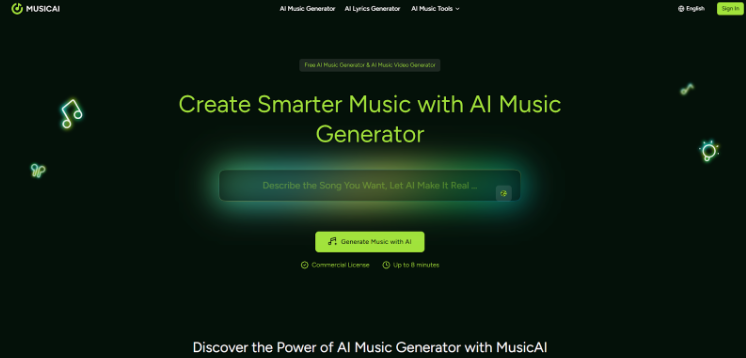
If your business strategy involves posting 50 videos a day across different channels, you need speed. MusicAI positions itself as a rapid-fire solution for bulk creation.
Commercial Edge
Speed: It is incredibly fast. You can generate multiple variations of a background track in seconds.
Versatility: It covers a broad range of generic styles. From "Corporate Upbeat" to "Lo-Fi Study," it hits the standard notes required for social media.
The Trade-off: While efficient, it sometimes lacks the "soul" of more expensive tools. However, for a 15-second Instagram Story, it gets the job done effectively.
4. Freemusic AI: The Safe Harbor
The Promise
The name says it all.
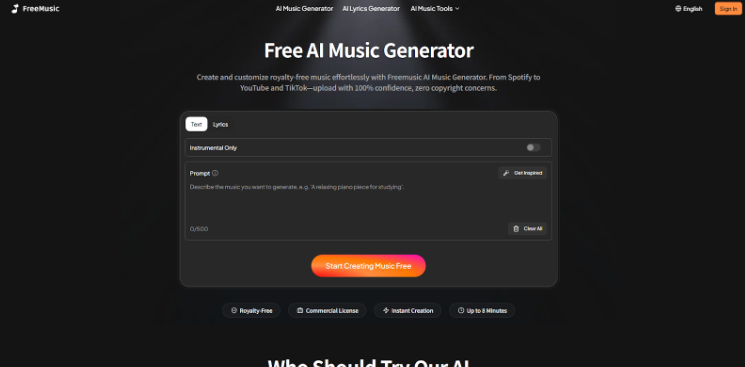
For many small businesses, the fear of a DMCA takedown is real. Freemusic AI markets itself on safety and simplicity. It aims to be the stock photo library of the audio world.
What You Get
Royalty-Free Focus: The licensing terms are generally straightforward. This transparency is vital for commercial projects.
Ease of Use: There is almost no learning curve. You select a category, and you get audio.
Limitations: As an AI music generator, the library can feel a bit repetitive. It is excellent for background elevator music or simple tutorials, but it won't win a Grammy.
5. MusicCreator AI: The Editor’s Suite
The Purpose
Video editors often struggle with static music tracks.
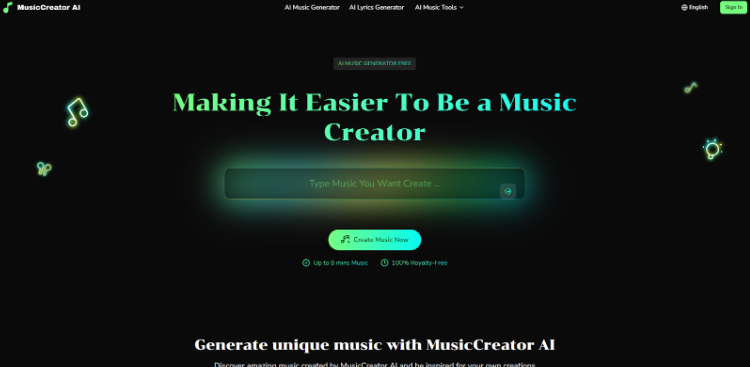
A song usually has a set length. Your video does not. MusicCreator AI attempts to solve the timeline problem. It functions less like a jukebox and more like a smart assistant.
Key Capabilities
Structural Control: This AI music generator allows you to define where the climax of the song hits. This is essential for syncing audio with a product reveal or a dramatic cut.
Target Audience: It is ideal for YouTube creators and freelance video editors.
Usage: You can re-generate specific sections. If the intro is too long, the AI can shorten it without creating an awkward "jump cut" in the audio.
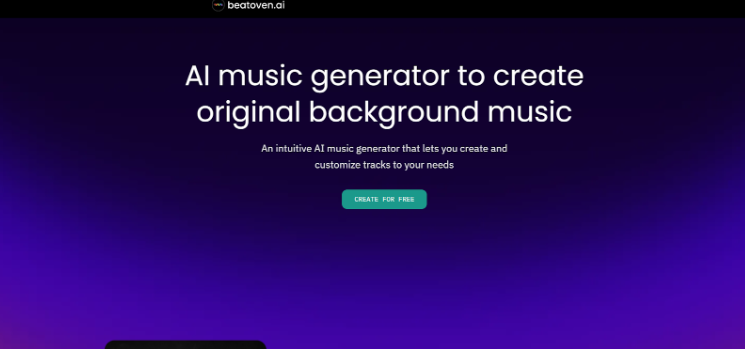
6. Beatoven.ai: The Mood Architect
The Vibe
Beatoven.ai is arguably one of the most B2B-focused tools on this list.
It doesn’t just make music; it manufactures emotion. The platform uses advanced mood-tracking logic to ensure the audio resonates with the viewer's psychology.
Under the Hood
Granular Control: You can upload a video and "paint" different moods over different sections. You can have a "calm" intro that shifts into an "energetic" body.
Industry Standard: It is widely used by podcasters and indie game developers.
The Impact: This level of customization is how modern businesses increase retention rates. If the music matches the narrative arc, viewers watch longer.
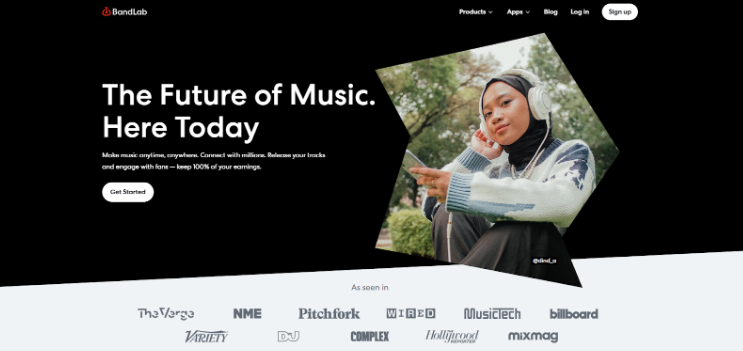
7. BandLab: The Collaborative Ecosystem
The Community
BandLab is a giant.
It is more than just software; it is a social network for musicians. Their "SongStarter" feature leverages AI to kickstart the creative process, which can then be finished by humans.
Strategic Advantage
Hybrid Model: This is the future of commercial music. You use the AI music generator to get a chord progression, then hire a human on the platform to add vocals.
Scalability: It connects businesses with millions of creators.
Uniqueness: Because you can edit the MIDI (musical data) directly, your jingle won’t sound like anyone else's. It offers bespoke quality at an AI speed.
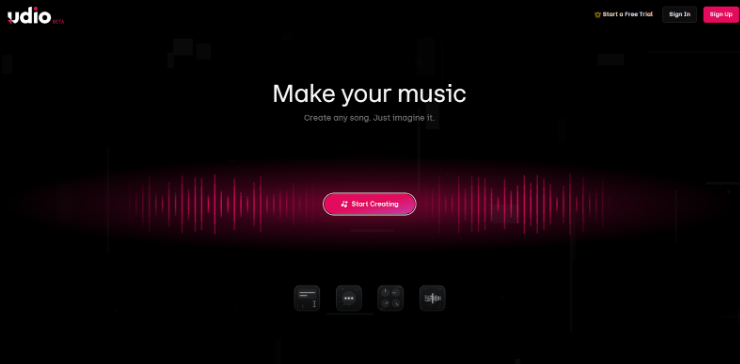
8. Udio.com: The Viral Hitmaker
The Disruption
Udio recently shocked the industry.
While many tools make "background noise," Udio makes songs that sound like they belong on the radio. The fidelity and vocal synthesis are currently best-in-class.
Market Power
High Fidelity: The audio quality is crisp. For high-end commercials or brand anthems, this is a serious contender.
Vocal Capability: It generates lyrics and singing that are frighteningly realistic.
The Risk: As a powerful AI music generator, it is currently at the center of copyright discussions. Businesses should be aware of the evolving legal landscape when using such high-performance tools.
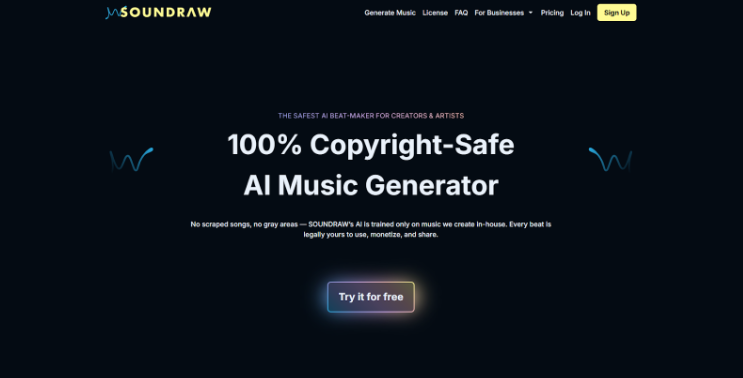
9. Soundraw.io: The Customization King
The Mission
Soundraw.io focuses on the "pain points" of content creators.
It acknowledges that finding the right song is easy, but finding the right song length is hard. It allows you to customize the composition to fit your exact needs.
Feature Set
Unlimited Customization: You can extend a song to 5 minutes or shorten it to 10 seconds. You can strip out the melody and leave just the bass.
Commercial Safety — read the licence, this was wrong. An earlier version of this article said you keep the rights to content created during your term even after cancelling. The vendor's licence says the opposite for a significant case: "If you use SOUNDRAW tracks as downloaded, you can only keep your content published while your SOUNDRAW subscription is active" (Soundraw, retrieved 2026-09-03, SOURCED). If you publish a track as downloaded and then cancel, you may have to take the content down. Check which usage class your work falls into before you rely on it.
Target: This is the go-to for YouTubers and heavy social media marketers.
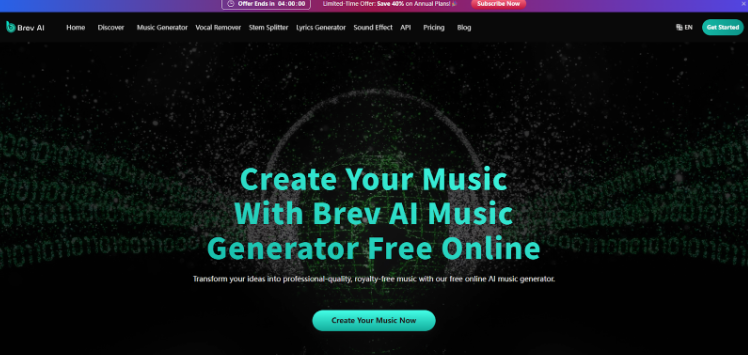
10. Brev.ai: The Text-to-Audio Sprinter
The Niche
Short-form video is eating the world.
Brev.ai is designed for the era of TikTok and Shorts. It thrives on text-to-music prompts, turning simple descriptions into instant audio clips.
Why It Works
Suno Integration: Many users note its high-quality output, often powered by advanced underlying models like Suno V3.5.
Simplicity: Type "Upbeat techno for car commercial," and it delivers.
Speed: It removes the friction. For a social media manager posting trending content, this AI music generator is a secret weapon.
The Commercial Revolution: AI’s Impact on Music Business
Democratizing Production
We are witnessing a "leveling of the playing field."
Ten years ago, a small coffee shop couldn't afford a custom brand anthem. Today, they can generate one in five minutes. This democratization allows small businesses to compete with big corporations in terms of production value.
The Shift in Value
Music is moving from a "product" to a "utility."
For business, audio is a tool to increase conversion rates. The AI music generator allows for A/B testing. Marketers can now test two different background tracks to see which one drives more sales.
This data-driven approach to audio is unprecedented.
Future Trends
Hyper-Personalization: Soon, ads will generate unique music for every specific listener based on their browsing history.
Copyright is already decided on the point that matters — this is not a future question. The US Copyright Office's position is that "the outputs of generative AI can be protected by copyright only where a human author has determined sufficient expressive elements", and the Register of Copyrights has said that extending protection to material "whose expressive elements are determined by a machine" would "undermine rather than further the constitutional goals of copyright" (US Copyright Office, retrieved 2026-09-03, SOURCED). ANALYSIS — an earlier version of this article said we would "see clearer laws regarding AI copyright, making these tools even safer". The human-authorship bar applies now. A fully machine-generated track is not something you can register, whatever the vendor's licence says about your right to use it — those are two different questions, and this article conflated them. The original wording follows: We will see clearer laws regarding AI copyright, making these tools even safer for enterprise use.
Hybrid Workflows: The most successful creators will be those who curate AI output rather than creating from scratch.
Final Thoughts
The music industry isn't dying; it is expanding.
For business owners and marketers, these tools represent efficiency. They represent a way to bypass hurdles and connect with audiences emotionally.
Whether you choose the granular control of OpenMusic AI, the viral potential of MusicArt, or the quick workflow of MusicAI, the goal remains the same.
You need to stand out.
The right AI music generator is the key to unlocking that potential. Don’t just make noise. Make an impact.
How This Guide Was Sourced
Written and maintained by the LogicBalls editorial team (logicballs.com). Disclosure: LogicBalls builds AI writing tools. No vendor here paid for placement, and this article contains no affiliate or referral link — every outbound URL was checked for tracking parameters on 2026-09-03 and none carried any.
AI involvement. This article was AI-assisted. Its vendors, licences and copyright claims were checked on 2026-09-03. Nothing was deleted: claims that proved wrong were corrected in place with the earlier wording named.
Four of the reviewed tools are one product wearing four names. See the note at the top — the evidence is 23 byte-identical JavaScript bundles, a shared FAQ typo, the same unrendered template placeholder in all four sets of terms, and four shell entities sharing one arbitration clause. This article presented them as four independent options and it should not have.
Two licensing claims were wrong, and licensing is the whole risk here. One vendor was credited with a "permanent license" surviving cancellation; its own licence says that for tracks used as downloaded, content can only stay published while the subscription is active. Another was described as stripping away subscription tiers when it publishes five of them, and as open source when it never uses the term.
The copyright framing was the deeper error. This article treated AI-music copyright as a problem awaiting future legislation. The US Copyright Office has already stated the operative rule: output is protectable only where a human determined sufficient expressive elements. A vendor's licence granting you commercial use is not the same as you owning a copyright, and a business planning around exclusivity needs to understand which one it actually has.
Most tools named here are not linked at all — Udio, Soundraw, Beatoven.ai, BandLab, Brev.ai and MusicCreator AI appear in bold with no source, while the four related sites carry all the links.
No LogicBalls telemetry is used in this guide.