AI Chatbots For The Insurance Industry

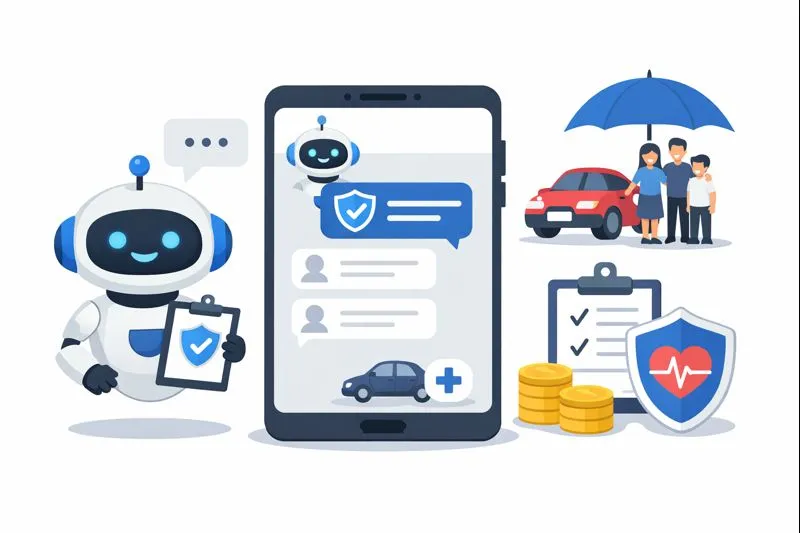
Insurance work includes a lot of repeated, time-critical tasks. That’s why a lot of insurers now let AI chatbots handle the first steps. The chatbot reads the request, understands the goal, collects the information, and routes it correctly.
Earlier chatbots were simple. Modern ones can understand context. They can read how something is written, notice the intention behind it, and reply with information that fits the question. Many insurers use them as part of AI insurance services to make customer experience smoother and daily operations less manual.

How AI chatbots in the insurance sector actually work
Insurance work is mostly driven by information and timing. A customer wants to know what their policy covers. Someone needs to file a claim. A document is missing. A payment wasn’t processed. AI chatbots handle these smaller interactions so human agents can focus on the more complex parts of the job.
A chatbot can pull up policy information, check past claims, confirm payments, or spot missing pieces. If something doesn’t make sense, it asks the customer to clarify. And if the request needs a human touch, it hands it over with a clear summary so nothing gets lost.
Insurance chatbot use cases
There are several areas where these tools make a measurable impact. While chatbots don’t replace because writing content with human expertise, they remove a lot of the friction that slows everyone down.
Claims intake
Most claims go through the same steps, so the chatbot is useful for collecting documents and checking whether the claim fits the policy. If something is missing, it asks for it immediately. This reduces delays and helps the case reach an adjuster faster.
Policy questions
People often want quick answers about coverage, renewal dates, deductibles, or how to update their details. The chatbot can handle these right away and pull the right information without making anyone search manually.
Lead qualification and sales
Many people reach out to compare plans or ask for quotes. The chatbot can gather the basic information, run a few checks, and prepare a draft for the sales team. This keeps the human side focused on real conversations instead of repeating the same intake questions.
Document and data checks
Insurance involves a lot of documentation. A chatbot can cross-check uploaded files, spot missing signatures, validate date formats, or compare the document with policy requirements. Customers receive corrections immediately instead of waiting for someone to review the file.
Internal team support
AI chatbots help employees by searching internal guidelines, summarising long documents, locating past cases, or sending reminders for deadlines. This reduces context switching and keeps communication organised.
AI Fraud Detection support
Fraud checks still rely on human judgment, but AI chatbots can take care of the early filtering. They spot inconsistencies, unusual patterns, or details that don’t match past records. They don’t make the final call, but they help direct the right cases to the right people.
What makes insurance chatbots useful for customers
The speed and consistency of chatbots result in advantages that customers notice right away. Common benefits include:
shorter wait times
clearer instructions during claim filing
fewer errors from missing documents
faster updates on policy changes
immediate help outside working hours
When routine questions are resolved quickly, people feel more confident in the insurer. And when the chatbot can’t solve something, the handoff to a human agent is smooth because all details are already captured.
Why AI chatbots matter for insurance companies
Insurance companies handle thousands of small tasks that accumulate over time. AI chatbots help by taking on the simpler steps automatically, giving human teams more time for negotiations, complex claims, and cases that need expertise.
From an operational standpoint, the advantages include:
less manual sorting of messages
fewer bottlenecks in claims and policy updates
reduced human error in data entry
more predictable workloads
faster responses to customers
AI chatbots also work well with document processing tools and risk analytics platforms. When combined with AI insurance services, the whole workflow becomes quicker and easier to manage.
Choosing the right setup
Not every insurer needs the same system. Some choose simple rule-based chatbots for straightforward tasks. Others need custom solutions that integrate with policy databases and claims platforms. The best approach is the one that fits the existing workflow and reduces steps instead of adding new ones.
AI chatbots in the insurance industry are most effective when they support humans. They handle the routine work and let experts focus on the complicated parts. This combination usually leads to faster service and fewer errors.