
7 AI Receptionists for Surgical Practices: A 2026 Comparison


TL;DR
- This guide evaluates the top seven AI receptionist platforms specifically tailored for the high-stakes demands of surgical practices. It covers critical features such as HIPAA compliance, automated surgical scheduling, and post-operative follow-up capabilities. By comparing integration ease and patient experience, the article provides a clear roadmap for clinic managers looking to reduce administrative burnout and ensure no patient call goes unanswered during busy consultation hours.
Search for an AI receptionist and you will find dozens of products that answer a phone pleasantly.
Very few have a defensible answer for the call that actually decides things in surgery, which is the post-op patient with a bleeding incision on a Saturday night.
This ranking is built for surgical practices, not general small business.
Two capabilities separate the list: whether an urgent caller reaches a human under a clinician-approved protocol, and whether bookings respect the real schedule, including days blocked for the operating room.
Every option below describes itself as HIPAA-compliant in its own published materials. That is a starting point rather than a finish line, so each entry ends with what to test before you sign anything.
How we ranked them
The criteria come from the five calls that decide whether a surgical practice keeps the tool: the after-hours post-op complication, the lunchtime referral, the pre-op question, the global-period booking and the workers' comp intake.
Clinical escalation. Does an urgent after-hours call reach the on-call surgeon, or a message queue? Is there a defined fallback when the first contact does not pick up?
Live scheduling. Does it book into the practice management or clinical record system in real time, or does it capture a request for staff to process later?
Surgical scheduling logic. Global periods, visit types, subspecialty matching and blocked operating-room days.
Documentation. What gets recorded, transcribed and written back, where it is stored and how it is matched to the right patient.
Compliance and contracts. A vendor handling protected health information on your behalf needs a Business Associate Agreement. A HIPAA statement on a marketing page is not the same thing.
The descriptions below reflect each vendor's own published claims, not independently tested performance.
The seven options, ranked
1. Central AI
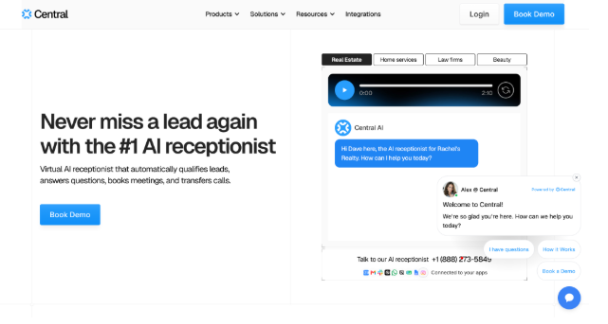
Central AI answers calls 24/7, books appointments live during the call against a connected calendar and produces a written summary of every conversation.
Its trust and security page states the platform is fully HIPAA compliant, executes Business Associate Agreements with all customers handling PHI and holds ISO 27001:2022 certification.
The published FAQ says the AI handles 90 to 95 percent of calls and escalates to a live receptionist when it cannot, with support for multi-department transfers.
Best for: solo surgeons and small groups that need dependable after-hours answering and a signed BAA without a health-system contract. Published pricing starts at $89 per month for 90 calls, with booking, lead capture, call summaries and 24/7 service on every plan.
Probe: confirm which scheduling system it will write to and walk through your escalation script, including the fallback when the on-call clinician does not answer. Before adding separate prior authorization software, confirm what the answering layer already covers on payer and billing calls.
2. Zocdoc Zo
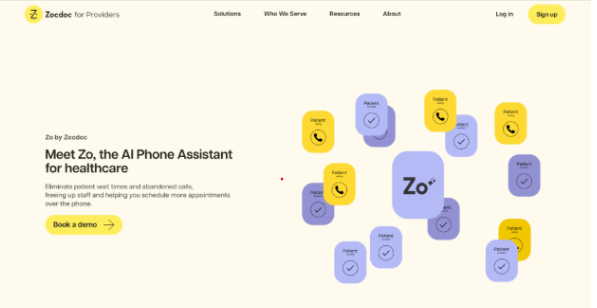
Zocdoc describes Zo as an AI phone assistant that answers on the first ring, collects insurance, follows your scheduling rules and books directly into the record system.
Zocdoc states that Zo integrates with leading systems, is HIPAA-compliant and SOC 2 certified.
Pricing is outcome-based, with no time-based charges and no license fees, so practices pay when Zo successfully manages an appointment.
Best for: consumer-facing practices already inside the Zocdoc ecosystem that want the phone handled by the same platform.
Probe: test new consults, post-op checks, visits inside the global billing period and blocked operating-room days.
Surgical triage depth is not where this product is centred, so walk the exact route an urgent caller takes to a person.
3. Phreesia VoiceAI
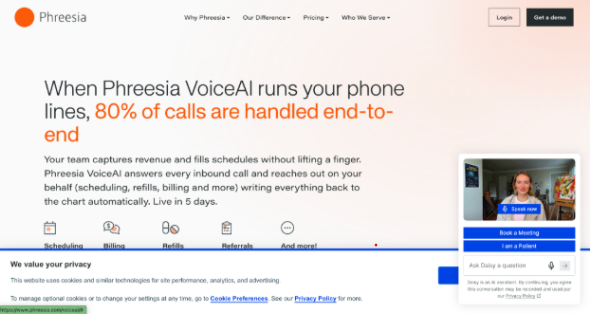
Phreesia describes VoiceAI as answering immediately in the patient's preferred language, verifying identity against existing records and routing by intent rather than phone tree.
Urgent after-hours calls go to the right on-call provider through real-time mobile alerts and HIPAA-compliant two-way texting.
Every interaction is recorded, transcribed and timestamped, then written back to the chart.
Best for: mid-size to large groups already running Phreesia intake, where the after-hours module is an extension rather than a new vendor.
Probe: test surgical scheduling templates and on-call paging in a live demo. Confirm how many languages are supported end-to-end rather than at the greeting, and request a written quote.
4. Relatient Dash Voice AI
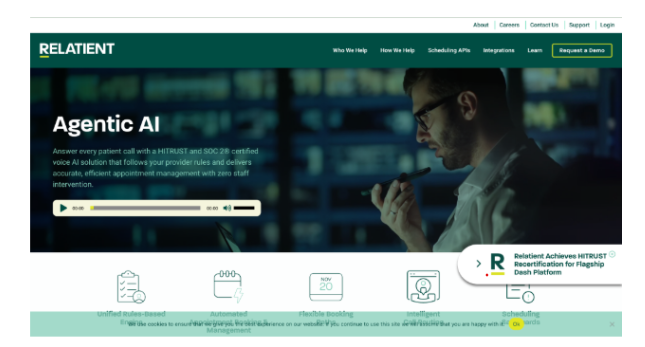
Relatient states that Dash Voice AI books, reschedules and cancels appointments with real-time posting to the practice management or clinical record system, using the same rules engine as the wider Dash platform.
A newer clinical request automation capability turns clinical, medication and billing requests into actionable tasks for the right care team.
Relatient describes Dash Voice AI as HITRUST and SOC 2 certified alongside HIPAA compliance, with i1 recertification announced in September 2026.
Best for: contact center and centralized access teams that want scheduling and request routing governed by one set of rules.
Probe: ask how surgical visit types and global periods are categorized, and whether a standalone voice deployment exists outside the broader platform.
5. Hyro
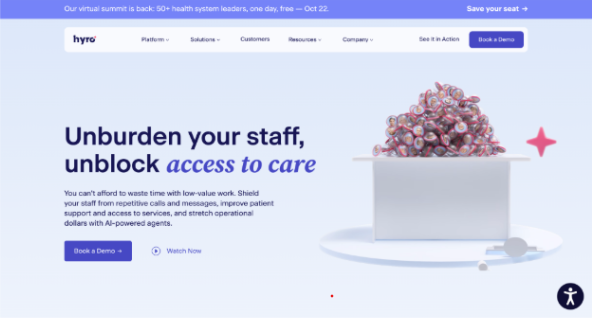
Hyro describes HIPAA-compliant AI assistants that automate over 85 percent of routine calls across voice and digital channels, covering registration, scheduling, physician search, prescription refills and smart routing.
The platform is built around enterprise contact center volume rather than a single practice's phone line.
Best for: health systems and large multi-specialty groups with call-center-sized volume.
Probe: confirm whether your proposed deployment includes direct booking, request capture or both.
Smaller groups should ask about minimum commitments, implementation timelines and the staffing needed to maintain it, then request current pricing.
6. Parlance
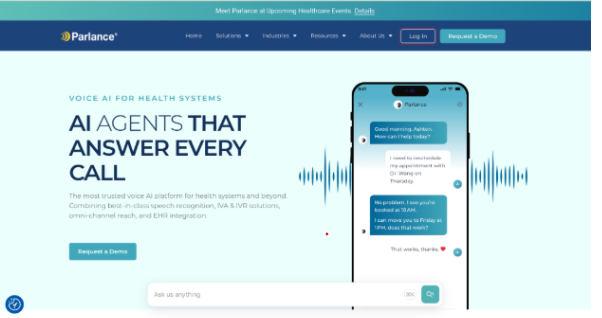
Parlance describes HIPAA-compliant natural voice AI that answers, understands and routes every healthcare call around the clock, combining speech recognition, omnichannel reach and clinical record integration.
The company states it serves more than 400 health systems and has answered over 1.9 billion patient calls.
Recent additions include self-service configuration for greetings and FAQ answers, plus an AI-generated call summary handed to agents on warm transfer.
Best for: hospital and integrated network patient access centers modernizing the front door at scale.
Probe: ask which integrations exist for your specific systems and what configuration they require.
Independent practices should check setup cost and deployment scope before committing to a platform built for hospitals.
7. DoctorConnect ARIA
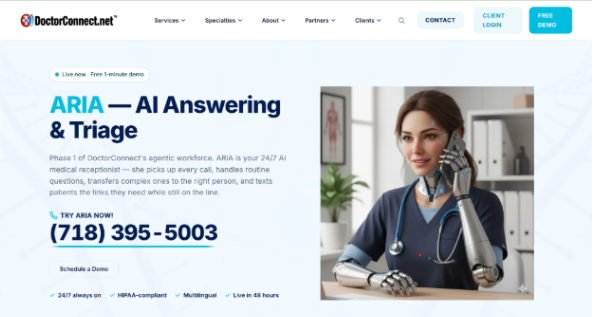
DoctorConnect describes ARIA as a 24/7 AI medical receptionist that answers every call, handles routine questions from your knowledge base, routes complex calls by department and texts patients scheduling links while still on the line.
The vendor lists it as HIPAA compliant by default, with caller ID matching for existing patients and support for 34 languages.
ARIA pairs with a companion module to complete bookings rather than booking on its own.
Best for: independent practices whose main pain is hold times and missed daytime calls.
Probe: the vendor uses both "HIPAA-compliant" and "HIPAA-aligned" across its pages, so get the position confirmed in writing and obtain the BAA before any PHI moves. Confirm which modules your quote includes.
What about traditional answering services?
The human answering service is the incumbent this category replaces. A person takes a message and relays it.
There is no booking, no write-back to the record and no triage logic beyond the script, and per-minute pricing punishes busy months.
The honest comparison is not features against features. It is the cost of a missed Saturday-night escalation against the cost of a service that cannot book.
What to make every vendor demonstrate
Bring your own scenarios to the demo and ask the vendor to run them on test data.
A caller says they had surgery on Tuesday and the incision is bleeding.
The assistant should follow your clinician-approved escalation protocol, including emergency instructions where appropriate, rather than offer an appointment or assess the symptom.
The on-call clinician does not answer. Test the backup contact, the notification method and who owns the follow-up.
A caller requests a post-op visit or first consult on a blocked operating-room day.
Confirm the assistant respects the actual template rather than the generic availability feed.
A caller asks for appointment details. Verify how identity is confirmed before anything is disclosed.
A front desk rollout that holds up
Start with scheduling and referral intake, and route clinical questions to staff under an approved protocol.
This is ordinary workflow automation applied to the phone, and the same sequencing rules apply.
Define after-hours routing in writing, covering escalation triggers, contact methods, emergency instructions and the fallback if nobody answers.
Pilot with two or three providers for a fixed period while staff review every booking and handoff.
Review booking accuracy, abandoned calls, missed escalations and patient complaints weekly. Expand into refill and clinical request intake only once staff can reliably close those tasks.
Compliance guardrails
A BAA sets contractual responsibility for protecting PHI, but signing one does not by itself make a deployment compliant.
Review access permissions, storage, retention, incident reporting and any subcontractors that touch patient data.
Tell callers they are speaking with an automated assistant.
Keep it inside approved administrative tasks, limit data collection to what is needed and align recording practices with your written policy and applicable consent rules.
Offer a clear path to a person, including language assistance. Clinician-approved emergency instructions should never depend on someone picking up a transfer.
The bottom line
Pick your camp first. Health systems should shortlist Hyro and Parlance, and groups already standardized on an intake or marketplace platform should look hard at extending it before adding a vendor.
For a surgical group of two to fifteen providers, the shortlist is shorter than the market suggests, and the tiebreaker is the Saturday-night call.
Before signing, get a written walkthrough of exactly what happens to that call, including who is accountable if the first handoff fails.