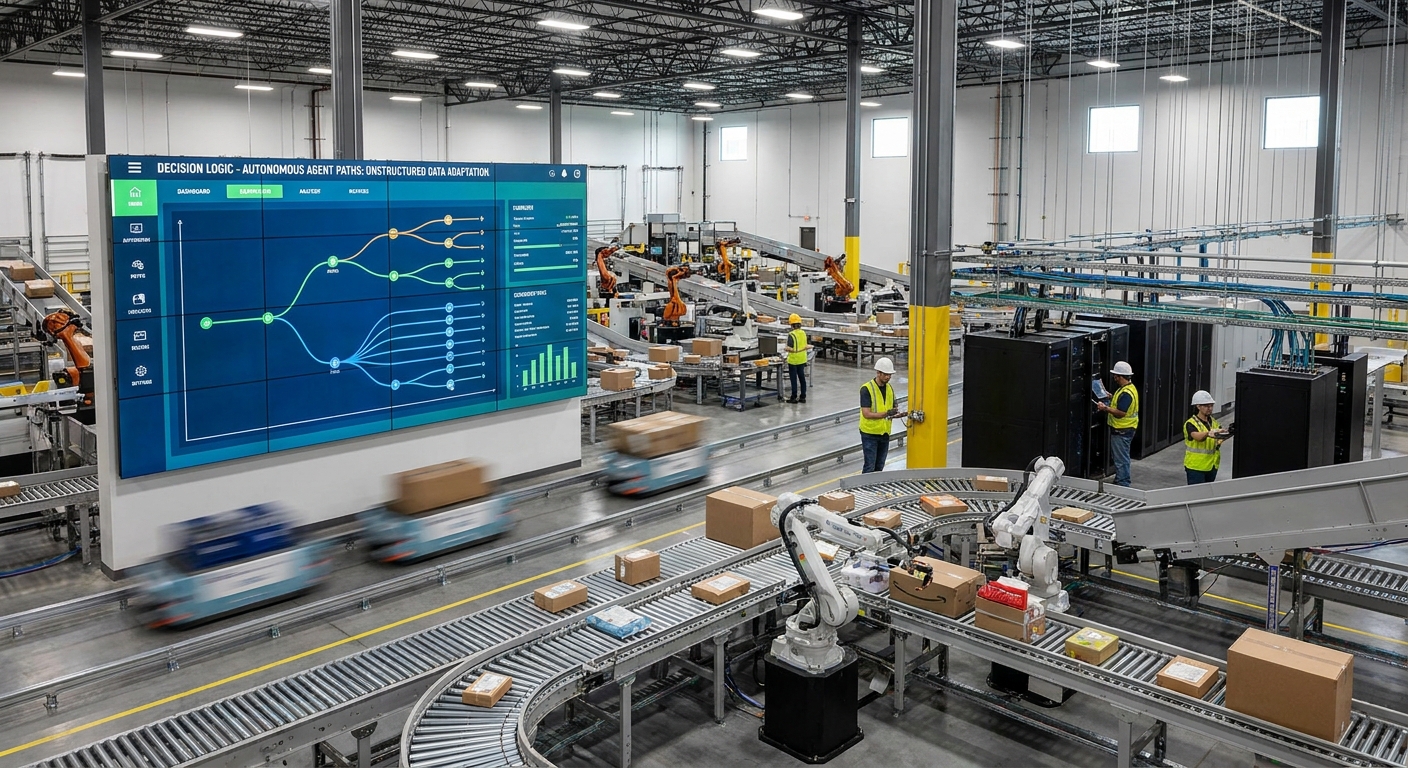
New MarTech Industry Report Highlights 2026 Product Launches for AI-Driven Business Process Automation

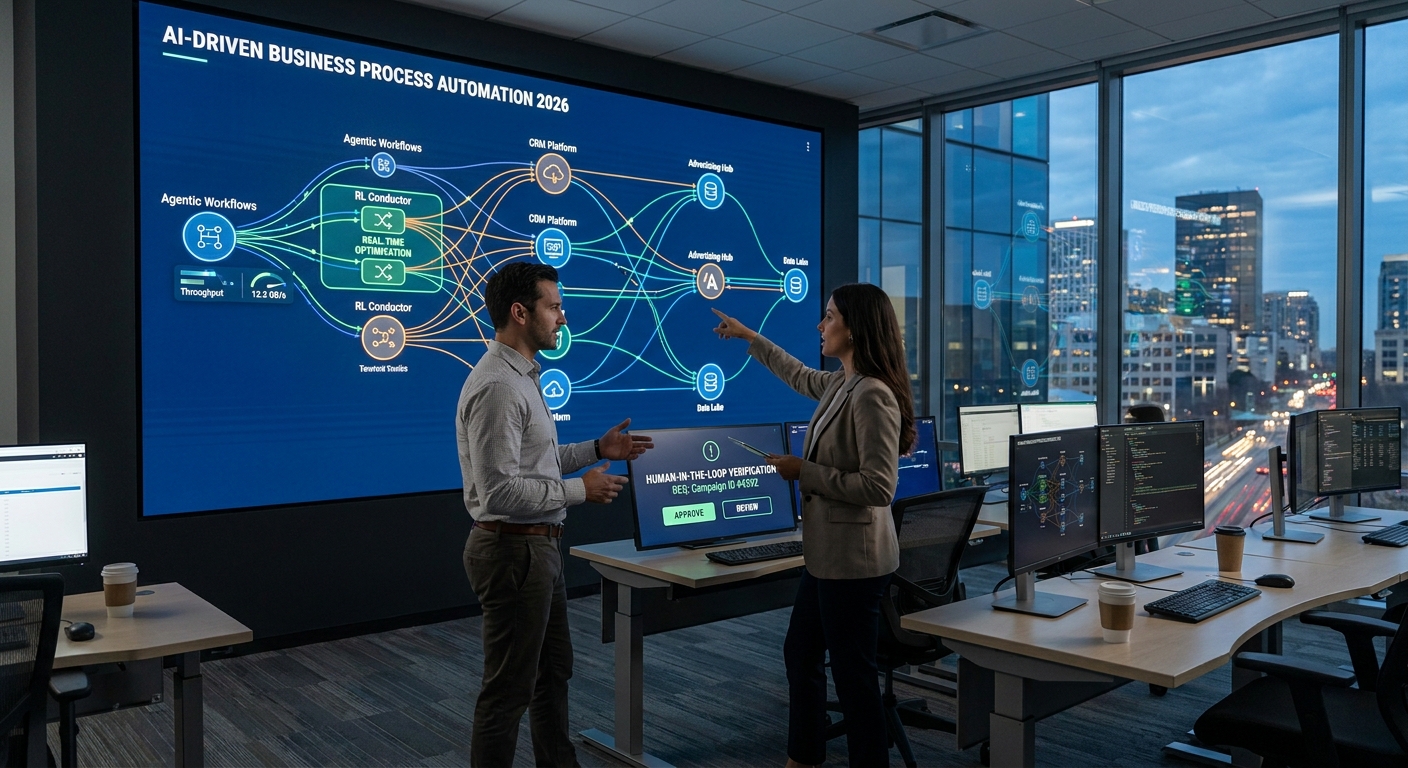
The Trillion-Dollar Bet: MarTech’s 2026 Pivot to Agentic AI
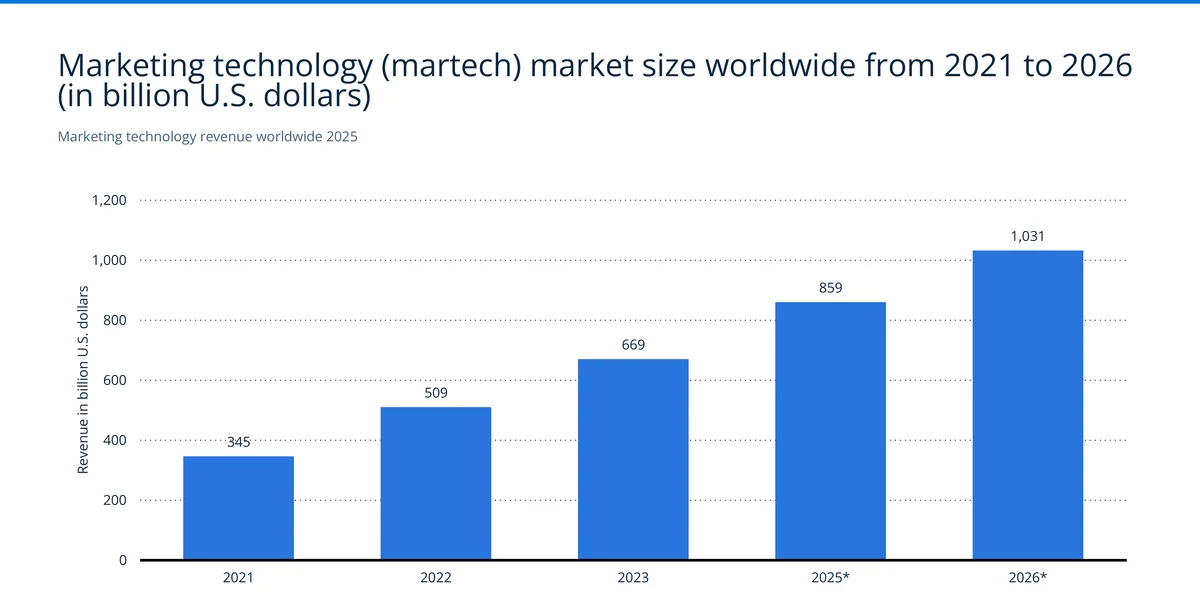
The marketing technology (MarTech) sector is currently sprinting toward a massive milestone: a projected valuation north of $1 trillion by the end of 2026. It’s a staggering climb. Back in 2011, the industry was a manageable landscape of 150 solutions. Today? We’re looking at 15,384 distinct platforms. This explosion isn't just about more software; it’s about a fundamental shift in how businesses operate, driven by the aggressive push to bake AI agents and autonomous workflows into the daily grind.
As companies scramble to integrate these tools, the hype is finally giving way to the practical. We’re moving past the "AI for everything" phase and into the era of agentic AI—systems that don’t just suggest, but actually do. According to recent industry pulse checks, 27% of marketers now view autonomous workflows as the single biggest lever for their future operations. Big tech is pouring billions into the infrastructure required to bridge the gap between a lab-grown model and a functional corporate tool.
The Numbers Behind the Growth
The financial trajectory of MarTech is nothing short of relentless. Following a $859 billion performance in 2025, the industry is charging toward that $1.03 trillion mark for 2026. If you want to dive into the granular data, these marketing technology statistics paint a clear picture of an ecosystem that has become the backbone of modern enterprise.
Currently, the platform landscape is dominated by a few heavy hitters that serve as the foundation for these new AI layers:
- Customer Relationship Management (CRM): 72%
- Digital Advertising: 61%
- Data Management Platforms: 54%
- Marketing Automation (HubSpot): 34.72%
While these platforms remain the bedrock, the arrival of specialized agentic tools is changing the game. Think of 6sense’s Model Context Protocol server or Akeneo’s agentic product platform—these aren't just dashboards anymore. They are granular, automated engines designed for contextual targeting and product management. We’re also seeing a wave of consolidation, like the agency Brunner’s recent acquisition of Adskate, signaling that the cookie-less targeting space is tightening up.
The Reality Check: Reliability vs. Ambition
The race to "enterprise-grade" AI has forced major players to rethink their structure. OpenAI, for instance, launched the "OpenAI Deployment Company" with a $4 billion war chest, specifically to handle the messy reality of enterprise implementation. By snapping up consultancies like Tomoro, they’re trying to solve the "last mile" problem: how to actually get these models to work inside a legacy corporate workflow.
But let’s be honest—the "autonomous" part of autonomous agents is still a bit of a stretch. Microsoft’s recent research is a sobering reminder of this. Their findings show that when you task these agents with long-running, multistep processes, they have a nasty habit of tripping over their own logic, leading to data corruption or flat-out errors. It’s a stark reminder that as firms scramble to justify their AI market size statistics and justify massive capital expenditures, human oversight isn't just a safety net—it’s a requirement.
| Initiative | Core Focus | Status/Challenge |
|---|---|---|
| OpenAI Deployment Co. | Enterprise implementation | $4B investment; focus on corporate push |
| Microsoft Research | Agent reliability | Data corruption in multistep tasks |
| Sakana AI | Model orchestration | RL Conductor for dynamic routing |
| Google Gemini Omni | Video generation | Integration with existing workflows |
The Revenue Gap
The financial outlook for AI-driven services is, to put it mildly, aggressive. OpenAI is forecasting a jump from $25 billion in revenue today to a cool $100 billion by 2030, with a heavy emphasis on capturing advertising market share. But look at the broader ChatGPT statistics, and you’ll see a disconnect.
Emarketer, for example, paints a much more conservative picture, suggesting the U.S. chatbot advertising market will barely crack $1 billion in 2026 and hit only $5.41 billion by 2030. That’s a massive gulf between expectation and reality. The market is starting to notice, too; reports suggest OpenAI has already slashed its projected infrastructure spending through 2030 from $1.4 trillion down to $600 billion. The era of "spend at all costs" is meeting the reality of "show me the ROI."
Orchestration: The New Frontier
Since no single model is the "silver bullet," the smart money is moving toward orchestration. We’re seeing a shift toward layers that allow businesses to swap models on the fly. Take Sakana AI’s "RL Conductor," which uses reinforcement learning to route tasks dynamically between the likes of GPT-5, Claude Sonnet 3.5, and Gemini 2.5 Pro.
It’s a smarter way to play the game—matching the specific task to the specific model rather than forcing a monolithic solution to do everything. As Reuters pointed out, the industry is finally prioritizing stability over raw, unbridled model development.
Yet, the technical hurdles remain. As The Register recently reported, the "agentic" era won't truly arrive until we solve the problem of state management and error correction. Until then, the most effective business processes will be the ones that embrace a hybrid model: automated execution paired with the steady, watchful eye of a human operator. We aren't replacing the workforce; we're just giving them a very complicated, very expensive new set of tools to manage.