Microsoft Retrains Sales Teams to Compete With OpenAI and Anthropic in Enterprise AI Market

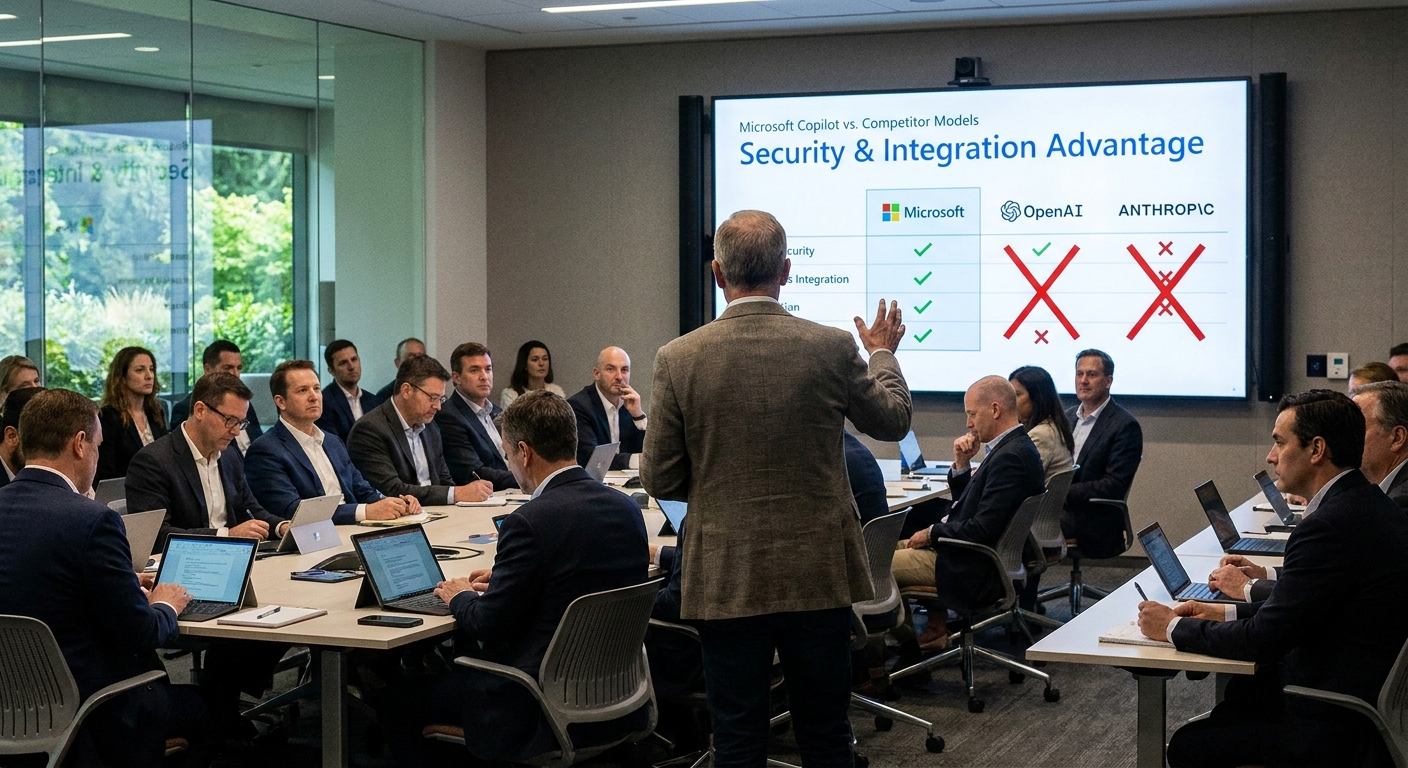
Microsoft is pulling a classic pivot. The company—which once bet the farm on its partnership with OpenAI—is now aggressively training its sales army to treat its former allies like the competition. It’s a sharp turn, moving away from the "neutral platform" narrative toward a "Microsoft-only" ecosystem. The message to enterprise clients is simple: why bother with the complexity of Anthropic or OpenAI when you can just stay in the walled garden?
This isn't just about software; it’s about survival. Microsoft is under the microscope, with investors grumbling about the massive, eye-watering capital expenditure poured into AI infrastructure. With the stock taking a hit—down 20% this year—the board needs a win. They’re betting that if they can lock enterprise clients into their proprietary, end-to-end stack, they can stop the bleeding and prove that their AI investments actually pay off.
The Gloves Are Off
The honeymoon phase with OpenAI effectively ended back in April. When they amended their partnership to remove exclusivity clauses, the writing was on the wall. OpenAI was free to shop its tech elsewhere, and Microsoft was free to stop playing nice.
Now, the internal directive is clear: stop being model-agnostic and start being a salesperson. Reports suggest that Copilot lead Jacob Andreou and other high-level execs are coaching staff on exactly how to dismantle the competition. The script is surprisingly blunt. If a client mentions Anthropic’s Claude, the sales team is prepped to pivot to "latency," "security gaps," and "integration headaches." They aren't just selling a tool anymore; they’re selling a narrative that third-party models are essentially disjointed, insecure, and ultimately, a waste of money.
| Feature Area | Microsoft Positioning | Competitor Critique |
|---|---|---|
| Security | End-to-end enterprise integration | Lacking robust security frameworks |
| Performance | Optimized for speed and accuracy | Alleged latency and output errors |
| Cost | Integrated, cost-effective platform | Higher total cost of ownership |
| Integration | Full-stack ecosystem | Disjointed component offerings |
Chasing the ROI
Why the sudden aggression? It’s the money. When you spend billions on GPUs and data centers, you can’t afford for your customers to "model hop" between vendors. Microsoft needs to prove that its ecosystem is the only one that makes financial sense.
CEO Satya Nadella has been leaning hard on the "Unilever case study" during investor calls, claiming the firm saved $300 million by ditching third-party models for Microsoft’s native stack. It’s a compelling hook. By framing the switch as a cost-cutting move rather than a product downgrade, Microsoft is trying to turn the tide of investor sentiment. They are telling the market: we aren't just building AI; we’re building the infrastructure that makes AI profitable.
Cleaning House
The shift isn't just happening on the sales floor; it’s happening in the code, too. Microsoft’s 'Experiences + Devices' division is quietly phasing out external tools. If you’re a developer at Microsoft, the days of reaching for Anthropic’s 'Claude Code' are numbered. The company is pushing its own internal solutions, like the 'GitHub Copilot CLI,' to ensure that the entire development lifecycle stays under the Microsoft umbrella.
As Microsoft is increasingly relying on its own models, the strategy is becoming crystal clear: vertical integration is the new gold standard. They want to own the stack, the model, and the deployment.
The move is reportedly training salespeople to talk down OpenAI and Anthropic as a matter of policy. It’s a bold, risky play. By positioning themselves as a "full AI platform," they are betting that ease-of-use and security concerns will outweigh the desire for the "best-in-class" performance that a mix-and-match strategy might provide.
The Road Ahead
Industry analysts are watching this closely. As Microsoft trains its sales team to talk down OpenAI and Anthropic models, the company is effectively declaring that the era of the "neutral host" is over. They aren't just the landlord of the AI world anymore; they’re the tenant, the developer, and the primary competitor.
The strategy boils down to a few core pillars:
- Platform Consolidation: Stop selling pieces; start selling the whole house.
- Cost Optimization: Cut out the middleman (and the expensive API fees) by favoring in-house models.
- Competitive Differentiation: Use fear, uncertainty, and doubt regarding security to keep clients from straying to Anthropic or OpenAI.
- Internal Alignment: Force the company’s internal tools to match the sales pitch.
Will it work? That’s the multi-billion dollar question. Large enterprises are notoriously fickle, and they don't like being told what to use. Microsoft is betting that the convenience of a "one-stop-shop" will be enough to keep the big spenders from looking elsewhere. If they’re wrong, they risk alienating the very ecosystem they helped build. If they’re right, they’ve just secured their dominance for the next decade.
For now, the sales teams have their marching orders. The pitch is ready. The question is whether the enterprise world is ready to buy what Microsoft is selling.