New Industry Report Forecasts Autonomous AI Agents Will Redefine Digital Marketing Workflows by 2026
autonomous agentic workflow platformsdigital marketing workflows 2026generative AI enterprise adoptionMarTech AI integrationAI content marketing ROI

On this page
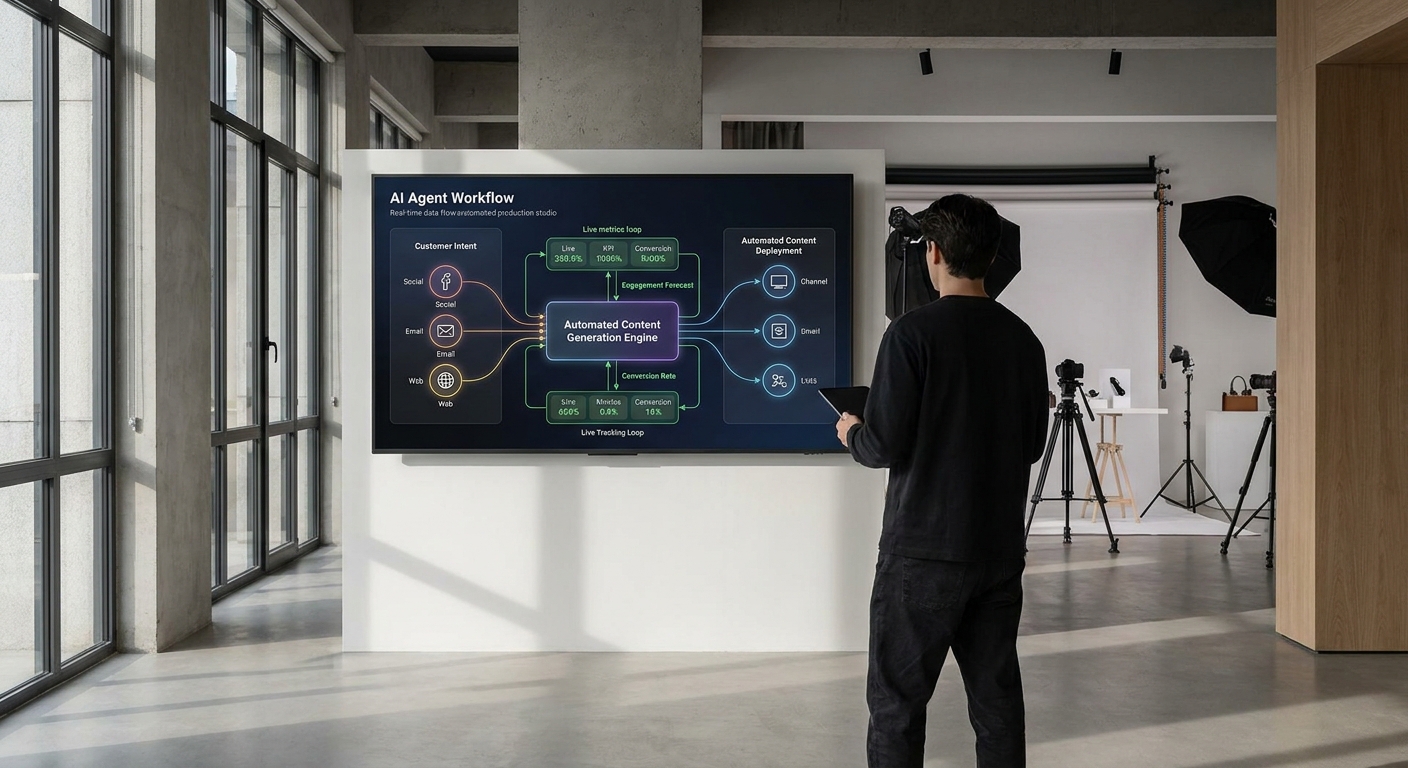
The latest report from Google Cloud, AI Agent Trends 2026, makes one thing clear: the era of playing around with chatbots is ending. Within the next 18 months, autonomous AI agents are set to overhaul how digital marketing actually functions. We’re moving past simple text generation and basic image prompts. Instead, we’re entering a phase where these systems handle complex, multi-step workflows with almost no human hand-holding. It’s not just "using AI" anymore; it’s systemic integration.
The research—pulled from the brains of over 3,466 global executives and Google’s own AI specialists—pinpoints five key trends that will dictate how businesses operate next year. The goal? Moving from experimental, "let’s see what this does" usage to standardized, agentic workflows that scale content without losing the brand's voice.
The Shift Toward Agentic Workflows
Let’s be honest: AI adoption is everywhere, but it’s a mess. According to the 2026 State of AI Content Marketing report, 94% of teams are using AI, and 88% have baked it into their daily grind. But here’s the kicker—only 23.3% of companies have actually integrated autonomous agents capable of making their own decisions. Most of us are still babysitting the tech.
The numbers don't lie, though. Companies that have made the leap to true agentic workflows are seeing a 42% boost in content volume and a 42% drop in production costs. Yet, there’s a massive "accountability gap" looming over the industry. A staggering 81% of teams don't have a formal way to measure if their AI initiatives are actually doing anything useful. Only 19% of marketers are tracking AI-specific KPIs, which is a major oversight if you care about long-term content marketing ROI in 2026.
Customer Expectations and Experience Design
Why the rush toward autonomy? Because consumers are fickle, and their attention spans are shrinking. The Adobe 2026 AI and Digital Trends report surveyed 3,000 executives and 4,000 customers, and the results are a wake-up call. People are giving ads, emails, and social posts a measly two to five seconds before they click away.
To keep up, 80% of organizations are pivoting toward "anticipatory" experiences—using AI to predict what a customer needs before they even ask. Roughly 72% of companies are working to unify their digital and physical touchpoints. The biggest challenge? Doing all of this without sounding like a robot. Keeping a human-centric tone is the top priority for 60% of these teams, who are terrified of losing their brand identity in the process.

Strategic Implementation and Measurement
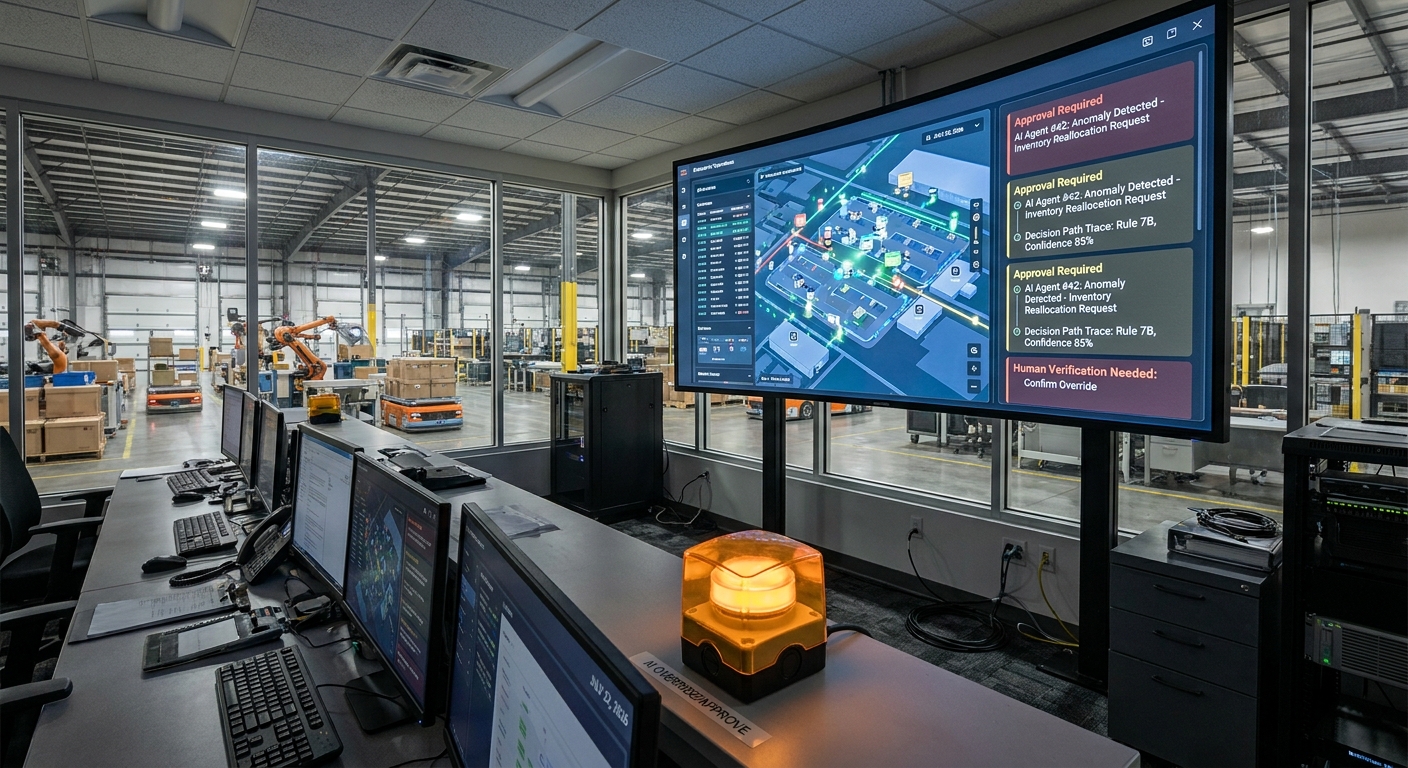
Most marketers aren't ready to let AI run the show entirely. Currently, 73% of teams use a hybrid model, keeping a human in the loop to ensure quality. Only 5% of organizations are letting AI go solo. This "human-in-the-loop" approach is the safety net that keeps brands from drifting off-course as AI agent trends for 2026 continue to shift.
| Metric | Industry Status |
|---|---|
| AI Adoption Rate | 94% |
| Daily AI Usage | 88% |
| Full Agent Integration | 23.3% |
| Teams Lacking Measurement Frameworks | 81% |
| Marketers Tracking AI-Specific KPIs | 19% |
Challenges in Scaling AI Operations
The transition to agentic workflows isn't a walk in the park. Even with early productivity gains, many companies are hitting a wall because their data is siloed. You can't deploy AI across an enterprise if your data architecture is fragmented. This creates a dangerous disconnect: leadership wants to go all-in, but the actual systems aren't ready to support that ambition.
To fix this, experts emphasize the need for real, AI-specific KPIs. Without them, you’re just measuring "busyness"—higher output volume doesn't mean a thing if it doesn't lead to actual growth. As content marketing statistics show, scale is only valuable if it drives engagement and conversions.
Furthermore, we need to rethink our approach to content strategy. AI isn't just a writing assistant anymore. The next step is agents that manage entire campaigns—from segmenting the audience to handling multi-channel distribution. As noted in recent content marketing benchmarks, the winners will be those who treat AI as core infrastructure rather than a side project.
Future Outlook
By 2026, the competitive edge won't come from just using AI. It will come from how effectively you integrate autonomous agents into the fabric of your business. The companies that bridge the accountability gap and build rigorous measurement frameworks are the ones that will win on both efficiency and customer experience.
As we move toward this automated future, the synergy between machine speed and human strategy is everything. The technical capabilities will keep growing, but the need for high-quality, brand-aligned content is a constant. For many, the path forward is a delicate balancing act: chasing the efficiency of AI-generated content and search engine performance while maintaining the authentic, personalized touch that customers actually crave. The next year will be the ultimate test of which brands can scale their tech without losing their soul.
Related Articles
 no-code AI platform market growth 20262026 Industry Analysis Ranks Top No-Code AI Platforms for Enterprise Automation and Agentic WorkflowsExplore the 2026 enterprise AI landscape. Discover why autonomous agentic workflows and AI governance are the new benchmarks for production-ready automation.David Brown4 min read
 generative AI enterprise automation trends 2026MarTech Funding and AI Content Intelligence Innovations Drive New Enterprise Automation StandardsDiscover how AI-driven content intelligence and agentic workflows are defining new enterprise automation standards in 2026. Stay ahead of the MarTech arms race.Deepak Gupta4 min read
 enterprise AI workflow automationModiqo Secures $3 Million Funding to Enhance Reliability of Enterprise AI Workflow AutomationModiqo secures $3M in pre-seed funding to launch 'Rote,' an infrastructure layer designed to make generative AI workflows deterministic and reliable for enterprise.Deepak Gupta4 min read
 autonomous AI agents for business operationsNew Industry Report Projects Autonomous Agentic AI Systems Will Redefine Enterprise Workflow Standards by 2026By 2026, 40% of business workflows will be managed by autonomous agentic AI. Discover how this shift from automation to autonomy is transforming operations.Deepak Gupta4 min read