
Search Engine People Debuts AI Visibility Measurement Tool to Advance Marketing Performance Benchmarking


The rules of the game just changed. Late May 2026 marked a quiet but seismic shift for digital marketers: Search Engine People launched a new visibility measurement tool specifically designed to track how brands show up in generative AI search results. We’re moving past the era of chasing blue links and keyword density. Now, it’s about winning the conversation.
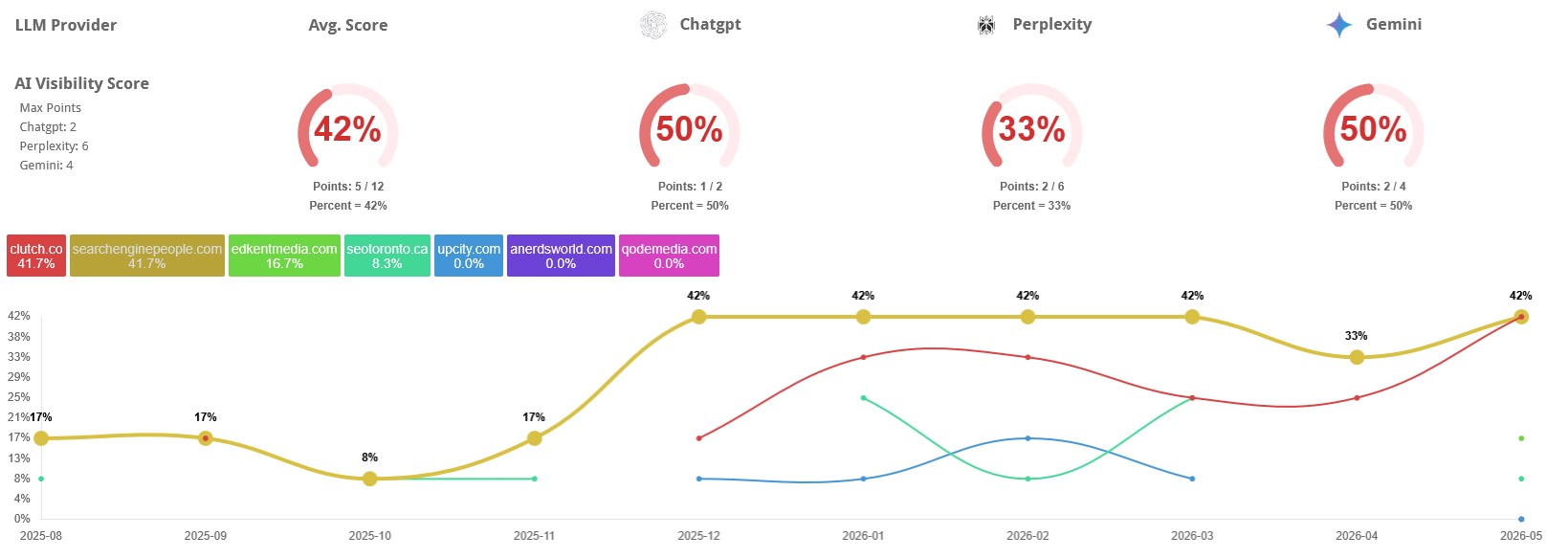
For years, SEO was a game of volume—how many people searched for term X, and how high did your site rank? But with ChatGPT, Google Gemini, Perplexity, and AI Overviews dominating the landscape, the "search" experience has become a synthesis engine. Users aren't looking for a list of links anymore; they’re looking for an answer. If your brand isn't part of that answer, you’re invisible. This new technology aims to fix that blind spot by giving companies a composite visibility score, quantifying their influence in a world where AI does the talking.
The Shift from Keywords to Prompt-Based Tracking
Traditional SEO is starting to feel like a relic. Why? Because large language models (LLMs) don't care about your keyword stuffing. They care about context, authority, and relevance. Search Engine People’s new AI visibility measurement tool pivots away from the old-school search volume model and embraces "prompt-based" tracking.
Instead of asking, "How many times did someone search for this keyword?" the system asks, "When a user asks the AI a question, how does the model represent my brand?" It’s a subtle but massive distinction. If you want to maintain market share, you have to understand how the AI synthesizes information. The tool breaks this down into three core metrics:
- Brand Mentions: Is the AI actually talking about you? And more importantly, is it doing so in a positive or relevant context?
- Link Inclusions: When the AI provides a source, is it yours? Getting that direct URL into the response is the new "top of page one."
- Citations: Does the AI treat your content as a source of truth? This is the gold standard for building authority in an automated ecosystem.
Benchmarking Performance Across Platforms
Here’s the rub: AI search isn't a monolith. A brand might be the star of the show on Perplexity but completely ignored by Google’s AI Overviews. This fragmentation is a nightmare for marketing teams trying to keep their heads above water. Recent industry reports suggest that this new tech is designed to standardize the chaos, offering a unified dashboard to see exactly where you stand across the entire generative ecosystem.
| Metric Category | Platform Coverage | Primary Focus |
|---|---|---|
| Brand Mentions | ChatGPT, Gemini, Perplexity | Conversational presence |
| Link Inclusions | Google AI Overviews | Direct traffic attribution |
| Citations | Search Engines & LLMs | Authority and source trust |
By pulling these disparate data points into one place, teams can finally optimize their presence in AI search engines. No more guessing which prompts trigger a mention. You get actionable data that tells you exactly how to adjust your content strategy to align with the logic of these models.
Implications for Digital Strategy
We are currently witnessing the "black box" era of search. The old funnel—search, click, convert—is being dismantled in real-time. If a consumer asks an AI for a recommendation and your brand isn't in the response, you’ve been cut out of the consideration set before the user even visits a website.
The announcement of this technology is a wake-up call. AI visibility is no longer a "nice-to-have" experiment; it’s a pillar of modern strategy. By tracking a composite visibility score, companies can benchmark their progress against competitors in real-time. It’s not just about being mentioned; it’s about the quality of that mention. Are you the expert the AI cites, or are you just a footnote?
This move toward a hybrid model—blending legacy SEO with AI-specific performance indicators—is likely the future of the industry. We aren't abandoning the old ways; we’re augmenting them. We’re capturing the full spectrum of search, from the traditional blue links to the synthesized answers of tomorrow.
As the tech evolves, the ability to influence these AI responses will be the ultimate competitive edge. The focus on prompt-based tracking is smart because it’s resilient. Even as algorithms update and models shift, the fundamental need for brand mentions, links, and citations remains constant. By adopting these standards now, organizations are positioning themselves to stay relevant in an increasingly automated world. The search landscape is changing, but with the right tools, you don't just have to watch it happen—you can lead the charge.