Competitive Market Pressures Drive Rapid Adoption of AI-Powered Document Automation in Enterprise Workflows

The Great Automation Shift: Why Enterprises are Finally Ditching Legacy OCR for AI
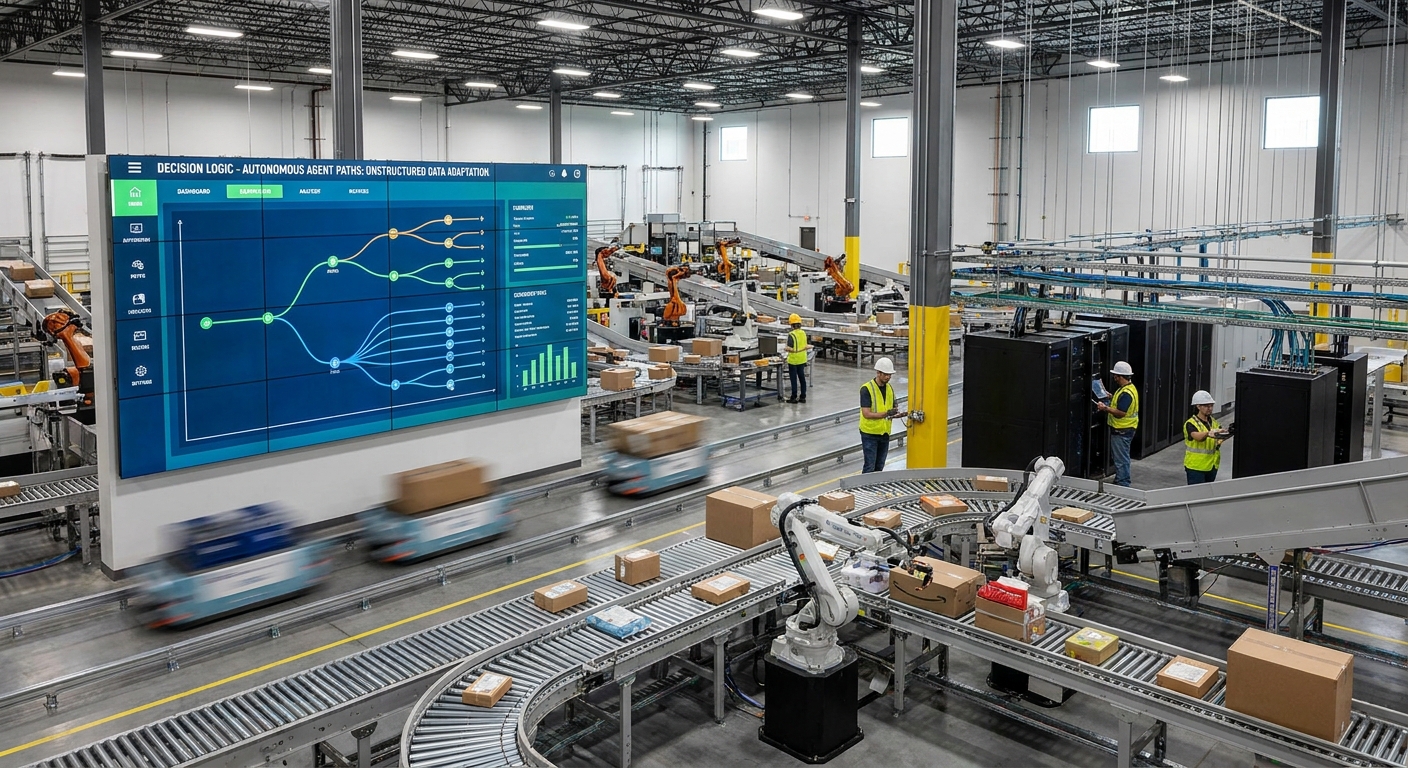
The days of treating artificial intelligence as a "pilot project" are effectively over. Across the board, enterprises are moving from sandbox experimentation to the messy, high-stakes reality of full-scale operational implementation. The data doesn't lie: roughly 78% of companies across the U.S. and Europe have officially graduated from testing, now relying on advanced automation to wrangle the sheer chaos of unstructured data.
We are witnessing a quiet revolution in how businesses function. For years, companies leaned on legacy optical character recognition (OCR)—those rigid, temperamental systems that broke the moment a document layout shifted by a millimeter. Today, that’s being swapped out for context-aware intelligence. It’s no longer about just "reading" a page; it’s about understanding it.
The numbers behind this shift are staggering. According to market analysis from Market.us, the global Document AI market is set to balloon from $32.8 billion in 2024 to a massive $185.3 billion by 2034. That’s a compound annual growth rate of 18.9%. Why the rush? Because in a competitive market, "good enough" manual data entry is a liability. When you’re under pressure to slash costs and boost accuracy, Intelligent Document Processing (IDP) stops being a luxury and starts being a survival tactic.
The Efficiency Payoff
If you’re wondering why the C-suite is so obsessed with this, look at the bottom line. Organizations adopting these tools are reporting productivity spikes of up to 45% and efficiency gains as high as 55%.
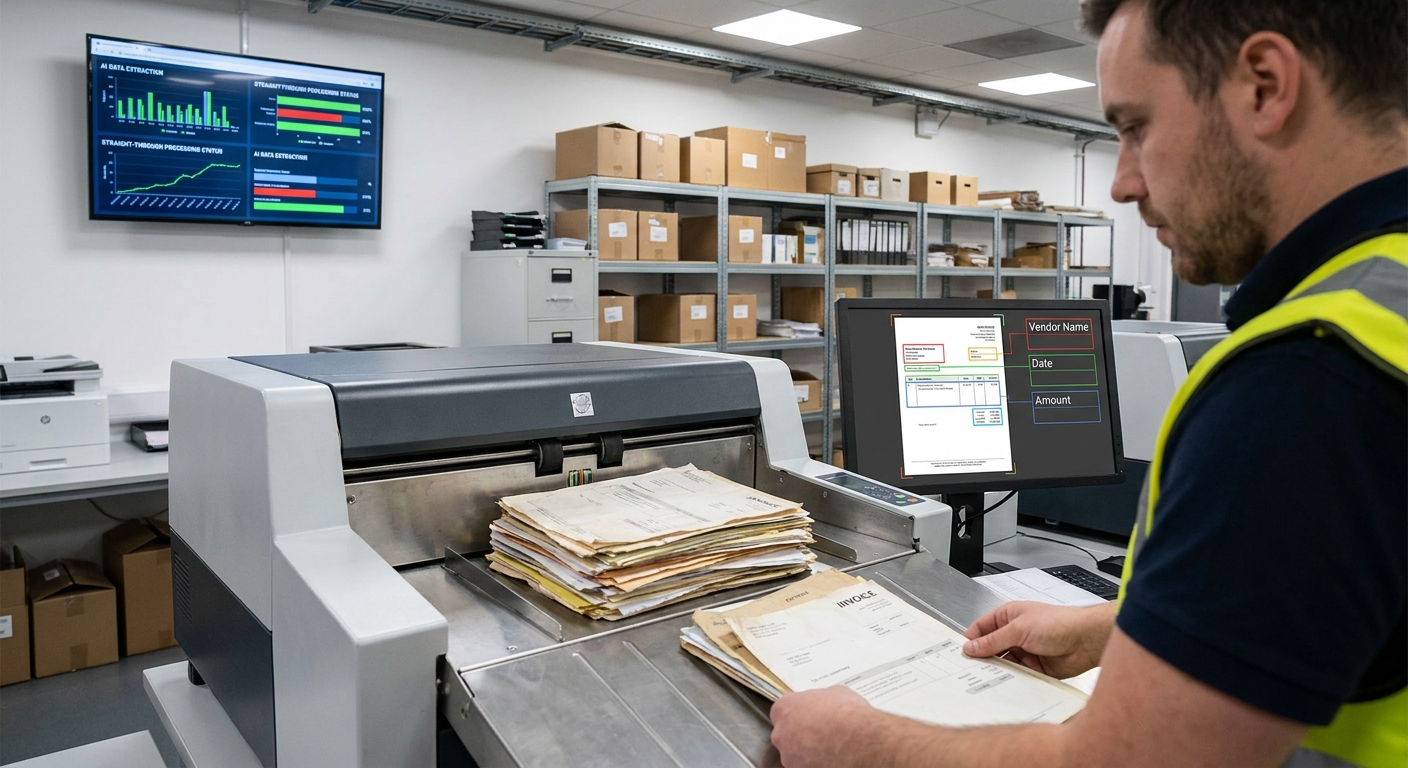
The magic happens when you move away from manual keying and toward "straight-through processing." By automating the intake, you’re not just saving time; you’re eliminating the exceptions—those annoying, human-caused bottlenecks that stall business-critical workflows. Finance and accounting departments are leading the charge here, claiming 37.2% of the market share. When an AI can hit 98% accuracy while cutting processing times by 70%, the return on investment isn't just theoretical—it's immediate.
Yet, there’s a stubborn irony in all this digital transformation: paper isn't going anywhere. Research shows that 61% of IDP-enabled workflows are still tethered to paper-based inputs. Even more surprising? Nearly half of enterprises expect their paper volume to actually increase in the coming year. This is why modern IDP platforms can’t just be fancy software; they have to be Swiss Army knives capable of ingesting everything from scanned physical mail to PDFs and emails.
The Metrics of the Shift
To understand where the industry is heading, you have to look at the scoreboard. The transition to AI-driven document handling isn't just a trend; it's a measurable shift in operational performance.
| Metric | Performance Impact |
|---|---|
| Data Accuracy | Up to 98% |
| Processing Time Reduction | Up to 70% |
| Efficiency Gains | Up to 55% |
| Productivity Improvement | Up to 45% |
| CAGR (2025-2034) | 18.9% |
As Tungsten Automation details in their evaluation of IDP platforms, the secret sauce isn't just the algorithm—it’s the "human-in-the-loop" (HITL) factor. The best systems don't work in a vacuum. They learn from human reviewers, refining their classification and extraction capabilities every time a human corrects a mistake. It’s a feedback loop that makes the system smarter the longer it runs.
The Security Tightrope
Of course, it isn’t all smooth sailing. Security and privacy remain the biggest headaches for anyone trying to scale these systems. We aren't just talking about internal invoices anymore; these workflows now touch HR onboarding, contract management, and sensitive KYC (Know Your Customer) protocols.
With 62% of IDP systems now involving external users and 72% of the market operating in the cloud, the attack surface has grown. Protecting data as it moves through these pipelines is no longer an IT afterthought—it’s the foundation of the entire architecture.
Interestingly, the procurement process itself has been disrupted by the very tech being purchased. Buyers are increasingly using generative AI to vet vendors and research platforms. It’s a circular irony: using AI to pick the AI that will run your company. It highlights just how deep this technology has embedded itself into the enterprise decision-making hierarchy.
The Roadmap to Integration
If your organization is looking to make the jump, you need to stop thinking about "software" and start thinking about "ecosystems." Here is what actually matters when you’re building your stack:
- Multi-Format Intake: If it can’t handle a messy email attachment and a high-res scan of a physical contract, it’s not ready for the real world.
- Contextual Understanding: Keyword matching is dead. You need systems that actually "get" the intent behind the document.
- Regulatory Compliance: In finance and law, if you can’t audit it, you can’t use it.
- Human-in-the-Loop (HITL): Never trust an AI that can’t be checked. Build in the oversight.
- API and RPA Connectivity: Your IDP tool is useless if it can't talk to your existing ERP or robotic process automation infrastructure.
North America is currently holding the pole position with 35.1% of the market, driven largely by the urgent need to combat labor shortages and ballooning operational costs. But the goal isn't just to automate a task; it’s to build an intelligent, end-to-end process that runs itself.
As noted in insights regarding the AIIM Market Momentum Index, the "pilot phase" is effectively over for most. We are entering the era of production-grade AI. The next frontier? Deepening the integration of generative models to finally kill off the manual exception handling that still plagues nearly every document-heavy workflow.
The bottom line is simple: the pressure to adopt isn't going to let up. As the market climbs toward that $185 billion valuation, the businesses that win won't be the ones with the most AI—they'll be the ones that best balance the blinding speed of automation with the steady hand of human oversight.