5 Tips to Create SEO-Optimized Blog Posts with AI
 Ankit AgarwalMarketing Head
Updated 6 min readHow we fact-check
On this page
Artificial intelligence is revolutionizing the content and SEO domain by making it smarter and data-driven. Most marketers agree that generative AI is transforming everything from personalization to productivity. In a survey by Salesforce, 76% of marketers already use AI for content creation and building marketing campaigns and SEO strategies. AI allows marketers to properly place, structure, and optimize keywords. With AI-powered tools they can analyze search trends, suggest keywords, and structure content to align with the search intent. Further, it improves audience engagement by generating relevant topics and optimizing readability. In this post, you will find value-adding and practical tips on leveraging AI to create SEO-optimized content.
1. AI in SEO Content Creation
SEO content creation with AI writing assistants like Logicballs can enhance the efficiency, accuracy, and relevance of the content. Such tools can generate well-structured and optimized content for the targeted audience, analyze top-ranking pages, suggest keyword placement, and offer in-depth insights into the search intent. This ensures that the blog content aligns with the user expectations and the search engine algorithms.
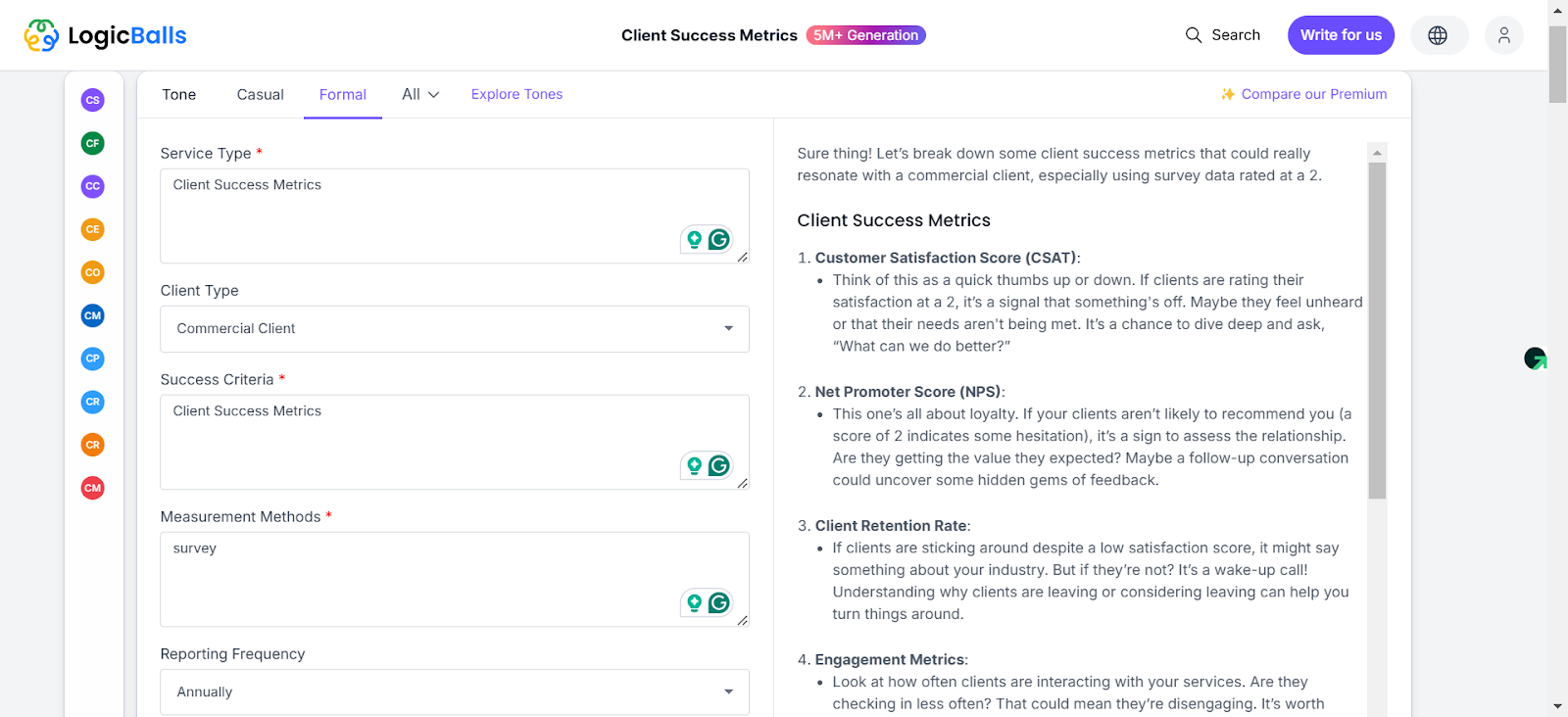
Source AI can also improve the readability of a piece of content by simplifying complex ideas, thus leading to improved user engagement. Tools like Grammarly and Hemingway can help in improving the readability of a content piece. Besides, AI can analyze the search intent to come up with trending topic ideas that directly address the audience's intent. However, to add the human creative touch, writers must share clear AI prompts. This will not just create well-researched content but also balance automation with human creativity. AI also plays a central role in SEO. It can enhance meta descriptions, headers, image alt texts, and other elements to make the content more discoverable. For instance, AI algorithms identify the most relevant topics that resonate with readers based on factors like scroll depth, time spent on a page, and social shares among others. This information can help create targeted content that addresses the audience’s pain points and interests. By integrating expert SaaS SEO services in the content and SEO strategy, businesses can avoid keyword stuffing and other non-SEO-friendly practices. These services include expert guidance on maintaining keyword density and structure, thus allowing businesses to produce optimized content that ranks higher, engages readers, and builds authority in the competitive digital landscape.
2. AI in Keyword Research
AI-powered tools for SEO content marketing allow a holistic approach to keyword research and uncover high-performing keywords for content campaigns. Since AI adds speed, data-driven insights, and accuracy to the process, it streamlines keyword research by allowing content creators to target the relevant keywords based on search volume, competition, and relevance. These tools can identify high-traffic opportunities and predict the content’s ranking potential. One of the most important aspects of AI-driven keyword research is assessing the user intent. AI helps classify the keywords into informational, navigational, transactional, and commercial, ensuring that the content aligns with the searchers' intent. Such alignment improves engagement, reduces bounce rates, and improves conversion rates. Through competitor analysis, AI tools identify the keyword gaps and top-ranking opportunities. Further, AI is promising several advancements in the keyword research domain.
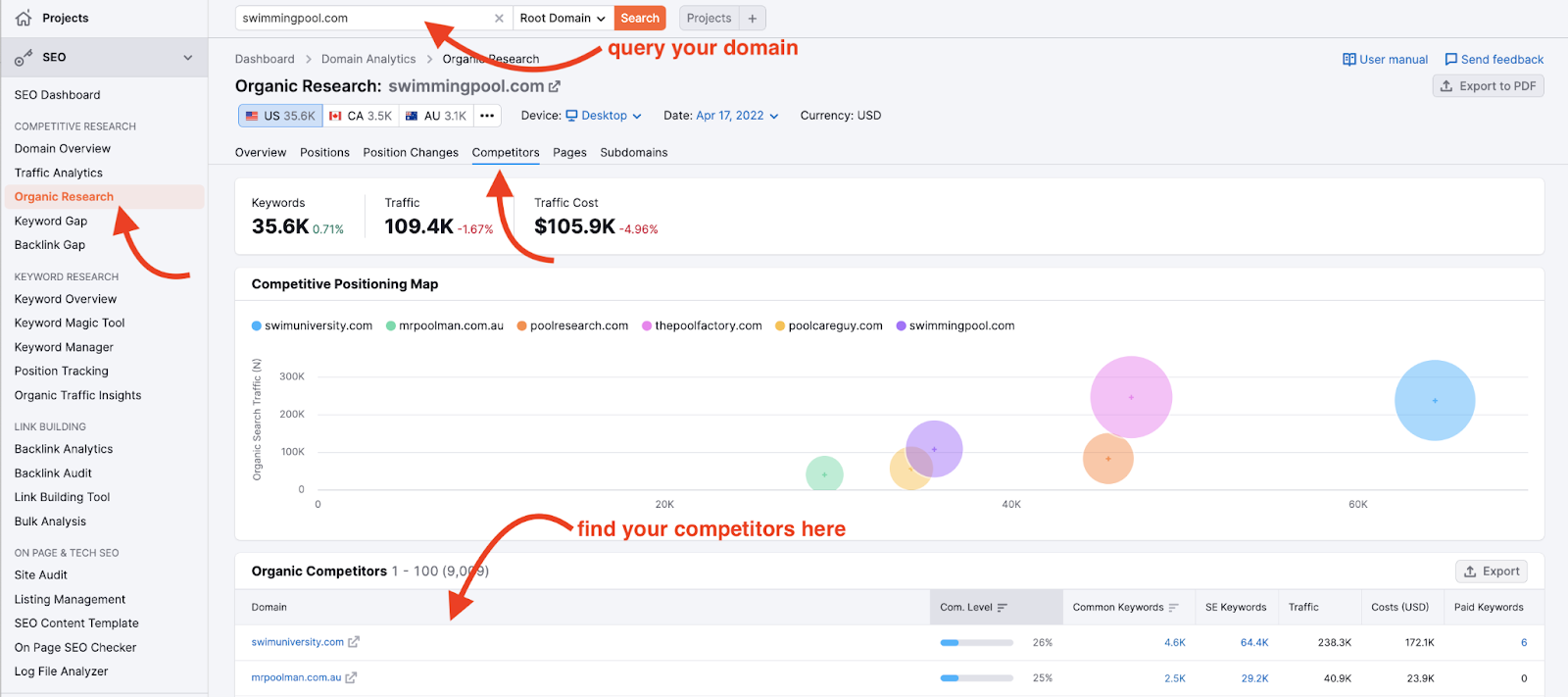
Source For instance, predictive analytics insights offer a peek into historical data and content performance. Also, deeper user intent analysis allows marketers to anticipate long-tail keyword opportunities. What’s more? AI can also be used for YouTube keyword research to optimize video content through features like competitor data for the keyword and search volume data. AI-enabled keyword research is more advanced than traditional methods as it is powered by predictive insights and user intent analytics. However, traditional methods still hold their place as they offer a unique perspective to keyword research.
3. AI-Assisted Blog Structures
A well-structured blog is essential for improving readability, boosting the site’s crawl rate, driving engagement and authority, and acquiring high-quality backlinks. AI determines the most effective method to organize content by analyzing the top-performing articles and suggesting optimized headlines that align with the search algorithms. Well-placed headlines are critical for improving readability and user experience. It makes the content more scannable, thereby improving its searchability for relevant keywords. Working with a guest posting company can further enhance your backlink strategy by placing your well-structured content on authoritative sites, increasing visibility and domain authority. Besides natural language processing (NLP) allows AI to learn the context and topic relevance, ensuring a natural content flow with proper keyword placement. NLP allows AI tools to create content that mimics human patterns while making the post more engaging and informative. Thus, AI can help content creators create reader and search-engine-friendly content that’s highly relevant to the search queries.
4. AI for Enhancing Readability and UX
Difficult-to-read content frustrates readers and leads to high bounce rates. Achieving top-notch readability is critical for the content to be understood by a mass audience and improve audience engagement and satisfaction. AI-powered tools consider linguistic factors like sentence length, word length, syllable count, punctuation, and more to make content more engaging and accessible. These tools analyze the complexity and suggest improvements like simple word choices, shorter sentences, clear structures, and more. For instance, to enhance readability, an AI platform might spot long and complex sentences that deter readers, suggesting you break it down into shorter and more engaging sentences. Structured data plays a central role in SEO as it offers detailed information to search engines leading to improved visibility in the SERPs and enhanced user experience. AI also identifies optimal internal linking opportunities by analyzing the content. This improves site navigation, allowing users and search bots to discover content easily, thereby distributing link equity across pages and boosting the overall search performance.
5. AI for Tracking Content Performance
Tracking and analyzing the performance of the content allows marketers to make data-driven decisions and optimize marketing campaigns. Tools like Google Analytics offer comprehensive data on website performance in terms of user behavior, traffic, and engagement metrics. These insights help content creators to identify the topics that resonate with their audience. Updating content consistently is crucial to improve SEO performance, and with reliable SEO services like those offered by Oxygen, a digital marketing company, maintaining content freshness becomes more effective and manageable. AI-powered platforms can spot outdated content and suggest new updates and keywords that align with the search trends. For instance, it can determine emerging topics, helping content creators update old content with the latest information and improving visibility in the SERP. Finally, by analyzing user behavior, AI tools can help create content that engages and retains readers. The tools monitor metrics like time on page, bounce rate, and navigation paths to offer insights into user behavior and their pain points. Through this data content creators can refine their strategies and focus on topics that resonate with their target audience, leading to improved engagement and conversion rates. Incorporate AI in measuring content performance to find opportunities to refine your processes, ensuring the content remains relevant, engaging, and optimized for the search engines.
Conclusion
Artificial intelligence has revolutionized the content creation process, making it more data-driven, efficient, and impactful. Besides, integrating AI into business operations can help enhance visibility, save time and money, reduce mistakes, and help you stay ahead of the competitive SEO landscape. Start by using AI for keyword research and content structuring to ensure that the content aligns with your audience and has good readability. Also, leveraging AI to update the old and outdated content on your website to improve rankings and stay relevant. Experiment with the techniques and AI-powered tools shared in this post to keep your content fresh and aligned with the evolving trends. The faster you embrace AI the more tangible improvements you’ll see in your website rankings and user engagement.
Related reading
Related Articles
 AI for law firmsHow Law Firms Can Use AI to Create High-Converting Website ContentDiscover how law firms can leverage AI to scale high-converting website content while maintaining professional standards. Start building your authority today.Ankit Agarwal4 min read
 meta descriptionHow to Create SEO Meta Descriptions That Increase CTR by 30%Stop writing robotic snippets. Learn how to craft high-CTR meta descriptions that hook users, satisfy search intent, and stop Google from rewriting your copy.Mohit Singh7 min read
 Manufacturing SEOTechnical SEO Strategies That Work for ManufacturersLearn powerful technical SEO strategies for manufacturers. Improve site structure, speed, indexing, and keyword targeting with AI-driven optimization.Hitesh Kumawat6 min read
 convert PDF to WordFrom PDF Files to Editable Documents: Practical Workflows for Modern BusinessesStop wasting time retyping static files. Learn the best practical workflows to convert PDFs into editable documents and boost your team's productivity today.Govind Kumar10 min read